Targeted Advertising: How It Works and How to Use It Well

The average person sees somewhere between 6,000 and 10,000 ads a day. That is up from roughly 1,600 a day in the 1970s. People ignore most of those ads without a second thought.
That is the problem targeted advertising exists to solve. It separates brands people actually notice from brands that burn money on people who were never going to buy.
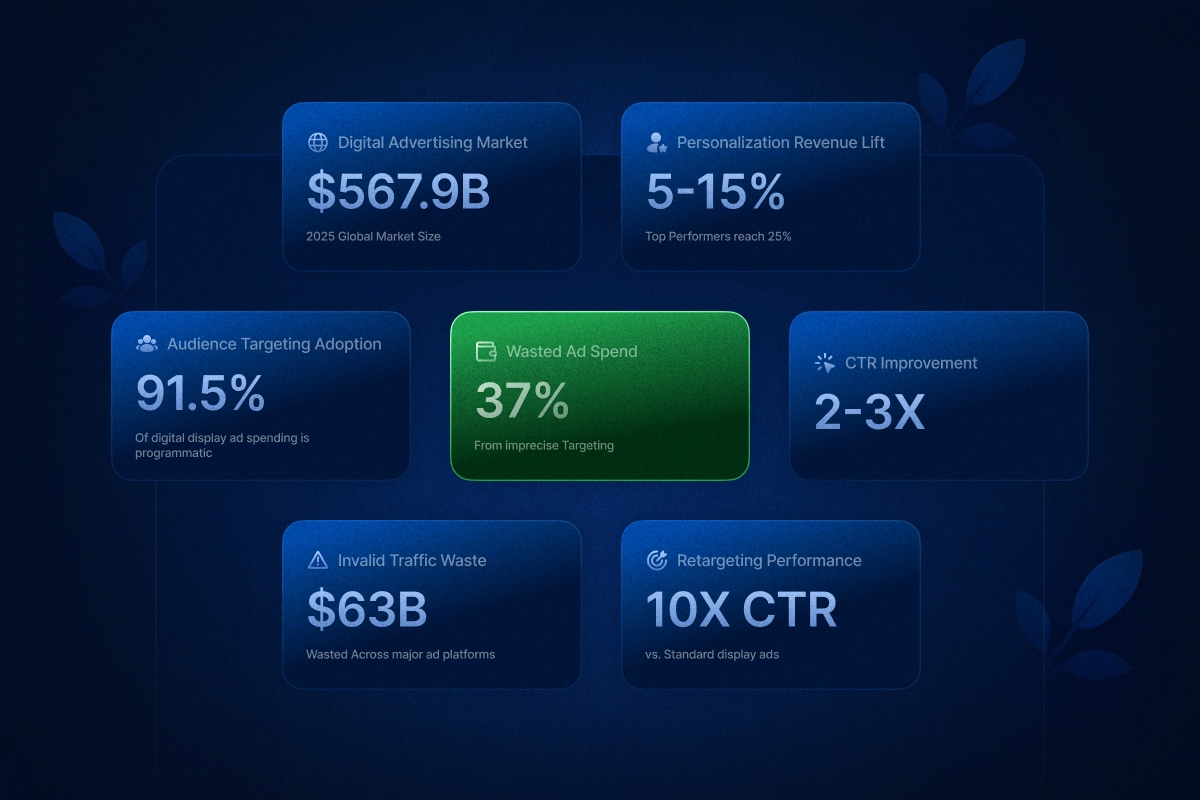
The cost of getting this wrong is high. Forrester Research estimates that imprecise targeting alone wastes 37% of ad spend. In a market where global digital ad spend is pushing past 650 billion dollars a year, that waste adds up fast.
This guide breaks down what targeted advertising actually is, how it works end to end, where the money is going right now, and how to build a strategy that does not fall into that wasted 37%. Whether you are new to the concept or refining an existing setup, this covers what are targeted ads and how to use them well.
Quick Key Stats
What Targeted Advertising Actually Means
Targeted advertising is the practice of showing ads to specific groups of people based on data about who they are, what they do, or what they are interested in, instead of showing the same ad to everyone.
If you look for a simple targeted advertising definition, it all comes down to relevance. A mass ad campaign assumes every viewer is a potential customer. A targeted campaign assumes the opposite. It tries to find the smaller group of people who are likely to care, and puts the budget there instead.
This did not start with the internet. Print advertisers have long picked publications based on who reads them, choosing a fishing magazine over a parenting magazine, for example. Advertisers bought TV spots based on what show, and therefore what audience, was airing at a given time. Radio worked the same way.
Online tracking added a new layer in the 2000s. Cookies let advertisers follow browsing behavior across sites and build a picture of interests over time. That made targeting far more precise than picking a publication or a time slot ever could.
Now the field is shifting again. AI-driven, real-time audience matching means platforms can predict who is likely to convert based on huge amounts of behavioral data. Platforms often adjust who sees an ad within milliseconds. The through-line across all of it is the same: match the message to the person most likely to want it.
Running targeted campaigns on Meta? Get an Uproas agency ad account and scale without spend caps or bans.
How Targeted Advertising Works: The Full Process
Targeted digital ads run through five stages, from raw data to a live ad in front of a real person.
1. Data collection: Advertisers gather information from three sources.
This third source has become far less reliable as privacy rules tighten.
2. Data analysis: Raw data on its own is not useful. Platforms and advertisers run this data through analytics tools to find patterns: which products a group tends to buy, what times of day they are active, and what other groups they resemble.
3. Audience segmentation: Once analysts find patterns, they group people into segments. A segment might be "women aged 25 to 34 who viewed running shoes in the last 30 days" or "existing customers who have not purchased shoes in 90 days." These segments become the targeting building blocks on ad platforms.
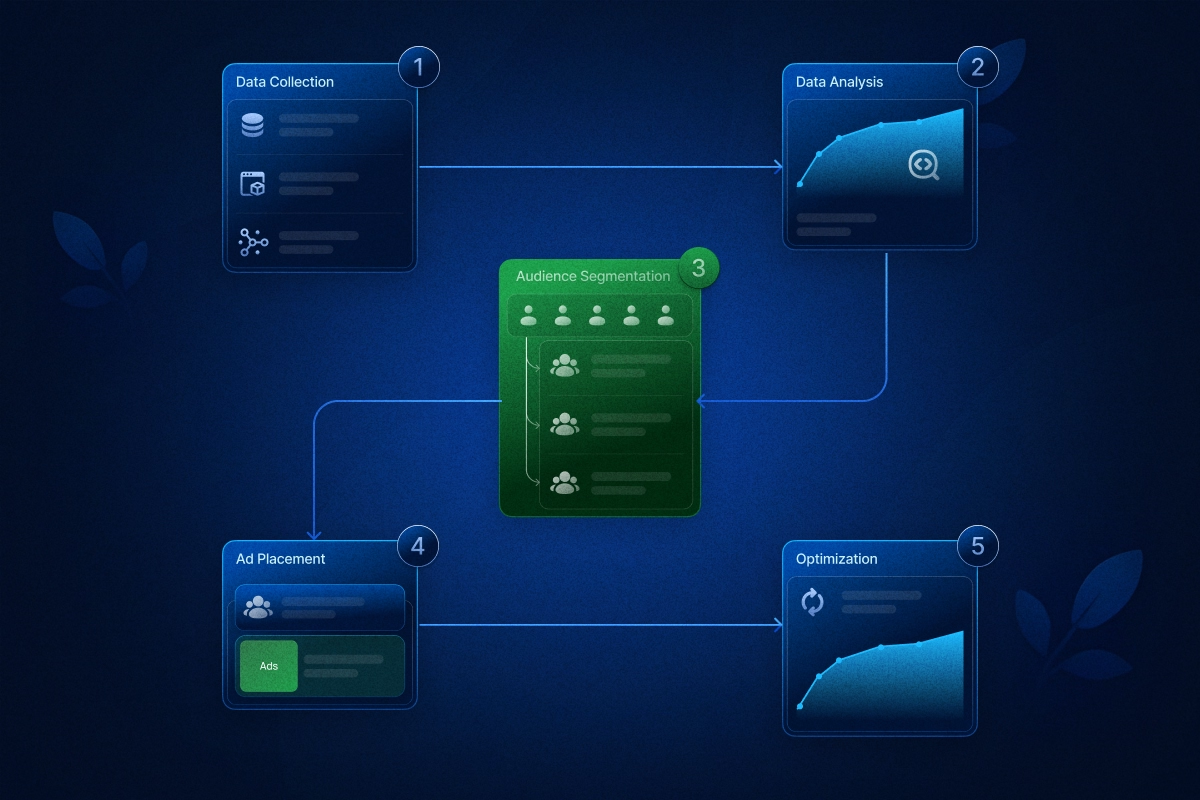
4. Ad placement and personalization: This is where programmatic buying comes in. When someone loads a page or app, an auction happens in the background. Demand-side platforms bid on behalf of advertisers, in milliseconds, for the chance to show that specific person an ad, based on which segment they fall into.
5. Optimization and tracking: Once a campaign is live, machine learning continuously adjusts it. The system shifts spend toward the segments and placements performing best, and away from ones that are not converting, often faster than a human trader could react.
The Main Types of Targeted Advertising
There are six main ways advertisers narrow down who sees an ad.
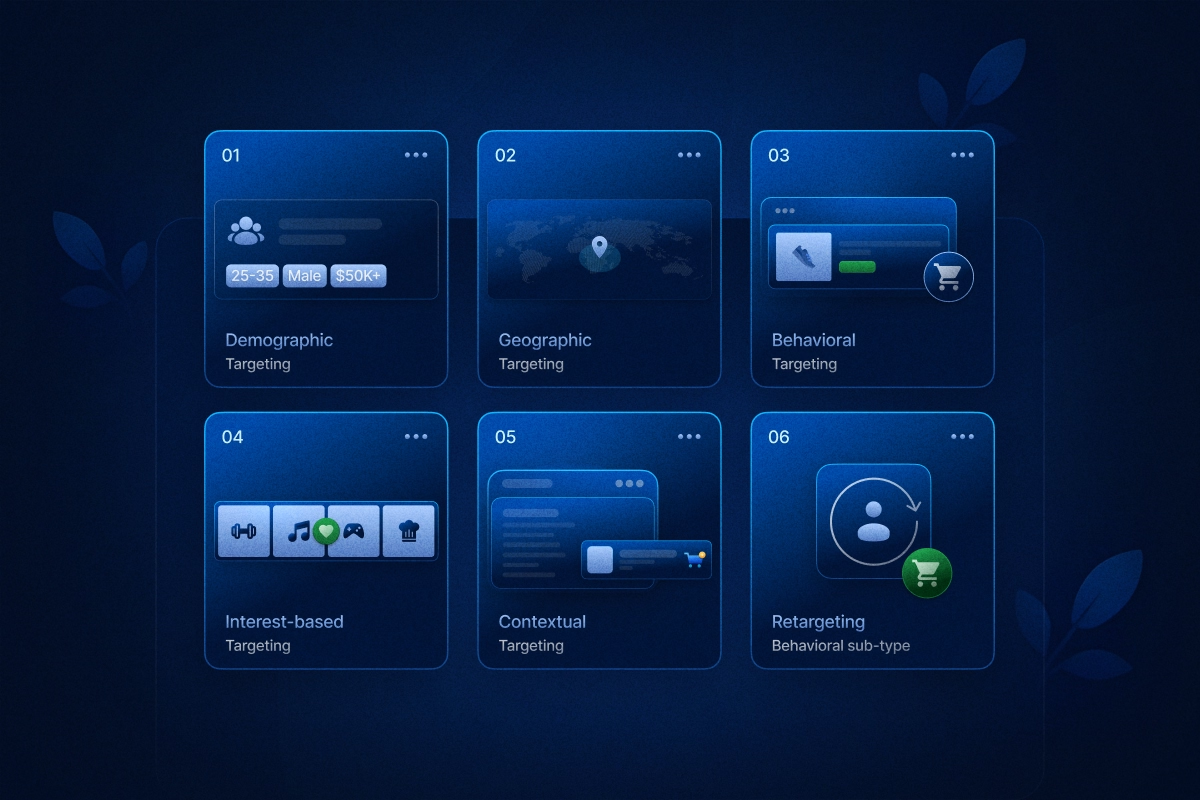
Demographic targeting uses basic traits like age, gender, income, or education. It is simple and cheap to apply but tends to be the least precise, since two 30-year-olds can have completely different interests.
Geographic targeting shows ads based on location, anywhere from a whole country down to a specific radius around a store. A local business running ads only to people within five miles is using geographic targeting.
You can learn more about geo-targeting and geographic segmentation here.
Behavioral targeting looks at what a person has done online, pages visited, products viewed, past purchases. It tends to be one of the more precise types since it is based on real actions rather than assumptions.
Interest-based targeting groups people by stated or inferred interests, such as fitness, cooking, or gaming, often pulled from the pages someone follows or the content they engage with.
Contextual targeting does not use personal data about the viewer at all. Instead, it matches ads to the content of the page itself, showing a running shoe ad on a marathon training article, for example. This is a meaningful distinction from behavioral targeting, which follows the person. Contextual targeting follows the content. As third-party cookies have become less reliable, contextual targeting has come back in a big way, since it needs no personal tracking to work.
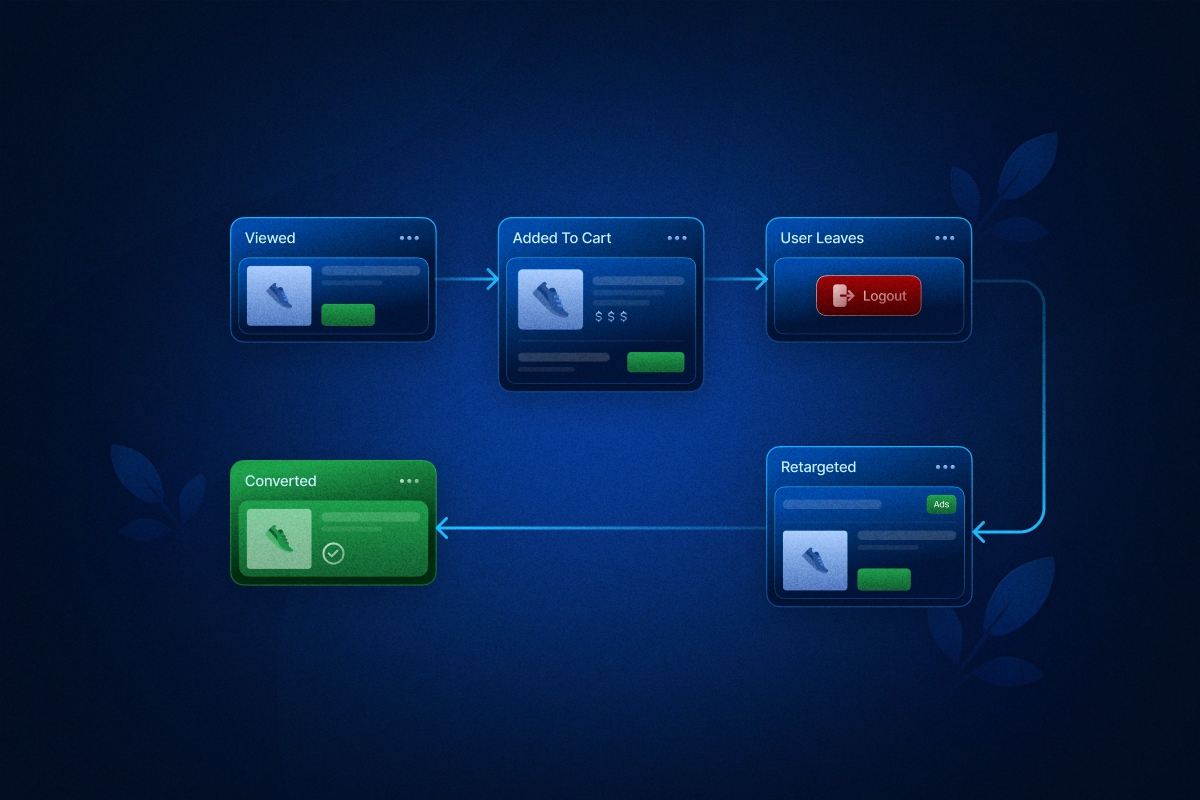
Retargeting shows ads to people who already interacted with a brand, such as visiting a site or adding something to a cart, without buying. Retargeting is a sub-type of behavioral targeting, not a separate category on its own. It also tends to produce the highest conversion rates of any targeting type, since it is aimed only at people who have already shown intent.
Targeted Advertising on Social Media Platforms
Social media targeted advertising is where most budgets go, and each platform has its own strengths.
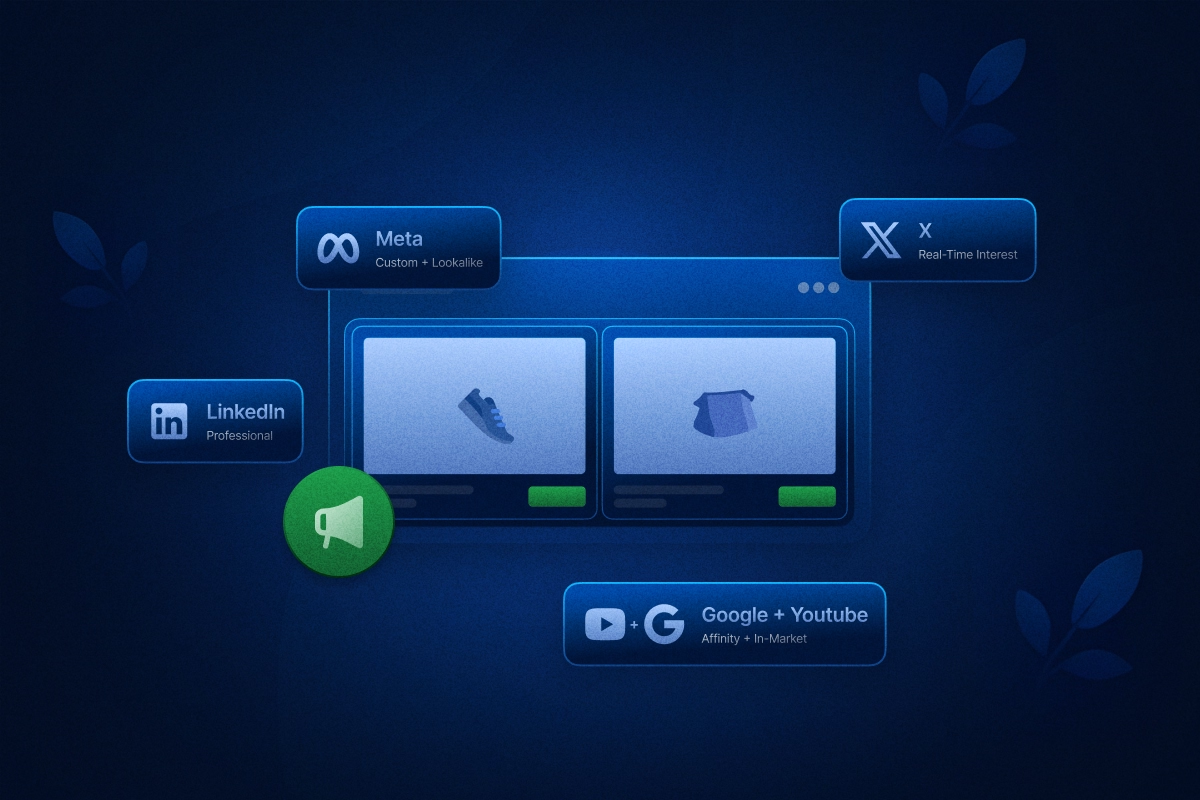
Meta (Facebook and Instagram) built its targeting system around Custom Audiences and Lookalike Audiences. A business builds a Custom Audience from its own customer list or website visitors. A Lookalike Audience takes that list and finds new people who resemble it.
In 2026, Meta's Advantage+ system shifted much of this toward AI-driven audience suggestions rather than strict manual rules. The underlying custom-audience-first approach still applies. Meta suits businesses of almost any size, from local shops to large e-commerce brands, given its combination of scale and purchase-based targeting.
TikTok relies heavily on interest and behavioral targeting, built from what people watch and engage with on the platform. Its Smart+ system, introduced in 2025, automates much of the audience selection based on campaign goals rather than manual segment building. TikTok tends to suit brands targeting younger, trend-driven audiences with native-feeling video content.
Want to avoid troubles while launching ads in TikTok? Get your TikTok agency account to enjoy no more restrictions.
LinkedIn targets by job function, seniority, company size, and industry. It’s the strongest option for B2B focused social media ad targeting trying to reach decision-makers directly. It’s also, by a wide margin, the most expensive major platform per click.
X (formerly Twitter) targets primarily by interest and by conversation topics people are engaging with in real time, making it useful for advertisers trying to reach an audience during a live event or trending topic.
YouTube and Google use affinity audiences, built from long-term interests, and in-market audiences, built from signals that someone is actively shopping for a specific category. This combination makes YouTube useful for both broad brand awareness and closer-to-purchase targeting.
Online Targeted Advertising Beyond Social Media
Social platforms are not the only place targeting happens. A large share of online targeted advertising spend runs through other channels entirely.
Google Search Ads target based on keyword intent. Someone searching "emergency plumber near me" is showing clear, immediate intent, which is why search ads tend to have some of the highest click-through rates of any format, averaging around 6.64% across industries.
Google Display Network ads combine contextual placement with audience-based targeting, showing banner and image ads across millions of partner sites and apps.
Do you know you can continue your ads in google without penalties? Get your Google Ads agency accounts and enjoy the benefits.
Programmatic display automates online ad targeting by buying ad space across a huge number of publisher sites at once.
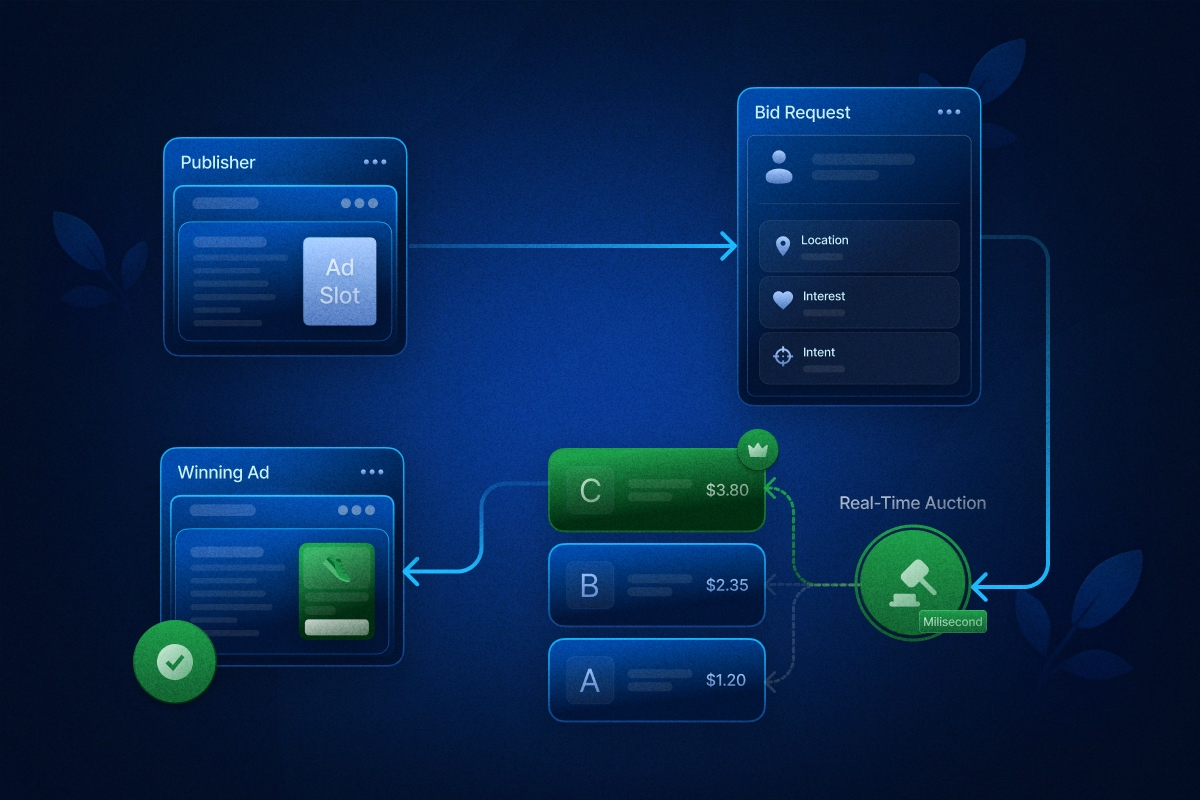
Here is how one auction works. A publisher's ad slot goes live the instant a page loads. A bid request goes out with anonymous signals about the visitor. Demand-side platforms respond with bids within milliseconds. The winning ad loads before the page finishes rendering.
Real-time bidding still leads the programmatic market, at roughly 41.30% of transactions in 2025. Private marketplace deals and programmatic guaranteed deals make up a growing share of the rest.
Native advertising blends ad content into the look and feel of the surrounding page, such as a sponsored article on a news site. It tends to get more engagement than a traditional banner, because it does not visually interrupt the reading experience.
Connected TV and OTT bring targeted advertising to streaming platforms. More viewers are moving to ad-supported streaming tiers. As a result, this segment is one of the fastest-growing parts of programmatic spend, and U.S. programmatic CTV spend is projected to keep climbing sharply year over year.
One nuance worth understanding: Google Ads targeting works in layers.
Keywords capture search intent. Audiences layer on who the person is, based on behavior or interest. Topics group content by subject for display placements. Placements let an advertiser choose specific sites or apps directly.
Stacking these layers together, rather than picking just one, is usually what produces the tightest targeting.
Real-World Targeted Advertising Examples
These targeted advertising examples show the theory in action.
Amazon uses purchase history and browsing behavior to power its product recommendation ads, showing shoppers items related to what they have already bought or viewed. Because the recommendations are based on real purchase intent rather than a guess, they tend to convert at a noticeably higher rate than generic product ads.
Netflix uses geo-targeted and behavioral data to promote different shows to different audiences, sometimes even testing different thumbnail images for the same title based on what a viewer has watched before. Industry data credits this kind of behavioral personalization with meaningfully higher viewer engagement compared to showing every subscriber the same artwork.
A retail e-commerce brand running cart abandonment retargeting is one of the most common and effective targeted campaigns in use. A shopper adds an item to their cart and leaves without buying. A retargeting ad follows them across other sites and platforms, often with the exact product they left behind.
A B2B SaaS company using LinkedIn job-function targeting can narrow a campaign down to, for example, IT directors at companies with more than 500 employees. This kind of tightly defined targeting typically costs more per click than broader targeting, but converts at a high enough rate to justify the premium, since the audience is made up almost entirely of qualified decision-makers.
A local business using geo-targeted search ads might be a dentist or a plumber bidding on searches within a five-to-ten-mile radius of their location. Because the intent behind these searches is immediate, this kind of narrow geographic and keyword targeting often produces some of the lowest-cost, highest-converting campaigns available to a small business.
The Benefits of Targeted Advertising
McKinsey research shows personalization typically lifts revenue by 5 to 15%, with top performers reaching 25%, while also improving marketing spend efficiency by 10 to 30%. Better targeting also means fewer dollars going toward people who were never going to convert, a direct answer to the 37% of spend that Forrester found gets wasted on imprecise targeting. It also gives advertisers sharper audience insights over time and a real edge over competitors still running broad, untargeted campaigns.
For consumers, the benefits are less discussed but just as real. Better targeting means fewer irrelevant ads cluttering a feed or inbox. It can also help people discover brands or products they would not have found otherwise.
Surveys back this up: 71-76% of consumers say personalization influences what they buy, and a notable share of consumers report frustration specifically when content or ads feel generic and irrelevant to them.
Privacy, Ethics, and the Regulatory Landscape
This is the part of targeted advertising that gets the most scrutiny, and for good reason.
For years, the assumption was that third-party cookies would be phased out of Chrome. That would have forced a full rebuild of how targeting works.
That assumption turned out to be wrong. Google reversed course multiple times. In July 2024, it dropped its original cookie deprecation timeline. In April 2025, it confirmed it would add no new consent prompt and would keep cookies supported in Chrome indefinitely.
Then, in October 2025, Google formally retired most of its Privacy Sandbox technologies, including the Topics API and the Protected Audience API. It cited low adoption and limited real-world value. Third-party cookies remain active in Chrome today, with no removal timeline in place.
That does not mean everything stayed the same. Consent and regulation kept tightening regardless of what happened with cookies.
Under GDPR, businesses generally need clear, opt-in consent before using someone's data for ad targeting. Fines for getting this wrong are large and public. Regulators issued roughly 1.2 billion euros in GDPR penalties in 2025 alone. Cumulative fines since 2018 now top 7.1 billion euros.
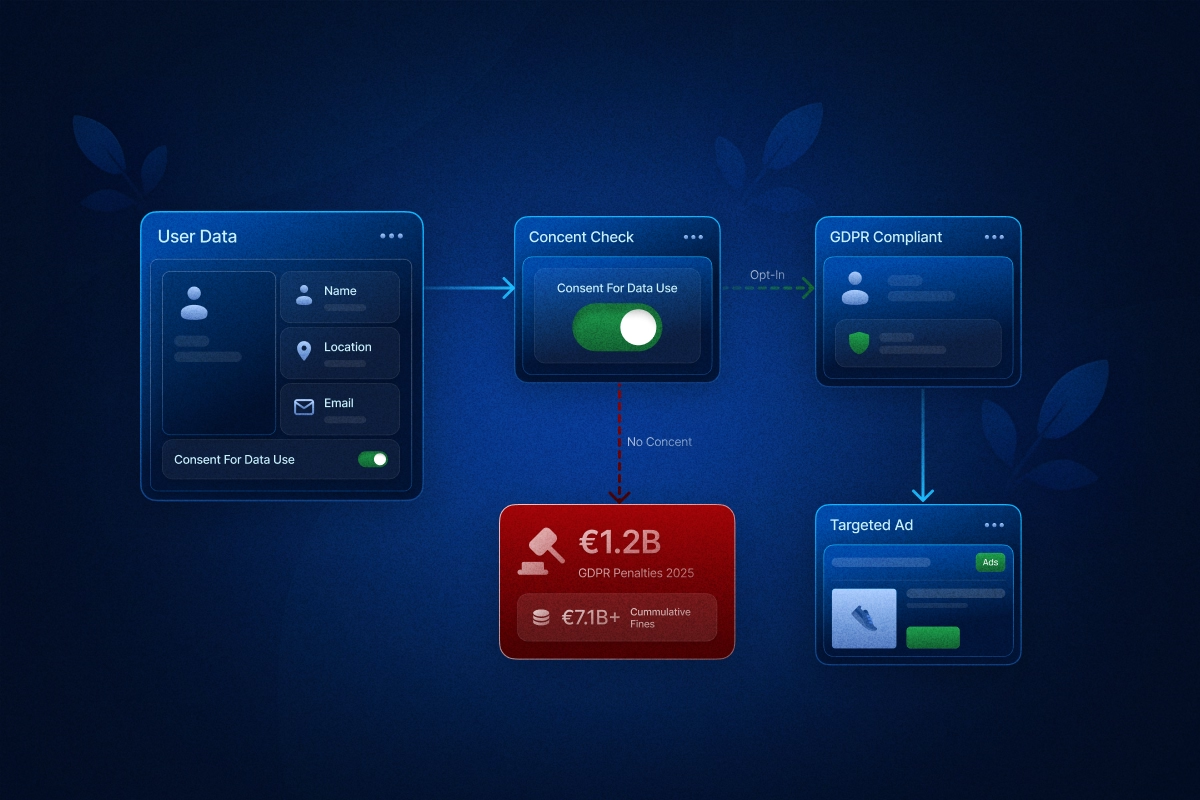
Two cases stand out. Regulators fined Meta 1.2 billion euros for unlawful data transfers. They fined TikTok 530 million euros in 2025 over how it handled European user data.
In the United States, CCPA and its expansion CPRA give California residents the right to opt out of having their data sold or shared for advertising. Violations run $2,663 for unintentional breaches, up to $7,988 for intentional ones. That figure is per violation, and the total can scale into the millions once many consumers are involved.
Nineteen other U.S. states now have similar comprehensive privacy laws. Several more take effect in early 2026.
Consumer concern has not gone away either. A meaningful share of people say they feel they have lost control over their personal information. Platforms have responded by restricting the most sensitive forms of targeting.
Meta, for example, now blocks custom audiences that could suggest health conditions or financial status. It has also removed detailed-targeting exclusions based on interest categories from its ad platform entirely.
The line advertisers need to hold is between helpful personalization and invasive tracking. Showing someone a relevant product based on what they browsed is generally accepted. Inferring or targeting based on sensitive categories, such as health status, sexual orientation, or financial hardship, is where most platforms and regulators have already drawn a hard line.
The Cookieless Future and Where Targeted Advertising Is Heading
Despite Google's reversal on cookie deprecation, the industry has not gone back to old habits, and for good reason. Cookies were already unreliable well before Chrome's decision, since Safari and Firefox block them by default and a large share of users reject them through consent banners regardless of what any single browser does.
First-party data has become the anchor strategy. In 2026, 92% of marketers named first-party data their primary privacy-centric targeting approach, and that share continues to climb. This means businesses build their own customer lists, purchase histories, and direct relationships, rather than depending on data bought from a third party.
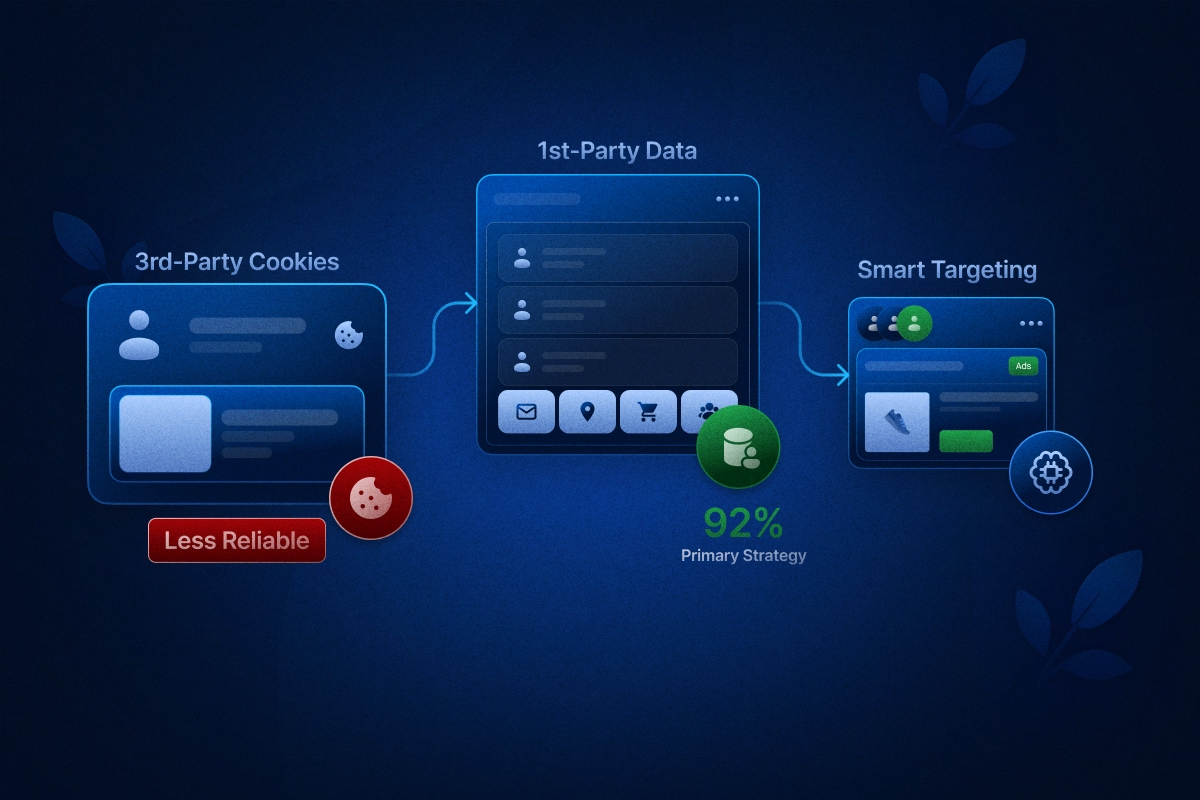
Contextual targeting is making a real comeback for the same reason. Since it matches ads to content rather than to a tracked individual, it needs no personal data at all, which makes it durable no matter what any browser or regulator decides next.
Google's Privacy Sandbox is worth understanding briefly, even after its formal retirement in October 2025. It shaped years of industry planning.
Google designed the Protected Audience API to let ad targeting happen inside the browser itself, without a central party seeing someone's full browsing history. It built the Topics API to assign a user's browser a small number of interest categories based on recent browsing, without exposing granular history.
Google shut down both tools due to low adoption and testing that showed real drops in publisher revenue and advertiser performance. The underlying goal, privacy-preserving targeting, is still the direction the industry is moving. It is just happening through other tools now.
AI is doing a lot of that work now. Predictive audience modeling looks at behavior patterns to forecast who is likely to convert before they have taken any obvious action. Lookalike audience generation has moved from static, manually built lists toward continuous, AI-driven expansion based on rich first-party signals. Real-time creative personalization adjusts the ad content, not just who sees it, based on what is likely to resonate with a specific viewer.
Identity resolution tools and data clean rooms are also becoming standard middle-ground solutions, letting two companies match audiences against each other's first-party data without either one seeing the other's raw customer list. This is increasingly how retailers, streaming platforms, and advertisers work together in a world with less third-party tracking than a few years ago.
How to Build and Optimize a Targeted Advertising Strategy
Building a targeted advertising strategy that works follows a consistent process.
A common mistake sits at both ends of this process. Over-targeting, narrowing an audience so tightly that it cannot generate enough data to scale, often leads to high costs and an extended learning phase with little to show for it.
Under-targeting, going so broad that the message stops being relevant to anyone in particular, wastes spend just as badly as no targeting at all. The right size of audience gives a platform's algorithm enough signal to learn while still keeping the message relevant to the people seeing it.
Tired of bans killing your targeting data? Try Uproas today and turn your campaigns into continuous revenue streams.
Conclusion
Online targeted advertising is not about surveillance. It is about relevance.
The stats throughout this guide point to the same conclusion. Brands that use data responsibly to reach the right person with the right message tend to win. Brands relying on broad, untargeted spend keep bleeding budget on people who were never going to convert.
Privacy rules keep tightening. Cookies keep losing reliability, regardless of what any single browser decides. The advertisers who invest in first-party data and genuine relevance, rather than blanket reach, will be the ones still standing.
FAQs


Latest blogs
Targeted Advertising: How It Works and How to Use It Well
Build a bulletproof targeted advertising strategy. Turn raw behavioral data into profitable segments using our step-by-step optimization plan.
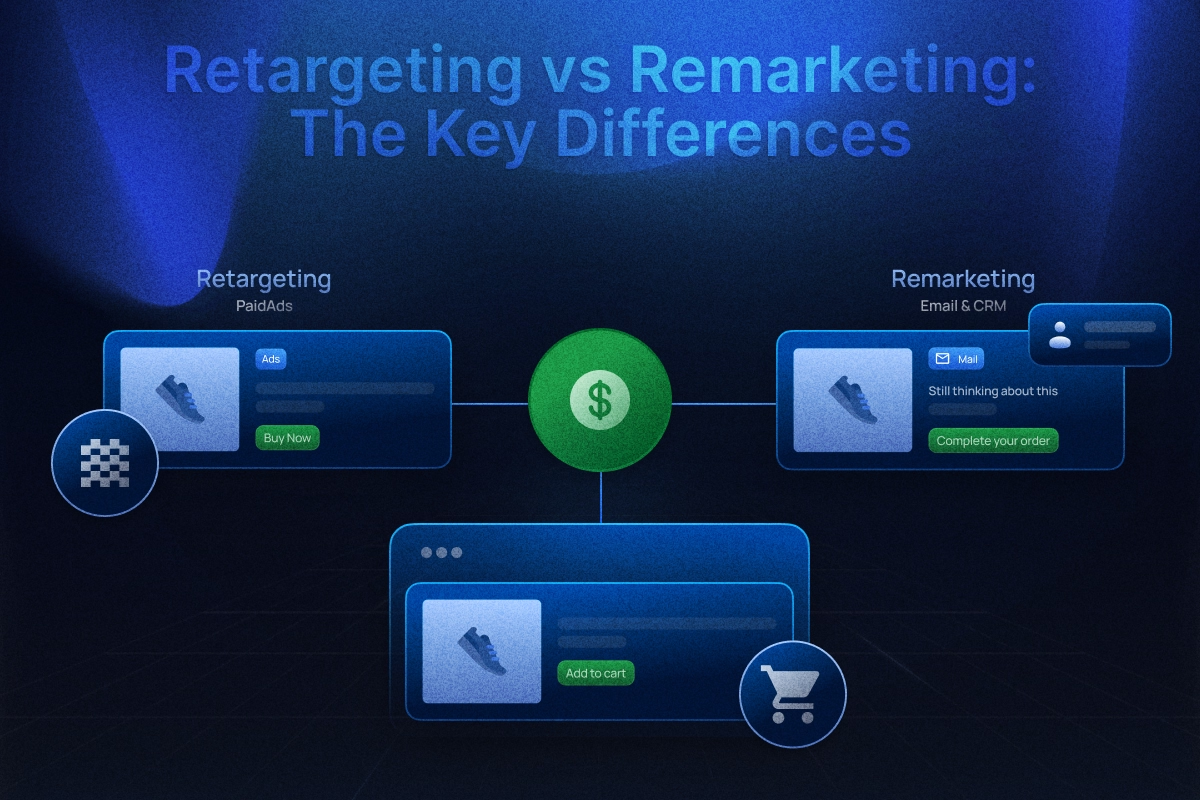
Retargeting vs Remarketing: The Difference Every Marketer Needs to Know
Stop treating Retargeting vs Remarketing as identical. Use a precise, high-impact framework to weaponize your data and maximize conversions.

Google Ads Cost: What You'll Really Pay (By Industry, Campaign Type, and Business Size)
Stop wasting budget on vague pricing. See exact 2026 Google ads cost benchmarks by industry, real CPC data, and the formula to reduce your ad spend.

Types of Facebook Ads: A Complete Guide to Every Format in 2026
See all types of Facebook ads, including current specs, placements, and objectives, plus a matching table to pick the right format for your goal.
ABM Stats: 2026 Benchmarks, ROI & Trends
From ROI to pipeline velocity, these 2026 ABM stats show exactly why account-based marketing dominates B2B growth.
.jpg)
The Real Price of Social Media Advertising: A Cost Guide for Advertisers
Find out what social media ads actually cost these days. Get to know about CPC, CPM, CPL, industry verticals, budget ranges, and ROAS across major platforms.
Bing Ads Cost in 2026: Everything You Need to Know
Stop wasting money on ad spend. See the 2026 Bing Ads cost benchmarks, real industry CPAs, and hidden ROI data you need to outperform competitors.

6 Best AI UGC Video Creators for TikTok Ads in 2026
Avoid expensive creators. Find the 6 best AI UGC video platforms for TikTok ads in 2026. Cut production costs, test faster, and scale your ROI.
TikTok Ads Statistics 2026: Benchmarks, Rates and Performance Data
With 8.7M businesses competing, discover key TikTok ads statistics and different benchmarks to beat the competition and refine your ad performance.