Bing Ads Cost in 2026: Everything You Need to Know

Microsoft Advertising (formerly Bing Ads) is a serious PPC channel for brands that want high-intent traffic and stronger cost efficiency. The Microsoft Search Network now reaches hundreds of millions of users globally across Bing, Yahoo, AOL, MSN, Outlook, Edge, etc.
For the right advertisers with the correct knowledge, it is a channel that delivers measurable ROI, lower CPCs, and less auction pressure than Google Ads. For businesses planning PPC budgets in 2026, the real question is how much Bing Ads cost, what ROI is realistic, and whether Microsoft Advertising fits their customer profile.
Quick Microsoft Advertising Stats for 2026
Understanding Microsoft Advertising and How It Works
Although many marketers still search for "Bing Ads," the platform is officially called Microsoft Advertising since its rebranding in 2019.
It is a pay-per-click (PPC) platform that allows businesses to display ads across Microsoft's search ecosystem and partner sites. This includes Bing, Yahoo, AOL, MSN, Microsoft Edge, Outlook, and other syndicated search partners.
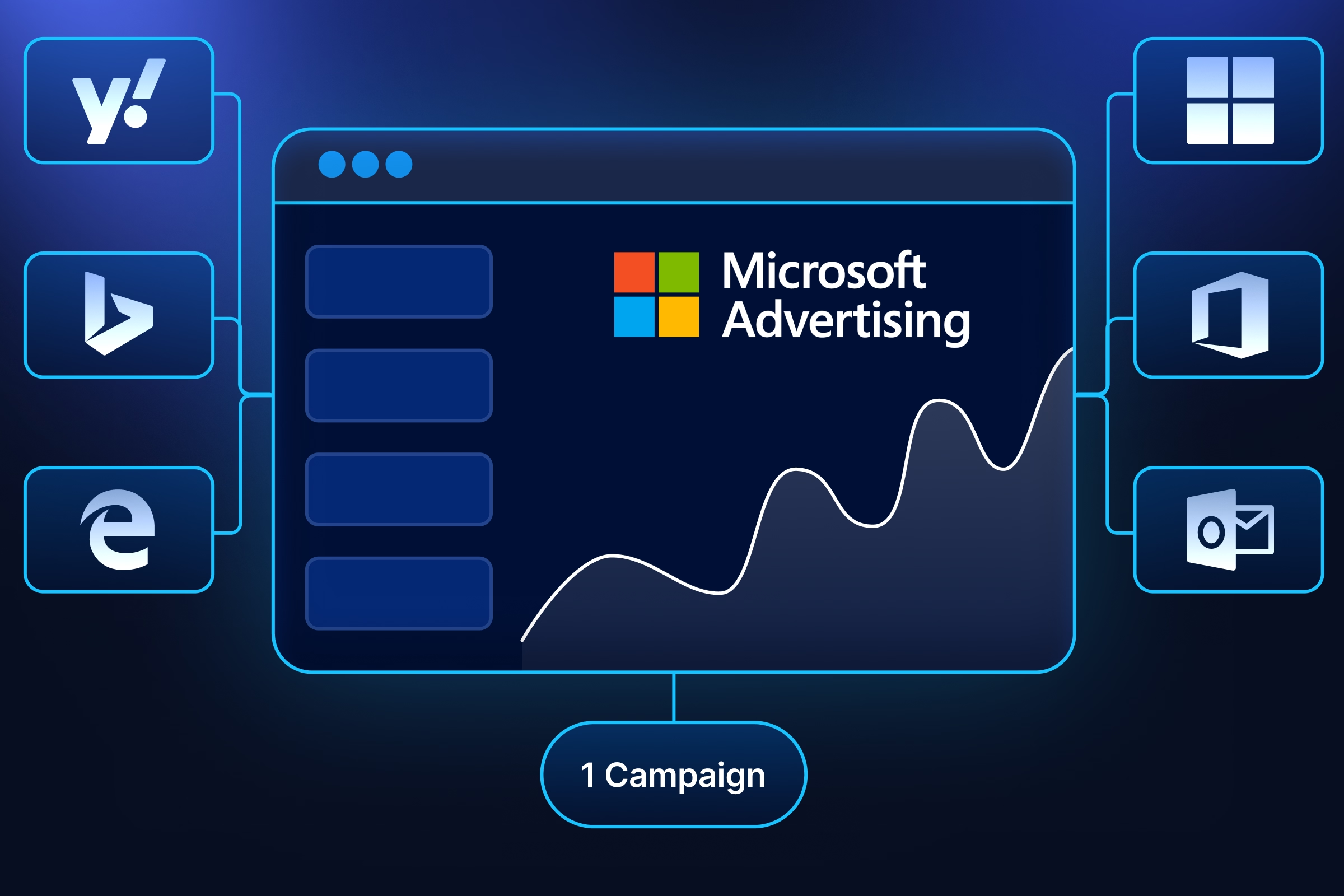
Unlike social platforms that interrupt browsing, Microsoft Ads targets active searchers, which is why search advertising consistently delivers some of the highest conversion rates in digital marketing.
Microsoft Search Network Reach in 2026
Ads can appear across Microsoft's full search network, not just Bing, giving advertisers reach well beyond Google alone.
The network audience for Bing Ads is older, more affluent, and more desktop-oriented than Google’s average audience. This is why Microsoft Advertising performs especially well for B2B brands, financial services, legal services, healthcare, home services, enterprise SaaS, high-ticket consumer products, etc.
The PPC Auction Model
Microsoft Advertising uses a PPC auction model similar to Google Ads, where advertisers bid on keywords.
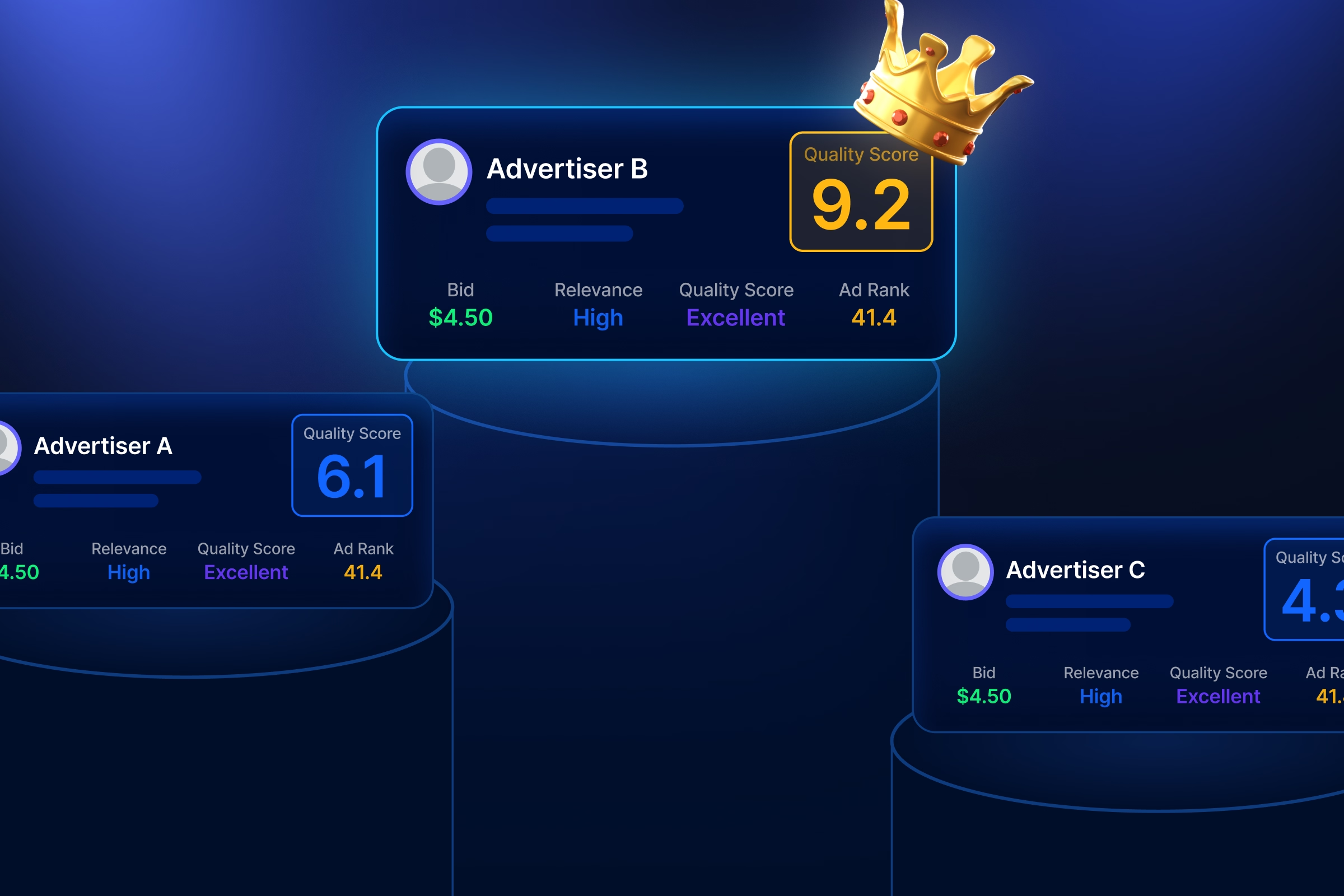
Each search triggers an auction evaluated on bid amount, keyword relevance, and ad quality.
The highest bidder does not automatically win. Microsoft's Quality Score framework, measuring expected CTR, ad relevance, and landing page experience, lets relevant advertisers outrank higher bidders at a lower cost per click.
Why Many Advertisers Start With Imported Google Campaigns
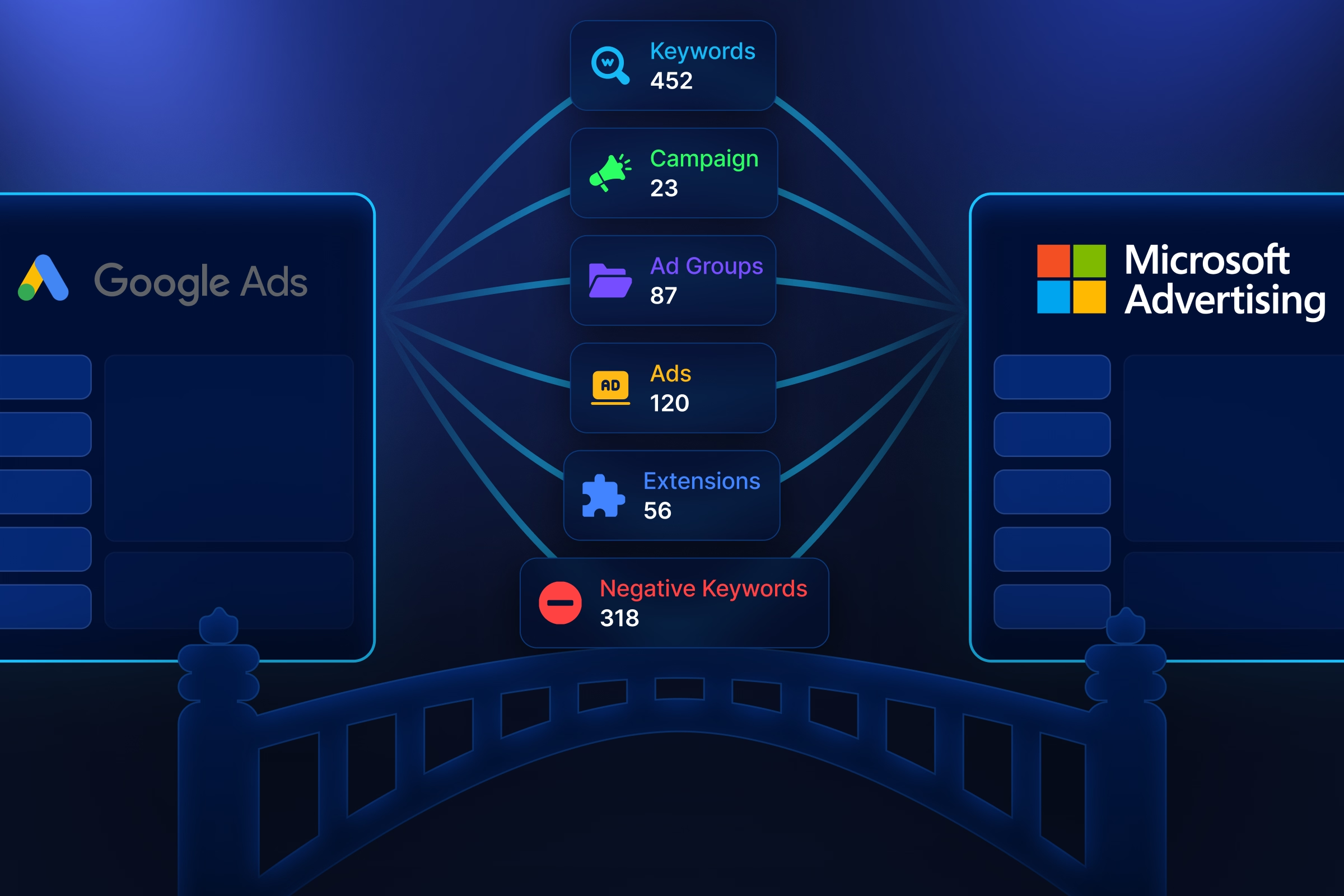
Microsoft Advertising offers a built-in Google Ads import feature. Most advertisers launch Bing campaigns by importing campaign structures, keywords, ad groups, extensions, negative keywords, and conversion tracking.
This dramatically reduces ad setup time and makes Microsoft Ads one of the easiest secondary PPC channels to activate for many.
Breaking Down Bing Ads Costs in 2026
Bing Ads costs vary by quality score, keyword competition, match type, audience targeting, bidding strategy, and search partner network. Industry benchmarks provide strong planning ranges.
Bing Ads Cost Calculation Example
Understanding Bing Ads costs becomes easier when you work through a simple cost calculation scenario.
Let’s suppose a business is targeting keywords with an average CPC of $2.83 and receives 1,000 clicks from its campaign:
- Average CPC = $2.83
- Total Clicks = 1,000
Total Ad Spend = CPC × Clicks = $2.83 × 1,000 = $2,830
Now assume the campaign converts at 6%.
Total Conversions = 1,000 × 6% = 60
To calculate CPA:
CPA = Total Ad Spend ÷ Total Conversions = $2,830 ÷ 60 = $47.17
In this example, spending $2,830 generates 60 conversions at a cost per acquisition of $47.17. This framework can help advertisers estimate budgets before launching a campaign and determine whether projected acquisition costs align with profitability goals.
Planning Bing Ads Budget: What You Should Know & Remember
Microsoft Advertising has no fixed minimum spend. In practice, meaningful optimization requires budgets well above the platform's technical minimum.
In practice, most PPC specialists recommend starting with at least $20-$50/day to gather statistically meaningful optimization data, especially for conversion-focused campaigns.
Recommended Starting Budgets by Business Type
The ideal Bing Ads budget depends on business model, sales cycle length, competition level, and customer acquisition goals. While Microsoft Advertising does not prescribe industry-specific spending levels, the following ranges are commonly recommended by PPC agencies and practitioners for initial testing and optimization.
Average Bing Ads CPC by Industry
CPC varies significantly by industry. High-value sectors with strong conversion intent command the highest auction prices:
Microsoft Ads CPC Benchmarks
Legal, insurance, SaaS, and financial services carry the highest CPCs due to high lead value and strong conversion intent. Travel, lifestyle, and local retail face significantly lower bidding pressure.
What Actually Impacts Bing Ads Pricing?
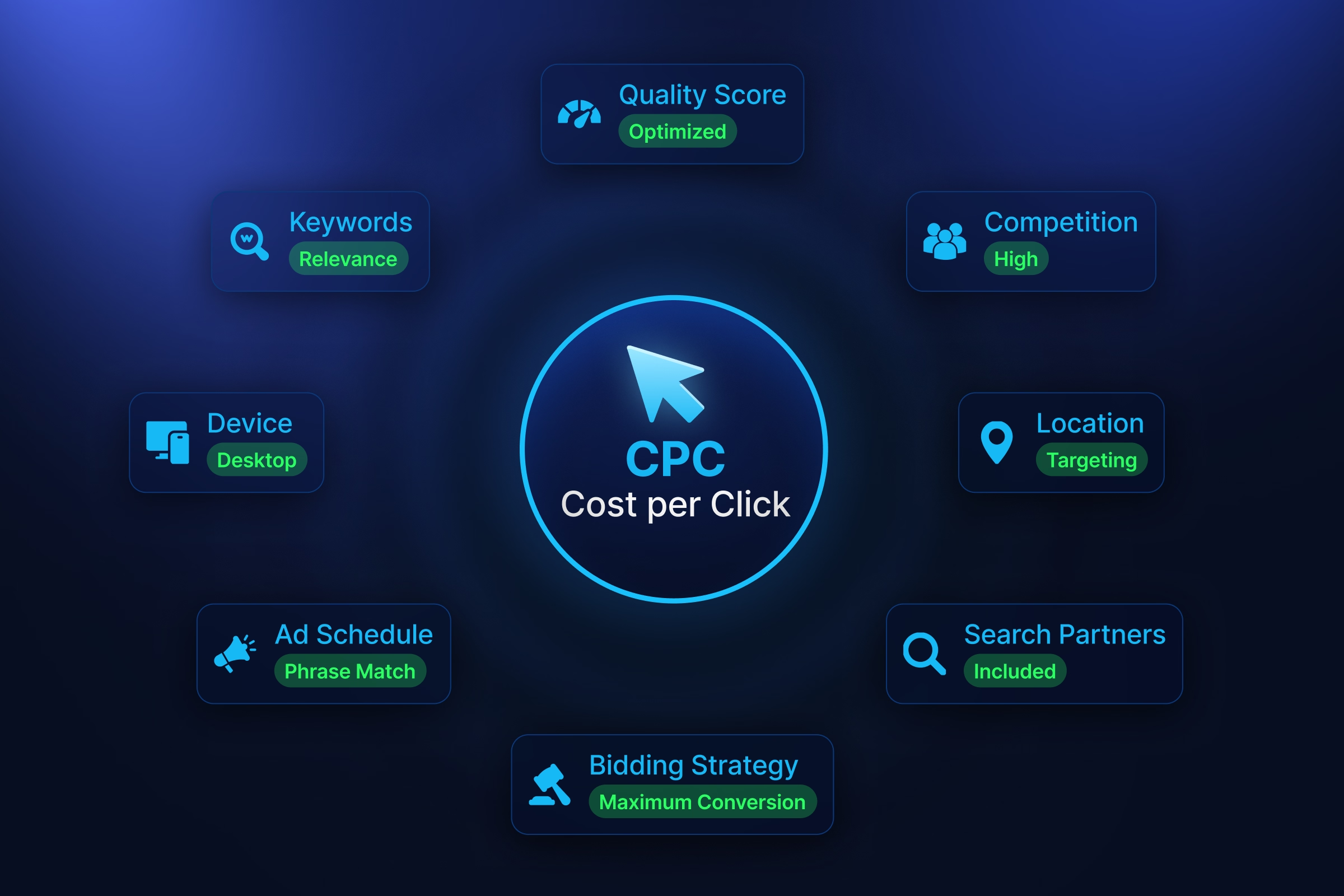
Eight variables directly control what you pay in Microsoft Advertising:
Quality Score (1-10): Scores of 7-10 lower CPC; scores of 1-3 raise it. Microsoft evaluates keyword relevance, expected CTR, ad quality, and landing page experience. Higher scores earn cheaper clicks.
Keyword Competition: High-value terms like "personal injury lawyer" and "business insurance" cost more due to aggressive bidding. Long-tail keywords reduce CPC while improving conversion quality. See how to spy on competitors' ads before setting bids.
Match Types: Exact match delivers the lowest waste. Phrase match offers moderate control. Broad matches carry the highest spend volatility. Tighter match types improve efficiency.
Device Targeting: Microsoft traffic skews heavily desktop. Granular bid adjustments per device let you concentrate on where conversions are highest.
Geographic Targeting: Large metro markets carry higher CPCs and more competition. Smaller regional markets typically offer lower acquisition costs. See our geographic segmentation guide for targeting precision.
Ad Scheduling (Dayparting): Running ads during peak conversion hours significantly improves CPA. Reduce overnight spend and increase bids during business hours.
Bidding Strategy: Microsoft supports six strategies: Manual CPC, Enhanced CPC, Maximize Clicks, Maximize Conversions, Target CPA, and Target ROAS. Automated strategies improve efficiency but can inflate CPCs if conversion tracking is weak.
Search Partner Network: Ads serve beyond Bing to Yahoo, AOL, and partner sites. Partner traffic often delivers lower CPCs but lower conversion quality and higher volume. Segment it separately for tighter cost control.
How to Reduce Bing Ads Costs Without Hurting Performance
Lowering CPCs should never come at the expense of lead quality. The goal is efficient acquisition, not just cheap clicks.
1. Improve Quality Score Before Raising Bids
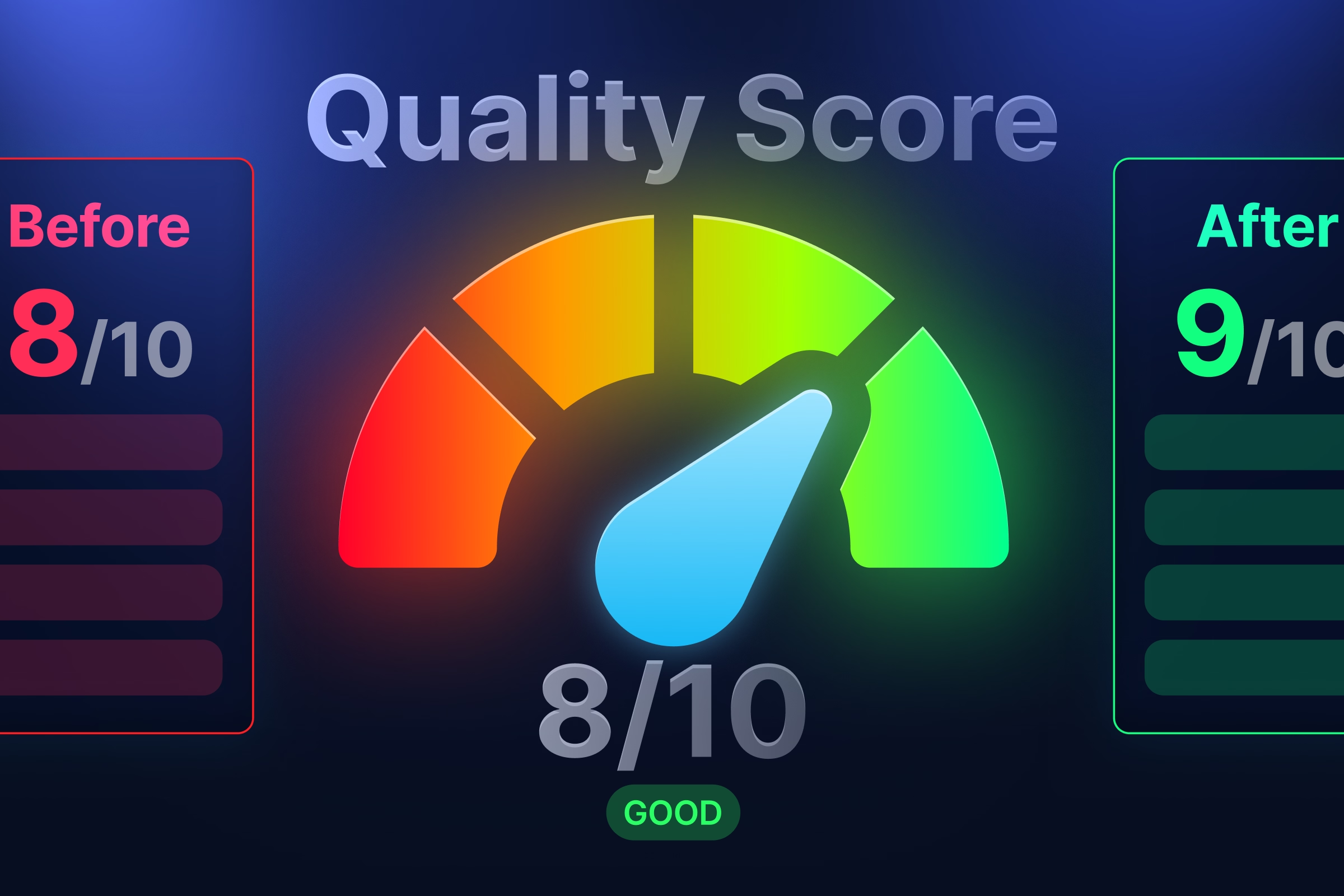
Quality Score is one of the biggest factors influencing CPC in Microsoft Advertising. Ads with higher scores often achieve better positions while paying less per click.
To improve Quality Score:
- Group closely related keywords into tightly themed ad groups.
- Include target keywords in headlines and descriptions.
- Match ad messaging to search intent.
- Improve landing page relevance and load speed.
- Continuously test ad variations to increase CTR.
2. Use Tighter Keyword Match Types
Broad match can quickly increase traffic, but it can also attract irrelevant clicks that drain your budget.For better cost control:
- Use Exact Match for your highest-converting keywords.
- Use Phrase Match to expand reach while maintaining relevance.
- Reserve Broad Match for testing and discovery campaigns.
This approach often reduces wasted spend and improves conversion rates simultaneously.
3. Build and Expand Negative Keyword Lists
Negative keywords prevent ads from showing for searches that are unlikely to convert. A few examples are: "free", "jobs", "salary", "training", "DIY".
Review search term reports regularly and add new negative keywords every month. Many advertisers discover that eliminating low-intent traffic is one of the fastest ways to reduce CPA.
4. Schedule Ads Around High-Converting Hours
Review performance data and identify peak conversion hours and low-performing periods. Increase bids during top-performing windows and reduce or pause during unprofitable periods.
5. Optimize Device Bid Adjustments
Microsoft Advertising offers granular device-level bidding controls.Monitor performance separately for desktop, mobile, tablet.
If desktop users consistently generate lower CPAs, increase desktop bid adjustments and reduce spend on weaker-performing devices.
6. Layer Audiences to Improve Efficiency
Audience targeting allows advertisers to focus budget on users most likely to convert. Consider layering:
- Remarketing audiences
- In-market audiences
- Customer Match lists
- LinkedIn company targeting
- LinkedIn industry targeting
- LinkedIn job-function targeting
This approach narrows targeting and often improves ROAS while reducing wasted impressions.
7. Test Ad Copy to Increase CTR
Higher CTRs can contribute to better Quality Scores and lower CPCs. Run ongoing A/B tests on: headlines, descriptions, calls-to-action and value propositions.
Even small CTR improvements can lower acquisition costs over time.
8. Align Landing Pages With Keyword Intent
A common mistake is sending all traffic to the same page. Instead:
- Create landing pages for specific keyword themes.
- Match page headlines to ad messaging.
- Use clear calls-to-action.
- Improve page speed and mobile usability.
The closer the landing page aligns with user intent, the more likely visitors are to convert.
9. Set Up UET Tracking Before Scaling
As previously mentioned, Universal Event Tracking (UET) is Microsoft Advertising's conversion tracking system. Without UET:
- CPA cannot be measured accurately.
- Automated bidding lacks conversion data.
- Budget optimization becomes guesswork.
Before increasing spend, verify that all key actions are tracked. This includes form submissions, phone calls, purchases, demo requests.
How to Build a Realistic Bing Ads Budget
One of the biggest mistakes advertisers make is underfunding campaigns. Small budgets often prevent algorithms from collecting enough conversion data.
A Practical Bing Ads Budget Formula
According to Microsoft Advertising’s website blogs, a common budgeting framework is:
Monthly Budget = Target CPA × Desired Monthly Conversions
Example:
- Target CPA = $50
- Goal = 40 leads/month
Required monthly budget = $2,000/month
For meaningful optimization data, most campaigns need at least 20-30 conversions monthly. Moreover, they need consistent daily traffic and stable bidding conditions.
Campaigns spending below $300-$500 monthly often struggle to exit learning phases.
Daily Budget vs Shared Budget
Microsoft Advertising allows campaign-level daily budgets as well as shared budgets across campaigns.
Daily budgets offer tighter spend control. Shared budgets improve flexibility for multi-campaign accounts. Advertisers need to choose wisely based on what they want the outcome to be.
Bing Ads vs Google Ads: Which Is More Effective?
The cost gap between Microsoft Ads and Google Ads is significant. For a full breakdown by industry, see our Google Ads benchmarks guide.
Bing Ads vs Google Ads: Dominance & Wins
Microsoft Ads performs especially well for B2B marketing, desktop-heavy audiences, high-income consumers, older demographics, lower-budget advertisers, and brands seeking lower CPCs.
On the other hand, Google still leads in overall search volume, mobile reach, YouTube integration, and international scale.
Microsoft does not disclose Bing's standalone valuation. But, according to Microsoft's FY2025 Annual Report, Search and News Advertising revenue grew from $12.306 billion in FY2024 to $13.878 billion in FY2025. This represents an impressive 12.8% (approximately) year-over-year growth.
Microsoft Advertising Audience and Targeting Advantages
Microsoft Advertising's most underrated advantage is its audience, not just its lower CPCs.
The network concentrates established professionals, decision-makers, and higher-income households, making it particularly effective for high-value products and services.
Microsoft Advertising Audience Characteristics
- Demographics: Predominantly aged 35-54. Large percentage of employed professionals and business decision-makers.
- Household Income: Significant share of users earn above average household income levels.
- Device Usage: Stronger desktop usage compared to mobile.
- B2B Concentration: Strong representation across business, technology, finance, healthcare, and professional services sectors.
- Purchase Intent: Higher propensity for online purchases and research-driven buying.
Why Microsoft Advertising Performs Well for B2B Marketing
Microsoft's ecosystem connects with professional environments through Windows, Edge, Outlook, and Microsoft 365. This creates a unique concentration of business professionals.
Consequently, B2B SaaS companies, enterprise tech providers, recruitment firms, and professional services often secure qualified leads here at lower acquisition costs than on consumer channels.
LinkedIn Profile Targeting
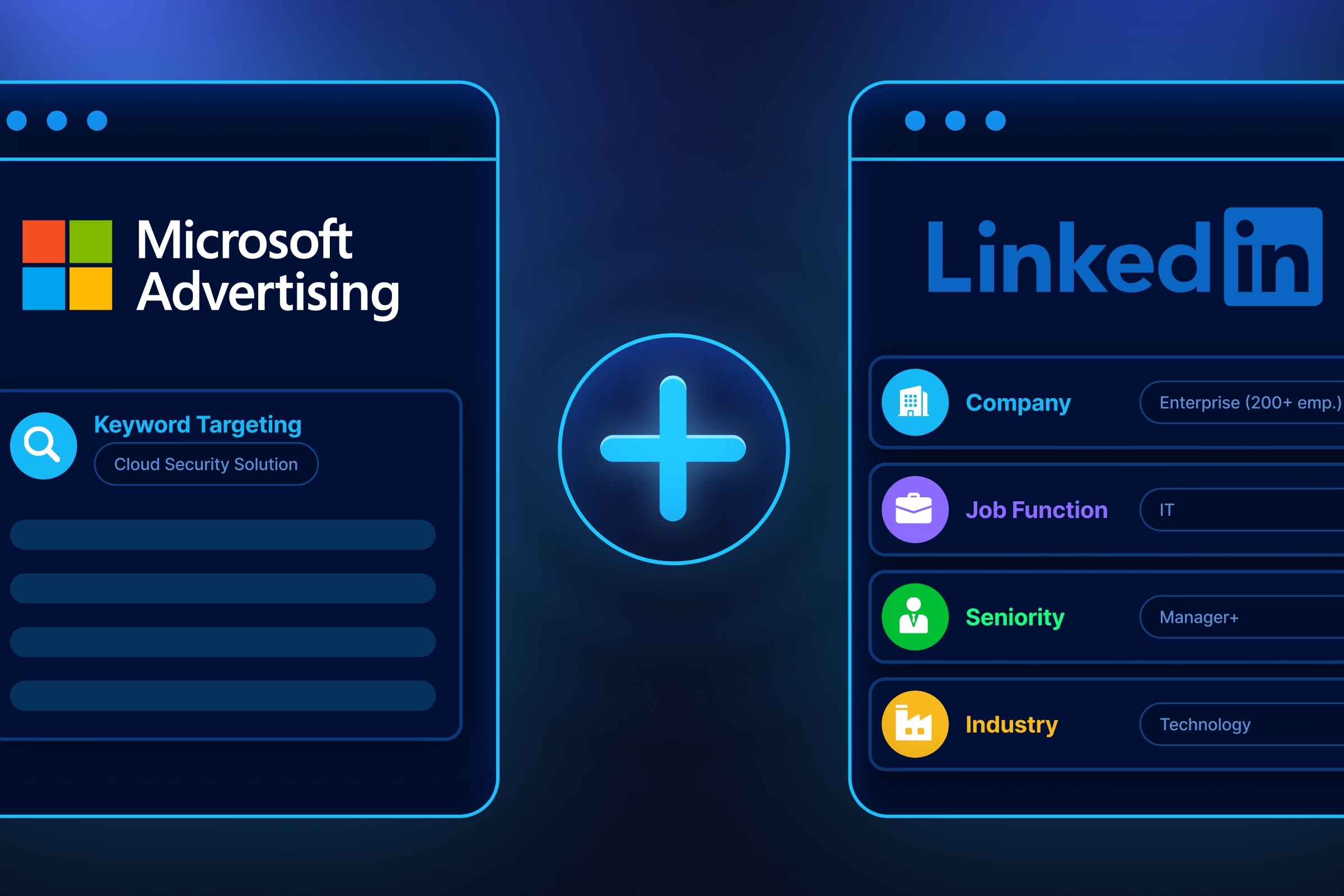
LinkedIn targeting is Microsoft Advertising's strongest differentiator over Google Ads. Advertisers can layer LinkedIn data onto search campaigns across three dimensions:
For example, a cybersecurity provider can bid aggressively on IT professionals, while a recruitment agency prioritizes specific industries. This targeted spending improves lead quality and reduces wasted clicks, making it highly valuable for B2B SaaS, enterprise tech, recruitment, and professional services.
Targeting Features That Improve Cost Efficiency
Microsoft Advertising offers several targeting controls that allow advertisers to allocate budgets more precisely:
Device targeting enables advertisers to increase or decrease bids separately for desktop, mobile, and tablet users. Businesses that generate stronger desktop conversion rates can shift more budget toward higher performing devices.
Geographic targeting allows campaigns to focus spending on specific cities, regions, or countries. This helps advertisers avoid paying for traffic in areas where they cannot serve customers profitably.
Ad Scheduling or dayparting lets advertisers adjust bids based on time of day or day of week. Many lead generation advertisers increase bids during business hours and reduce spend during low converting periods.
In-market audiences help advertisers reach users actively researching products and services within specific categories. Examples include home improvement, software, automotive, education, travel, and financial services. Combining search intent with in-market audience signals often improves conversion efficiency and audience relevance.
These targeting capabilities narrow the audience without sacrificing intent, allowing advertisers to reach high value users while controlling acquisition costs. Microsoft reports that its users possess higher average incomes and stronger purchase intent than users on competing platforms.
Bing Campaign Types and PPC Management Options
Microsoft Advertising offers several campaign formats designed for different business objectives. Choosing the right Bing campaign type often has a greater impact on performance than bidding strategy alone.
Microsoft Advertising Campaign Type: Which Is Right for You?
How Bing Paid Ads are Typically Set Up
Launching a Microsoft Advertising campaign is relatively straightforward, particularly for advertisers already familiar with Google Ads. Typical campaign setup flow is as following:
1. Create a Microsoft Advertising Account: Advertisers begin by creating an account and selecting billing preferences, business information, and campaign objectives.
2. Choose Your Campaign Goal: Microsoft allows advertisers to select goals or objectives such as website traffic, lead generation, product sales, phone calls, or app installs. Goal selection influences bidding recommendations and optimization settings.
3. Select a Campaign Type: The next step is choosing the appropriate campaign format based on business goals. Search campaigns remain the default choice for most advertisers, while eCommerce brands often start with Shopping campaigns.
4. Import Existing Google Ads Campaigns (Optional): Microsoft's Google Ads Import tool allows advertisers to transfer keywords, ad groups, extensions, conversion actions, and campaign settings directly into Microsoft Advertising. This can significantly reduce the setup time.
5. Configure Audience and Location Targeting: Advertisers can then define geographic targeting, device preferences, audience segments, scheduling settings, and optional LinkedIn targeting layers.
6. Set Bidding Strategy and Budget: Campaigns can use Manual CPC, Enhanced CPC, Maximize Clicks, Maximize Conversions, Target CPA, or Target ROAS bidding strategies depending on campaign goals.
7. Create Ads and Extensions: Ad copy, sitelinks, callouts, structured snippets, image assets, and other ad extensions are added to improve visibility and click-through rates.
8. Install Universal Event Tracking (UET): Before launching, advertisers should implement Microsoft's Universal Event Tracking tag to measure conversions, revenue, and user behaviour.
Why UET Tracking Matters:
Universal Event Tracking (UET) is Microsoft’s conversion tracking framework. It serves as the foundation of campaign optimization within Microsoft Advertising.
Without UET, advertisers cannot accurately measure leads, purchases, form submissions, or return on ad spend. Automated bidding strategies such as Target CPA and Target ROAS also become significantly less effective, because Microsoft's algorithms lack the conversion data required for optimization.
DIY vs Agency PPC Management
Once campaigns are live, the main decision is whether to manage Bing PPC internally or work with a specialist agency.
Typical Bing PPC Management Costs
Smaller businesses often begin with in-house management to reduce costs. Larger advertisers frequently partner with agencies to gain access to advanced bidding strategies, conversion tracking expertise, landing-page optimization, and scalable reporting systems.
For brands managing larger budgets across multiple platforms, working with a specialist like Uproas can provide the infrastructure needed to scale Microsoft Advertising campaigns more efficiently.
Are Bing Ads Worth It in 2026?
For many advertisers, the answer is yes.
Microsoft Advertising attracts high intent users with lower competition than Google Ads. Across many industries, advertisers secure lower CPCs, competitive CPAs, and access to unique professional audiences.
However, performance depends heavily on audience fit, industry, and campaign objectives. For industries with minimal Bing search volume, results may be limited.
When Bing Ads Deliver Strong ROI:
Before launching, benchmark your targets with our ROAS benchmarks guide.
These industries typically benefit from Microsoft's older demographic profile, stronger desktop usage, and lower auction pressure compared to Google.
When Bing Ads May Not Be the Best Fit:
Real-World Microsoft Advertising Results
- EaseUS Case Study, 2025
Microsoft Advertising case studies continue to demonstrate strong ROI potential. Software company EaseUS reported 22% more conversions, a 17% lower CPA, and 6% higher revenue after expanding beyond traditional Search campaigns using Microsoft's Performance Max format.
- ADAC Insurance (Microsoft Advertising Case Study, 2026)
In a 2026 Microsoft Advertising case study, ADAC Insurance achieved a 104% increase in conversions and an 89% increase in clicks while simultaneously reducing CPA by 4%, highlighting the platform's ability to scale without proportionally increasing acquisition costs.
- LinkedIn Profile Targeting Performance
Microsoft Advertising features LinkedIn Profile Targeting, which achieves up to 16% higher click through rates and 64% higher conversion rates than non targeted campaigns. This makes the platform a valuable secondary acquisition channel rather than a complete Google Ads replacement.
It usually performs best as a supplemental B2B lead generation source and diversification strategy, delivering incremental conversions at lower CPAs and making it an undervalued paid acquisition channel in 2026.
Microsoft’s Forecasting and Bid Estimation Tools
Before launching a campaign, use Microsoft Advertising's Keyword Planner and traffic forecasting tools to estimate:
- Expected CPC ranges
- Monthly click volume
- Search demand
- Traffic potential
- Estimated ad spend
These tools function similarly to a Bing price predictor and help advertisers model costs before launch or committing to a budget. Forecasts should not be treated as guarantees, but they do provide a useful starting point for budget planning and bid strategy development.
Final Thoughts on Bing Ads Costs in 2026
Microsoft Advertising continues to offer one of the strongest cost-to-intent ratios in PPC marketing.
The platform consistently delivers lower competition, cheaper CPCs, and strong conversion efficiency, especially for B2B advertisers.
The key is approaching it strategically: realistic budgets, strong targeting, quality landing pages, and disciplined optimization. For advertisers willing to invest beyond Google alone, Bing Ads remain one of the most undervalued PPC opportunities in 2026.


Latest blogs
Targeted Advertising: How It Works and How to Use It Well
Build a bulletproof targeted advertising strategy. Turn raw behavioral data into profitable segments using our step-by-step optimization plan.
Retargeting vs Remarketing: The Difference Every Marketer Needs to Know
Stop treating Retargeting vs Remarketing as identical. Use a precise, high-impact framework to weaponize your data and maximize conversions.

Google Ads Cost: What You'll Really Pay (By Industry, Campaign Type, and Business Size)
Stop wasting budget on vague pricing. See exact 2026 Google ads cost benchmarks by industry, real CPC data, and the formula to reduce your ad spend.

Types of Facebook Ads: A Complete Guide to Every Format in 2026
See all types of Facebook ads, including current specs, placements, and objectives, plus a matching table to pick the right format for your goal.
ABM Stats: 2026 Benchmarks, ROI & Trends
From ROI to pipeline velocity, these 2026 ABM stats show exactly why account-based marketing dominates B2B growth.
.jpg)
The Real Price of Social Media Advertising: A Cost Guide for Advertisers
Find out what social media ads actually cost these days. Get to know about CPC, CPM, CPL, industry verticals, budget ranges, and ROAS across major platforms.
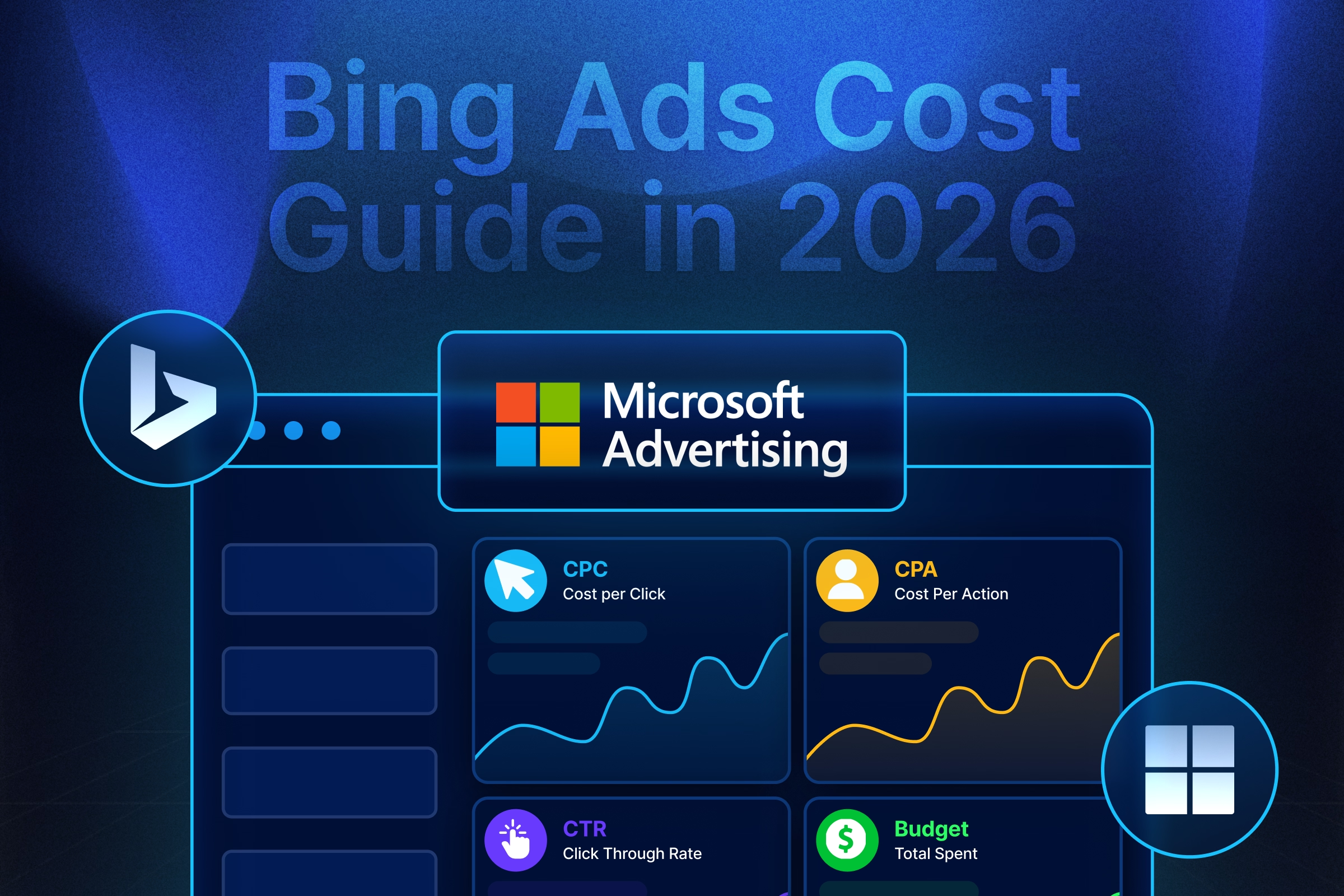
Bing Ads Cost in 2026: Everything You Need to Know
Stop wasting money on ad spend. See the 2026 Bing Ads cost benchmarks, real industry CPAs, and hidden ROI data you need to outperform competitors.

6 Best AI UGC Video Creators for TikTok Ads in 2026
Avoid expensive creators. Find the 6 best AI UGC video platforms for TikTok ads in 2026. Cut production costs, test faster, and scale your ROI.
TikTok Ads Statistics 2026: Benchmarks, Rates and Performance Data
With 8.7M businesses competing, discover key TikTok ads statistics and different benchmarks to beat the competition and refine your ad performance.