Retargeting vs Remarketing: The Difference Every Marketer Needs to Know

Over 70% of online shoppers abandon their carts before checkout. Baymard Institute data puts the global cart abandonment rate at 70.22%, a massive pool of recoverable revenue that retargeting and remarketing exist to win back.
While retargeting and remarketing both exist to win that revenue back, most marketers use the terms interchangeably. That confusion around retargeting vs remarketing is a costly mistake. Treat them as identical, and you end up serving the wrong message to the wrong audience on the wrong channel.
Knowing the real difference between remarketing and retargeting reshapes your entire reengagement strategy. It decides who you target, how you reach them, and what message they see. Get the distinction right and you turn wasted ad spend into a playbook that converts.
Numbers That Matter The Most
- Global online shopping cart abandonment stands at 70.22%.
- Retargeted visitors are 70% more likely to purchase than individuals who are not retargeted.
- Abandoned cart email flows average a 50.5% open rate versus 31% for standard campaigns.
- Email marketing yields an average ROI of $36 for every $1 spent.
- Retargeting ads hit a 0.7% click through rate, ten times higher than standard display ads.
- Google Customer Match signals lift conversions by 5.3% on active campaigns.
- Abandoned cart emails generate $3.65 per recipient which beats the next best automated flow by 37.74%.
Two Different Tactics: Meaning of Retargeting and Remarketing
You will see these terms interchangeably used in agency decks, marketing blogs, and even inside major ad dashboards. But treating them as identical misses the point entirely.
Each tactic relies on completely different user data, communication channels, and financial models. Here’s how retargeting and remarketing works:
Retargeting
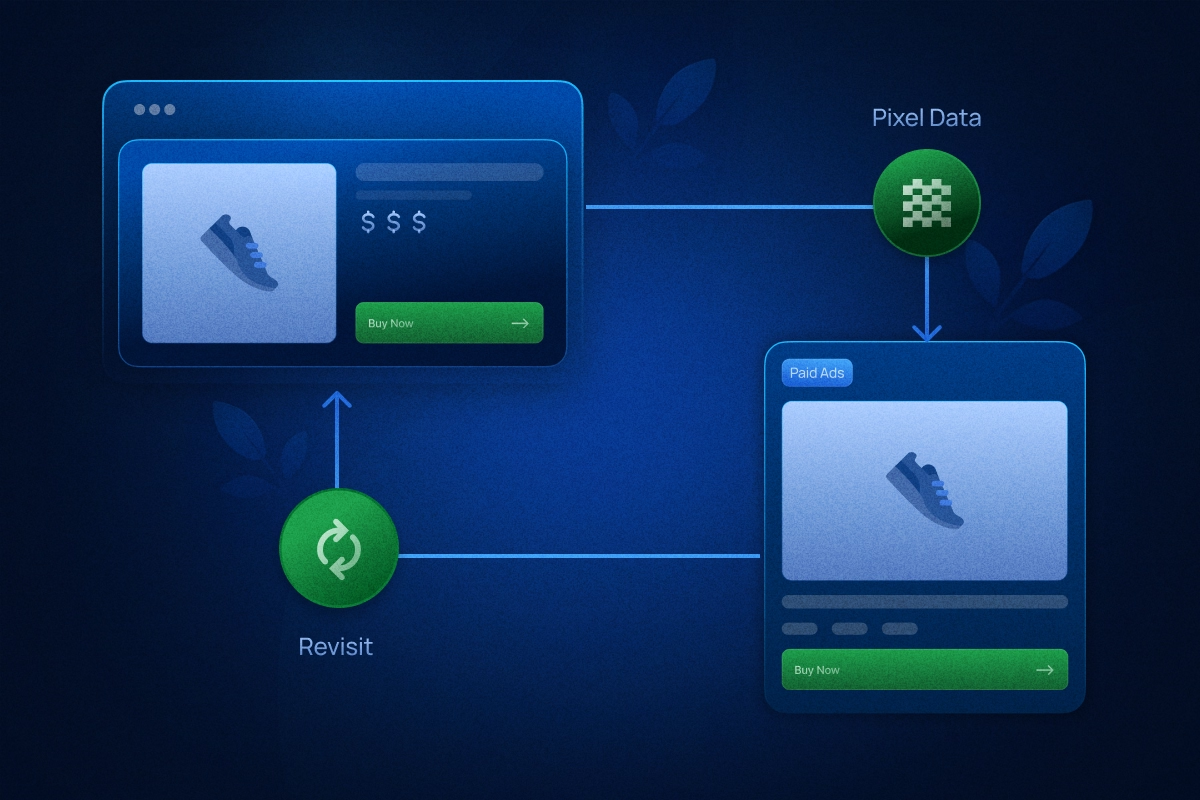
Retargeting uses paid ad placements to chase people who swung by your site and left without converting. The moment a stranger lands on a product page or drops something into a cart, tracking snippets like a Meta Pixel or Google Tag drop a cookie into their browser. That signal alerts third-party ad networks, which then serve your ads to that person as they browse elsewhere online.
The main thing to remember here is that the visitor stays completely unknown to you. You do not have their name, email address, or phone number. You only know what items or pages they clicked on while visiting your website.
- Primary Channels: Meta Ads (Facebook and Instagram), Google Display ads, YouTube, banner ads across the web, and paid search ads (RLSA).
- How It Works: A shopper looks at a pair of boots on your online store, gets distracted, and leaves. An hour later, an ad showing those exact boots pops up while they scroll through Instagram.
- Cost Structure: Pay-per-click (PPC) or pay-per-view (CPM). You have to pay ad platforms money every single time you want to show your ads to these users.
Remarketing
Remarketing focuses on reaching out directly to people who have already given you their contact info. This includes past customers, newsletter subscribers, or people with store accounts. Because you already have their information stored in your own system, you do not have to pay an ad company every time you want to send them a message.
Identity is the core differentiator here. You know exactly who you are messaging on the receiving end. That clarity allows you to send personal messages based on what they previously bought, their account status, or their reward points.
- Primary Channels: Automated emails (using tools like Klaviyo, Mailchimp, or HubSpot), text messages (SMS), WhatsApp, phone push notifications, and physical mailers.
- How It Works: A logged-in customer puts items in their cart and closes the tab. Two hours later, your software automatically emails them a reminder, followed by a quick text message offering a small discount to finish the purchase.
- Cost Structure: Mostly flat monthly software fees. Sending out automated emails or messages costs almost nothing extra per message sent.
Where the confusion comes from
Google Ads officially labels its pixel-based ad targeting as "remarketing" inside the platform, even though the industry widely calls this retargeting. Microsoft Advertising and AdRoll do the same. The industry has never agreed on a standard term, and the platforms have not helped.
In short, retargeting means paid ads driven by anonymous behavioral data, while remarketing refers to direct re-engagement through owned channels using real contact data.
Don’t want the extra hassle while launching ads? Get Google agency accounts and stop worrying about issues.
Retargeting vs Remarketing: A Closer Look At Their Differences
The Data Source Gap
Pixel data only tracks actions like viewing a product or leaving a checkout. It provides a useful but anonymous snapshot. You cannot see past purchase history or exclude people who already bought.
CRM data reveals who the person actually is. Research shows that first party data lifts conversion rates by 73% and boosts ROI by 72% over third party signals. Currently 78% of marketers rank first party data as their most valuable asset.
Why Timing Changes the Outcome
Retargeting is inherently delayed. A user visits, leaves, and sometime later encounters your ad while browsing elsewhere. You have no control over the gap.
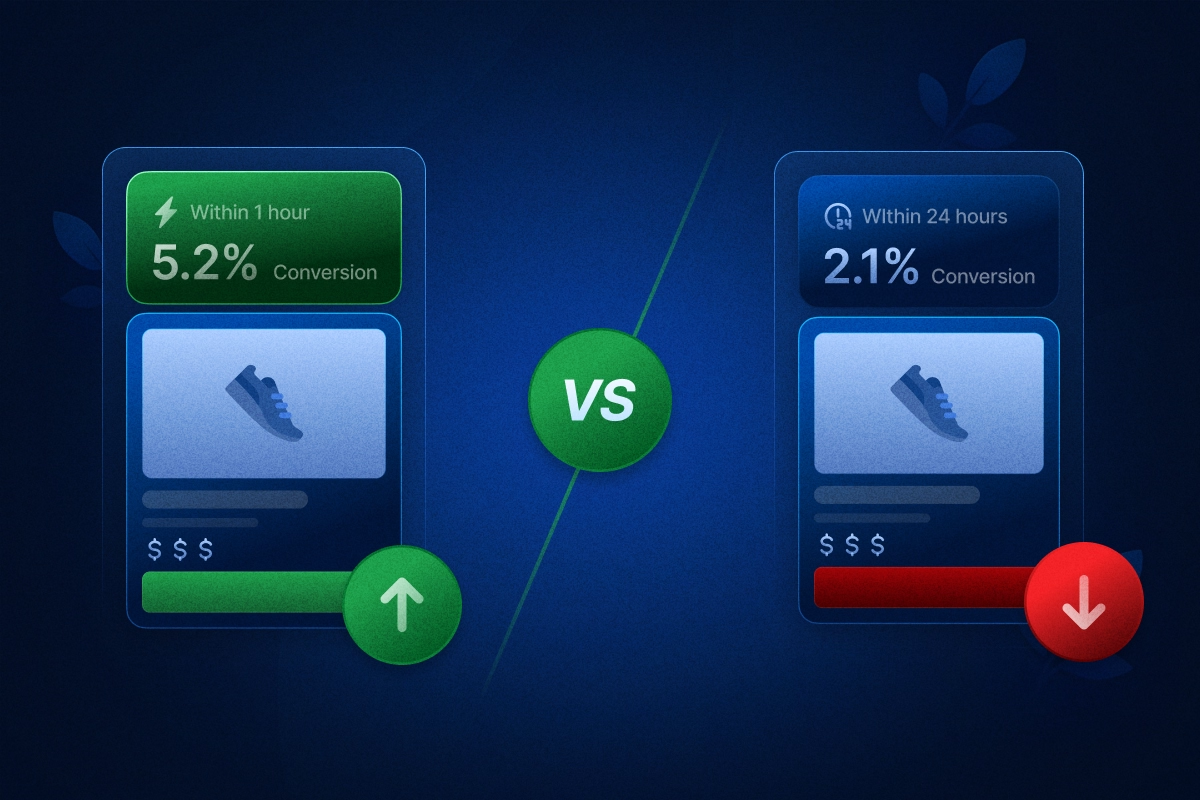
Remarketing works best when it is fast. Abandoned cart emails sent within one hour convert at 5.2%. Waiting 24 hours drops that conversion rate to 2.1%. Industry data shows that this single day of delay causes a 60% drop in recovered sales. (ZerocartAI)
What Happens After Someone Leaves Your Site: How Retargeting Actually Works
Many marketers know retargeting works, but few understand its mechanics. This gap becomes costly as technology changes fast.
The Pixel: Where Retargeting Begins
A retargeting pixel tracks site actions and places a cookie on the user browser. Ad platforms use this cookie to recognize the visitor later and serve targeted ads. The individual remains completely anonymous throughout the process.
Want to learn how ads work? Check our comparison between Bing vs Google to find which platform is better.
Conversion APIs: Why Pixel-Only Is No Longer Enough
Traditional pixels now have a massive blind spot. Privacy rules, ad blockers, and browser restrictions mean over 50% of web conversions go untracked.
Server side tracking fixes this by sending data directly from your server to the ad network. Using tools like Meta Conversion API or Google Enhanced Conversions alongside your pixel boosts tracked conversions to 98% compared to just 80% with a pixel alone.
How Behavioural Segments Get Built
Meta builds Custom Audiences using website pixel data and in app actions like video views that bypass cookie tracking.
Google creates remarketing lists based on user search history, display network traffic, and YouTube engagement. Programmatic platforms combine website data and privacy safe data clean rooms to match target audiences.
Dynamic Retargeting
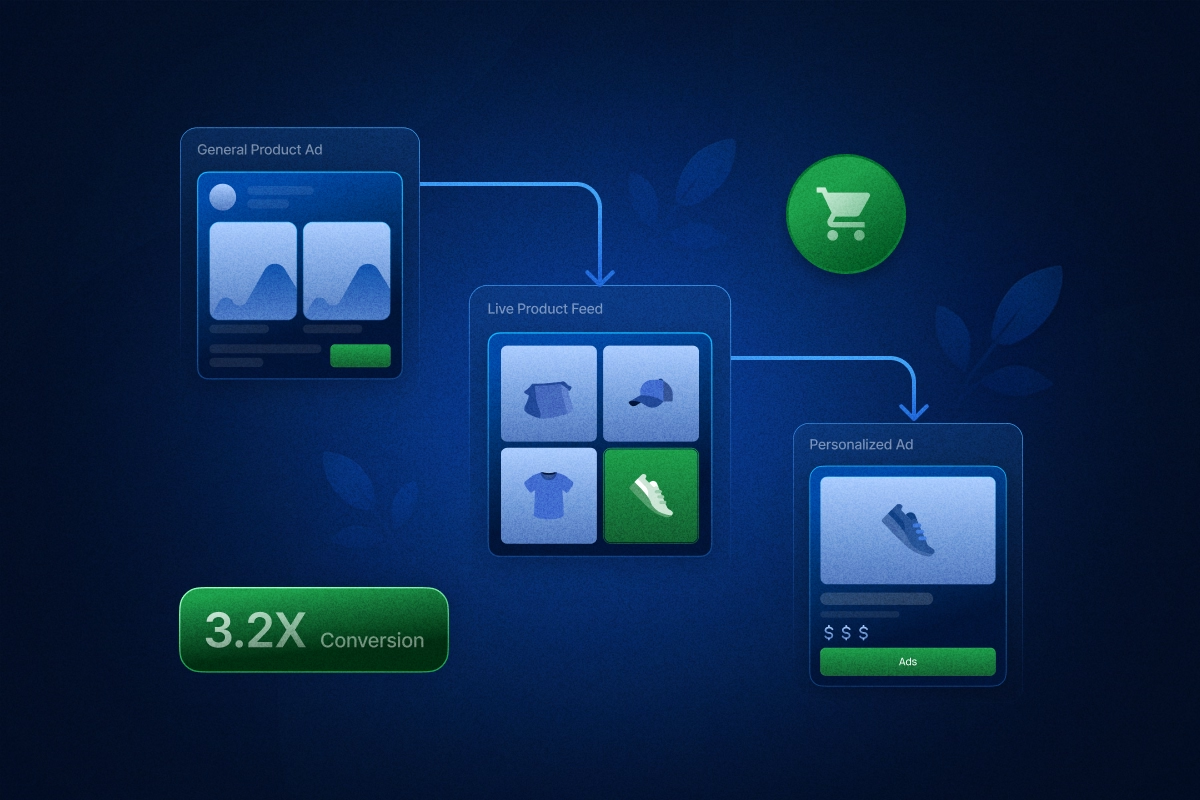
Standard retargeting displays generic ads. Dynamic retargeting uses a live product feed to automatically show the exact items a visitor viewed. This personalized approach delivers 3 times higher conversion rates than standard display retargeting.
For a deeper breakdown of when each format wins, see this comparison of static vs dynamic ads.
The Cookie Situation Right Now
Google cancelled its plan to phase out third party cookies and shut down its Privacy Sandbox initiative in late 2025. Third party cookies still work in Chrome, which accounts for ~65% of global web traffic, but Safari and Firefox block them by default. This fragmentation makes server side tracking and first party data critical.
How Remarketing Turns Data Into Sales
Retargeting tracks anonymous website actions while remarketing uses direct first party data. This data lets you build precise customer segments across multiple channels. You can also upload these lists to Google and Meta to scale your campaigns with paid ads.
Collecting and Activating First-Party Data
First party data comes from direct actions like email sign ups and purchases. Segmenting this audience by their behavior helps you deliver highly relevant messages.
Emails: Automated email flows generate 37% of email sales from just 2% of total send volume. They deliver 52% higher open rates and 2,361% higher conversion rates than manual campaigns. (Shopify)
SMS: Automated flows generate 147% higher click rates and 118% higher conversion rates compared to manual campaign texts.
On-site triggered messaging: Exit-intent pop-ups and cart persistence banners operate in real time, intercepting the session before the user leaves.
Customer Match: Where CRM Data Enters Paid Media
Uploading customer lists to Google and Meta lets you target known users with paid ads without using a pixel. This approach connects your remarketing data with your retargeting campaigns.
Advertisers typically match 29%-62% of uploaded customer records. High data quality maximizes this match rate to deliver 23% higher conversion rates. To run these campaigns, Google requires a minimum audience size of 100 users.
Email Sequences That Drive Most Remarketing Revenue
Let’s have a look at the sequences that help drive the most revenue-
High-intent automations drive 87% of all automated order revenue from a small fraction of total sends. A four-email win-back escalation achieves approximately 14.7% cumulative reactivation.
What These Plays Look Like in Practice
Amazon: Amazon runs browse abandonment emails and CRM-triggered replenishment reminders.
Netflix: Netflix sends win-back sequences with specific show recommendations rather than generic 'come back' messages.
Spotify: Spotify re-engages dormant users through listening-pattern recommendations and its annual Wrapped campaign.
Audible: Audible triggers 'your next listen' emails based on genre history and reading speed, framed as a recommendation rather than a sales pitch."
5 Ways Retargeting Gets Results
Not all retargeting signals carry the same weight. On-site signals (product views, cart adds, checkout starts) represent direct purchase intent.
Meanwhile, off-site signals (video views, social engagement) represent softer interest. The highest-performing use cases work primarily with on-site signals.
Here are five use cases:
- Cart Abandonment Display Ads
Cart abandoners show the highest buying intent. Retargeting this audience cuts acquisition costs by 60% and recovers 7%-12% of lost revenue. Display ads shown within 24 hours achieve click through rates over 1.2%.
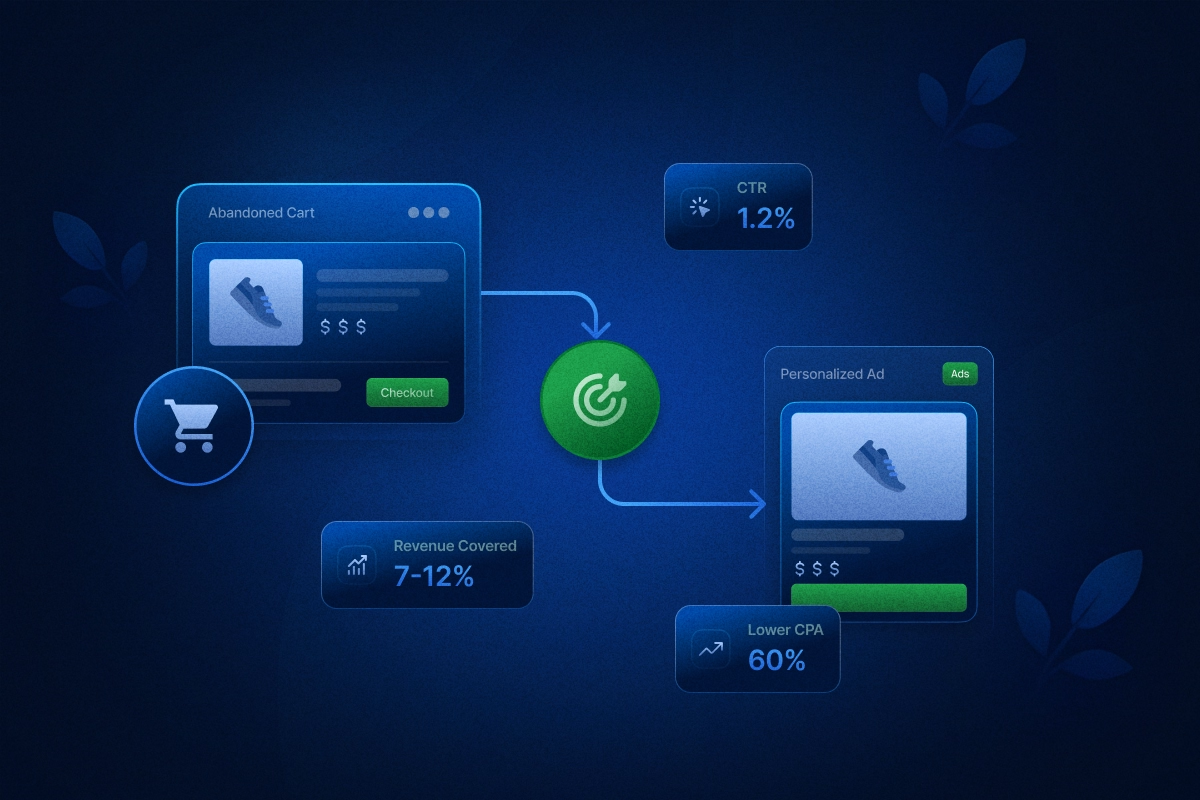
Example: Brands like ASOS capitalize on this by showing the exact abandoned item within hours without needing a discount.
- Dynamic Product Ads
Dynamic ads automatically display the exact product a user viewed by pulling data from a live catalog, which eliminates manual creative setup. This approach delivers 3 to 7 times higher ROI than static banner campaigns and increases Facebook conversions by up to 150%.
Example: Amazon uses its DSP network to show users the exact items they browsed on third party websites.
- Browse Abandonment Targeting
Browse abandonment targets users who viewed products but did not add them to the cart. While intent is lower, this audience is much larger. Segmenting visitors by specific product views or time spent on the page increases CTR by over 70% compared to generic ads.
- Cross-Device Retargeting
Over 60% of adults use multiple devices every day. Cross device retargeting ensures a user who views a product on a phone sees your ad on the device where they actually buy. By connecting sessions through logged in profiles or data modeling, this method increases your ad reach by 25–35%.

- Social Retargeting via Facebook and Instagram
Social retargeting uses website pixel data and platform engagement like video views. It is the most popular retargeting channel, used by 77% of marketers. Facebook retargeting achieves click through rates from 0.9-1.5%, while Instagram delivers up to 70% higher conversion rates than cold audiences. Meta Advantage+ campaigns also reduce conversion costs by 9%.
Want unrestricted and unlimited ads? Get Facebook agency accounts from Uproas and launch care-free
Retargeting Use Case Performance Summary
Let’s have a quick look at the performance summary-
7 Remarketing Tactics Worth Running
These strategies succeed because they target known contacts during moments of clear intent with relevant messages. The technical mechanism matters just as much as the marketing channel. Here is how each process works.
1. Cart Abandonment Email Sequences
But their email is on file, either from a previous purchase or because they entered it before abandoning. That triggers an automated sequence matching the exact products left behind. A standard three-email sequence runs within 1-4 hours (reminder, no discount), at 24-48 hours (benefit reinforcement), and at 72-76 hours (incentive if needed).
Cart abandonment emails achieve a 45%-50% open rate, around a 21% CTR, and 18% conversion rate. This is the highest conversion rate of any standard email type. Revenue per recipient averages $5.81. (Stripo)
2. Win-Back Campaigns for Lapsed Customers
Win-back campaigns target contacts past a defined inactivity threshold (typically 60–90 days) with an escalating sequence.
The sequence is: soft re-engagement → specific incentive → last-chance message before suppression.
Suppression matters. Removing unresponsive contacts before they damage your sender reputation is part of the strategy.
A four-email escalation achieves approximately 14.7% cumulative reactivation. Win-back also carries zero acquisition cost, since you're re-engaging someone you already paid to acquire.
3. Loyalty Re-engagement
This strategy targets inactive loyalty members, customers with expiring points, or users at risk of losing their tier status. It creates urgency around earned rewards, like reminding a member that their 400 points expire in seven days. Because these recipients already showed brand commitment by joining the program, these campaigns consistently outperform cold promotions.
4. Upsell and Cross-Sell Campaigns
Post purchase sequences send matching recommendations to recent buyers. Email my cart flows trigger when a shopper saves their cart and leaves. This specific flow converts at 24.58%, which is one of the highest rates in ecommerce.
5. Subscription Renewal Nudges
Subscription brands use renewal emails to target upcoming expirations and recent cancellations. Warning users about losing access works best. These automated messages achieve 50%-60% open rates, easily beating standard marketing emails.
6. Back-in-Stock and Price-Drop Alerts
Shoppers show clear interest by joining waitlists or requesting notifications. You trigger these emails when items restock or prices drop. Back in stock messages convert at 6.46%, the highest rate of any automated workflow. In consumer electronics, these alerts convert as high as 45.87%.
7. Pre-Submit Email Capture
Modern email systems use JavaScript to capture email addresses as users type them, before form submission. This allows you to message the 55% of users who abandon forms before completing an opt in.
Sending a link back to their saved session recovers 20% of these lost users. Because this tracking operates in a GDPR legal grey area, verify your local compliance laws before implementation.
Remarketing Playbook Summary
How Google and Meta Handle Re-engagement: A Platform-Level Breakdown
Most campaigns running retargeting or remarketing today live on Google, Meta, or both. Here is exactly how each platform works:
Remarketing Lists / Your Data Segments
The Google tag tracks website visitors to build custom audience lists. You can show YouTube, search, and shopping ads to these groups. Lists last 30 days by default, but you can extend membership up to 540 days.
Remarketing Lists for Search Ads (RLSA)
This tool only shows search ads when a past site visitor searches for your target keywords.
The feature uses two modes. Observation runs ads normally while gathering performance data. Targeting restricts ad delivery to list members only. You can adjust bids from -90% to +900%.
Bid higher on broad keywords for past visitors and cart abandoners. Customize your ad copy for returning users, and exclude past buyers entirely. This strategy increases conversion rates by 280% and lowers costs by 45%.
Running this well takes stable, well-funded ad accounts, which is where Google Agency Ad Accounts come in.
Customer Match
Customer Match lets you upload customer data to target known contacts across Google platforms. Match rates range from 29-62% and deliver an average 5.3% lift in conversions.
Dynamic Remarketing
Dynamic Remarketing connects your product feed to the Google tag. This automatically populates ads with the exact items a user viewed.
Meta: Four Tools
Meta Pixel
The Meta Pixel tracks website actions like page views and purchases to build Custom Audiences. However, privacy restrictions and ad blockers create a massive tracking blind spot. Standard pixel setups only capture 70-80% of true conversions.
Conversions API (CAPI)
Meta's Conversions API works the same way, sending event data server-side to recover the conversions Pixel-only tracking misses. Per Meta's 2025 Ads Transparency report, over 50% of browser-side conversions go untracked without it.
.avif)
Custom Audiences
Custom Audiences group users based on website history, customer lists, or social media engagement. Social engagement tracking is highly effective because it stays on the platform and does not rely on browser cookies.
These warm audiences convert at 15.8%, which easily beats cold targeting. Using Custom Audiences is also the only remaining way to exclude specific users from your campaigns. (Adamigo)
However, scaling these campaigns without spend limits is easier with Meta Agency Ad Accounts.
Lookalike Audiences
It finds new users who mirror your existing customer lists. A tight 1% lookalike audience is the most precise and delivers the lowest acquisition costs. (Coinis)
For the best results, upload your customer lists into Advantage+ campaigns as audience signals to let Meta automate and optimize the targeting.
Google vs Meta: Side by Side
Why Personalization Is the Biggest Performance Lever in Both Tactics
Every campaign comes down to one question: does the message feel personal, or does it feel like a generic ad blasted to everyone? The answer separates campaigns that pay for themselves from campaigns that drain the budget.
What Personalized Retargeting Actually Means
Personalized retargeting tracks website behavior like product views and price preferences to deliver tailored ads instead of generic brand messages. This goes far beyond just using a customer name. The strategy automates specific product matches while customizing audience segments, bids, and ad copy.
The Performance Gap
Segmented retargeting campaigns generate 76% higher click-through rates and 147% more conversions than generic retargeting. Showing users the exact product they viewed drives three times more engagement than a generic brand ad.
Personalisation on the Remarketing Side: Segmentation Logic
Sending the same remarketing message to your entire list fails because a lapsed buyer needs a different incentive than a frequent customer. Effective remarketing segments audiences by three core factors: recency, purchase history, and lifecycle stage.
Some brands add a fourth layer here too, using geographic segmentation to tailor offers by region on top of behavior.
Advanced segmentation drives a 760% revenue increase compared to full list blasting. Personalized subject lines boost open rates by 20-26%.
Brands earning over 10 million dollars use an average of 133.97 audience segments, while brands under $100k use just 13.36. This tracking gap directly explains the revenue gap.
Retargeting or Remarketing: Which One Should You Actually Use?
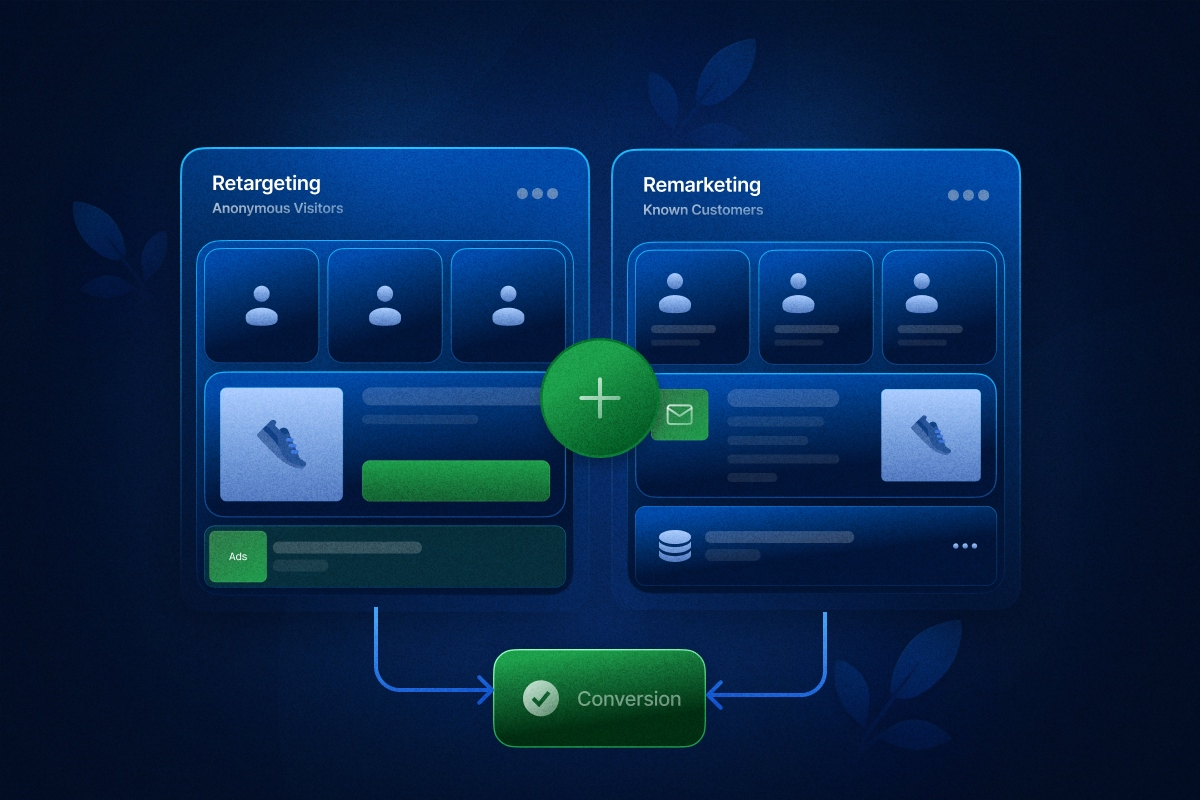
These tactics do not compete for the same budget because they target different audiences, channels, and funnel stages. Do not choose between them. Success comes from knowing when to use each tactic or how to combine them for better results.
Where Each Fits in the Funnel
Here's where retargeting and remarketing are the right fit, individually or together:
Why the Two Belong Together
Retargeting catches everyone who left your site without giving you their email. Remarketing re-engages everyone whose email you have. Together they cover the full post-visit audience. Separately, each has a blind spot.
Companies running both in coordination achieve 48% higher conversion rates and 23% higher customer lifetime value than single-channel advertisers. (Searchlab)
Combining email and paid ads improves repeat purchases by 33%. Omnichannel shoppers carry 30% higher lifetime value than single-channel buyers.
The Cost Efficiency Argument
Owned channel remarketing lowers conversion costs. Email returns $36 for every $1 spent, and automated flows cost virtually nothing to run. Use remarketing for known contacts and retargeting to reach anonymous visitors.
To see how that return compares across ad types, check these ROAS benchmarks.
Decision Matrix: What Should You Be Running?
Use this to identify your situation and what it calls for:
Not sure which one fits your funnel? Try Uproas agency accounts to figure it out.
7 Mistakes That Quietly Cost You Money
Certain common mistakes quietly drain campaign budgets, often unnoticed until someone checks the numbers.
- Letting Frequency Run Without a Cap
Meta found that CTR drops 45% after four views. In one D2C case, acquisition costs rose from $45 to $82 as frequency increased from 2.4 to 5.8, reaching $147 at seven or more views.
Retargeting audiences usually fatigue after 5-7 weekly impressions. A 15-20% drop in CTR over seven days signals that you must rotate creatives or limit ad frequency.
- Targeting Weak Signals as High-Intent Audiences
A quick homepage bounce shows far less intent than a shopping cart addition. Group your audiences by interest level. Prioritize cart abandoners first, place product page viewers in the middle, and keep generic visitors last or exclude them entirely.
- Ignoring Exclusion Lists
Remove past buyers from acquisition campaigns immediately to stop paying for ads to people who already bought. Fewer than one in four advertisers use exclusion lists. A strong exclusion strategy boosts ROAS by 20-40% and cuts wasted spend by 30-50%.
Refresh lists monthly to catch new buyers. Meta removed interest based exclusions, so Custom Audience exclusions are your only option.
- Batch-and-Blasting the Email List
Blasting your entire email list treats recent buyers the same as inactive subscribers. This practice lowers conversions and damages your sender reputation, which hurts future inbox delivery. Advanced segmentation avoids these issues and generates 760% more revenue than full list blasting.
- Running Generic Creative Instead of Matched Messaging
Showing a generic brand ad to someone who spent four minutes viewing a specific product wastes the intent data you've already captured. Product-matched retargeting delivers 76% higher CTR and 147% more conversions than generic campaigns. Every major ad platform now supports this type of personalization.
- Misattributing Results
Last click attribution undervalues retargeting by only crediting the final click before a conversion. Retargeting ads drive a 1,046% increase in branded search volume. Users often see an ad, search for your brand later, and convert. Last click credits the search click alone, making retargeting look ineffective. Use incrementality testing with a holdout group to measure true performance.
- Running Only One Tactic
Using only retargeting means you miss the opportunity to reach existing contacts through email. Using only remarketing means anonymous visitors disappear once their cookies expire. Brands that combine both approaches achieve 48% higher conversion rates and 23% higher customer lifetime value than those relying on a single channel.
Final Words
Retargeting and remarketing reach different audiences, run on different data, and operate through different channels.
Retargeting uses anonymous behavioral signals to re-engage visitors who left without converting. Remarketing uses owned contact data to re-engage known customers at a fraction of the media cost.
Most businesses need both, retargeting for reach and remarketing for depth. Brands running them together outperform those treating either as a standalone strategy.
Still worried about what to use between Retargeting vs Remarketing? Why not combine both and stop leaking revenue!
Get your desired agency accounts from Uproas and increase revenue flow.
FAQs


Latest blogs
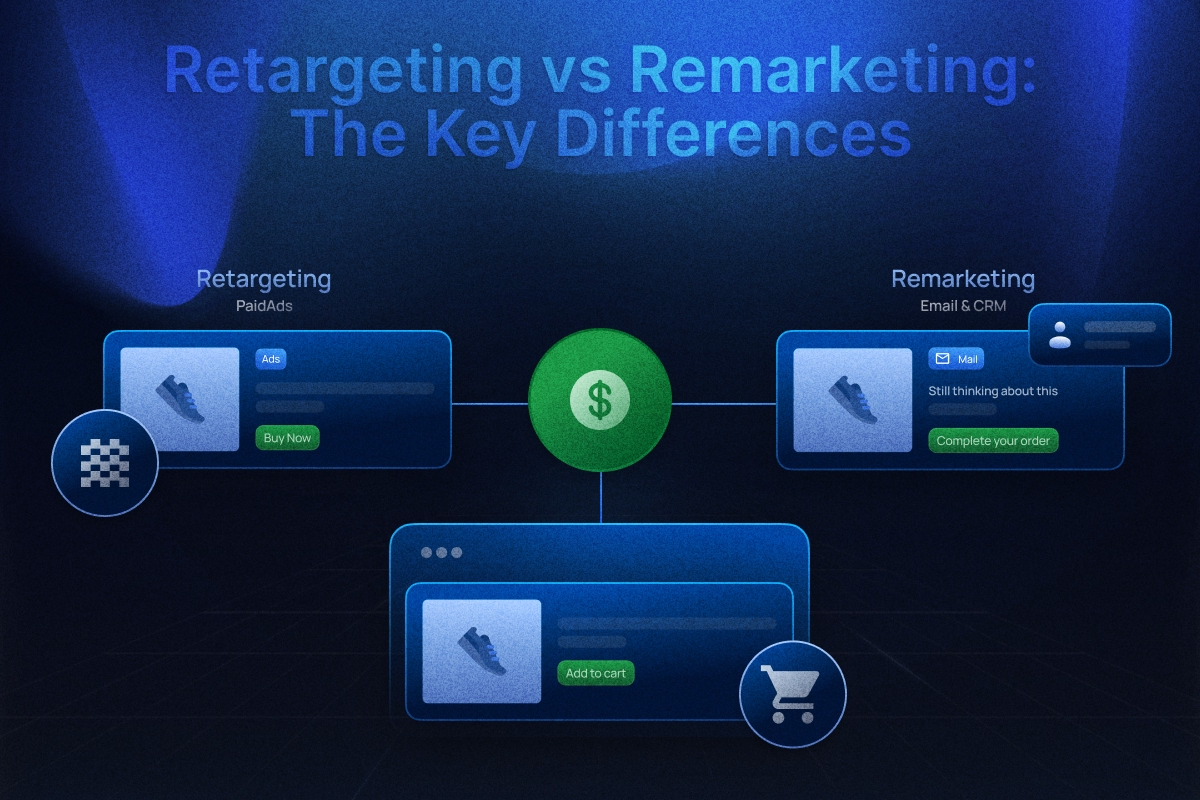
Retargeting vs Remarketing: The Difference Every Marketer Needs to Know
Stop treating Retargeting vs Remarketing as identical. Use a precise, high-impact framework to weaponize your data and maximize conversions.

Google Ads Cost: What You'll Really Pay (By Industry, Campaign Type, and Business Size)
Stop wasting budget on vague pricing. See exact 2026 Google ads cost benchmarks by industry, real CPC data, and the formula to reduce your ad spend.

Types of Facebook Ads: A Complete Guide to Every Format in 2026
See all types of Facebook ads, including current specs, placements, and objectives, plus a matching table to pick the right format for your goal.
ABM Stats: 2026 Benchmarks, ROI & Trends
From ROI to pipeline velocity, these 2026 ABM stats show exactly why account-based marketing dominates B2B growth.
.jpg)
The Real Price of Social Media Advertising: A Cost Guide for Advertisers
Find out what social media ads actually cost these days. Get to know about CPC, CPM, CPL, industry verticals, budget ranges, and ROAS across major platforms.
Bing Ads Cost in 2026: Everything You Need to Know
Stop wasting money on ad spend. See the 2026 Bing Ads cost benchmarks, real industry CPAs, and hidden ROI data you need to outperform competitors.

6 Best AI UGC Video Creators for TikTok Ads in 2026
Avoid expensive creators. Find the 6 best AI UGC video platforms for TikTok ads in 2026. Cut production costs, test faster, and scale your ROI.
TikTok Ads Statistics 2026: Benchmarks, Rates and Performance Data
With 8.7M businesses competing, discover key TikTok ads statistics and different benchmarks to beat the competition and refine your ad performance.
Static vs Dynamic Ads: Key Differences, Examples & How to Choose in 2026
Compare static and dynamic ads, their key differences, examples, and when to use each format to improve targeting, conversions, and ROI in 2026.