Static vs Dynamic Ads: Key Differences, Examples & How to Choose in 2026

The tension between static vs dynamic ads is where most performance strategies succeed or fail. While 68% of marketers acknowledge that personalization boosts performance, the real challenge is knowing when to use it and when a simpler approach works better.
If you are still wondering what a static ad is and how it stacks up against a dynamic one, the distinction directly affects your budget and results. Assuming dynamic ads are always better is a mistake. A sharp, focused static ad often outperforms a complex dynamic one.
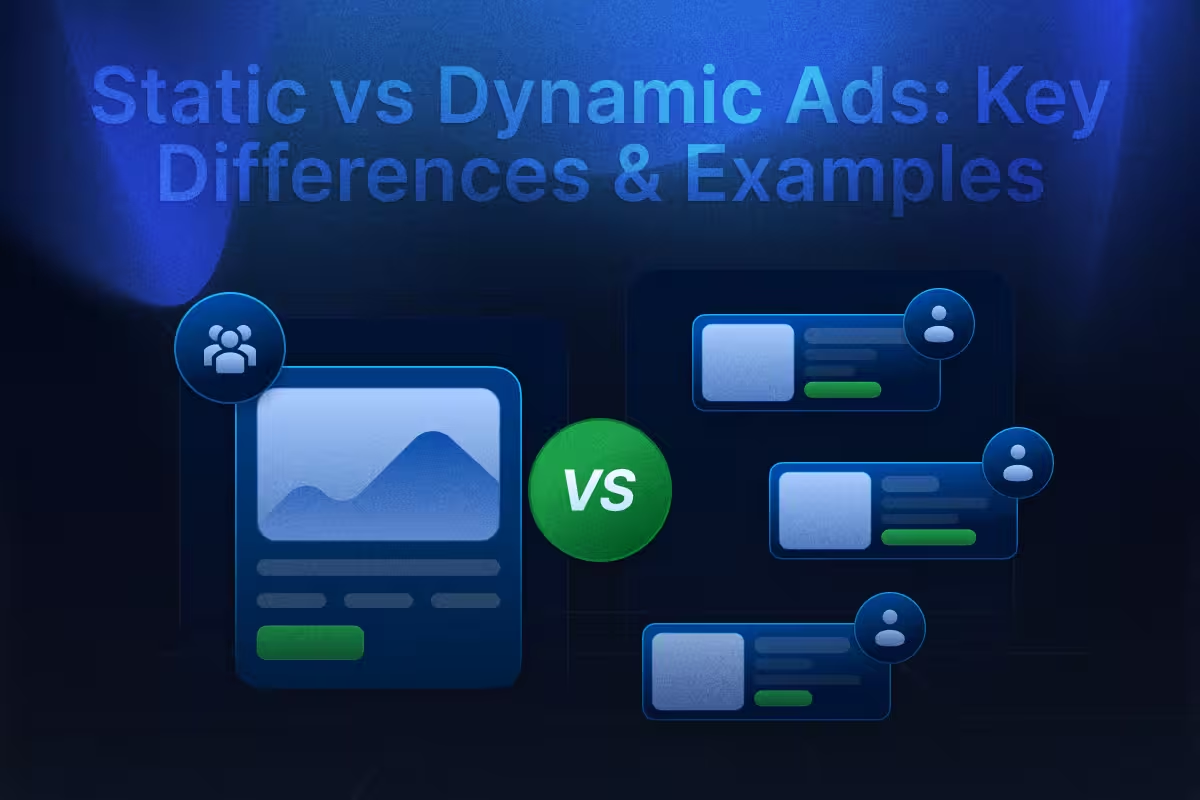
Static ads use the same creative for everyone, making them faster to produce and easier to test. Dynamic ads use data feeds to personalize content based on user behavior, improving relevance and providing better signals for algorithmic optimization.
This guide explains the differences between static vs dynamic ads, shows when each works best, and provides a framework to help you choose the right format for your campaign.
What Is a Static Ad?
Despite all the automation in modern advertising, static ads are still widely used, and often highly effective.
Static Ad Definition
A static ad is a fixed creative that does not change based on user behavior, data, or context. What you design is exactly what every user sees.
According to Google, static image ads are creatives that “serve ads with images exactly as provided” and do not adapt to placements or users.
Static Display Ad Formats, Sizes, and Structure
A static display ad is typically a visual banner or image placed across websites, apps, or social feeds.
Common placements:
- Website banners (top, sidebar, in-content)
- Mobile apps
- Social media feeds
The Google Display Network alone spans millions of websites and apps.
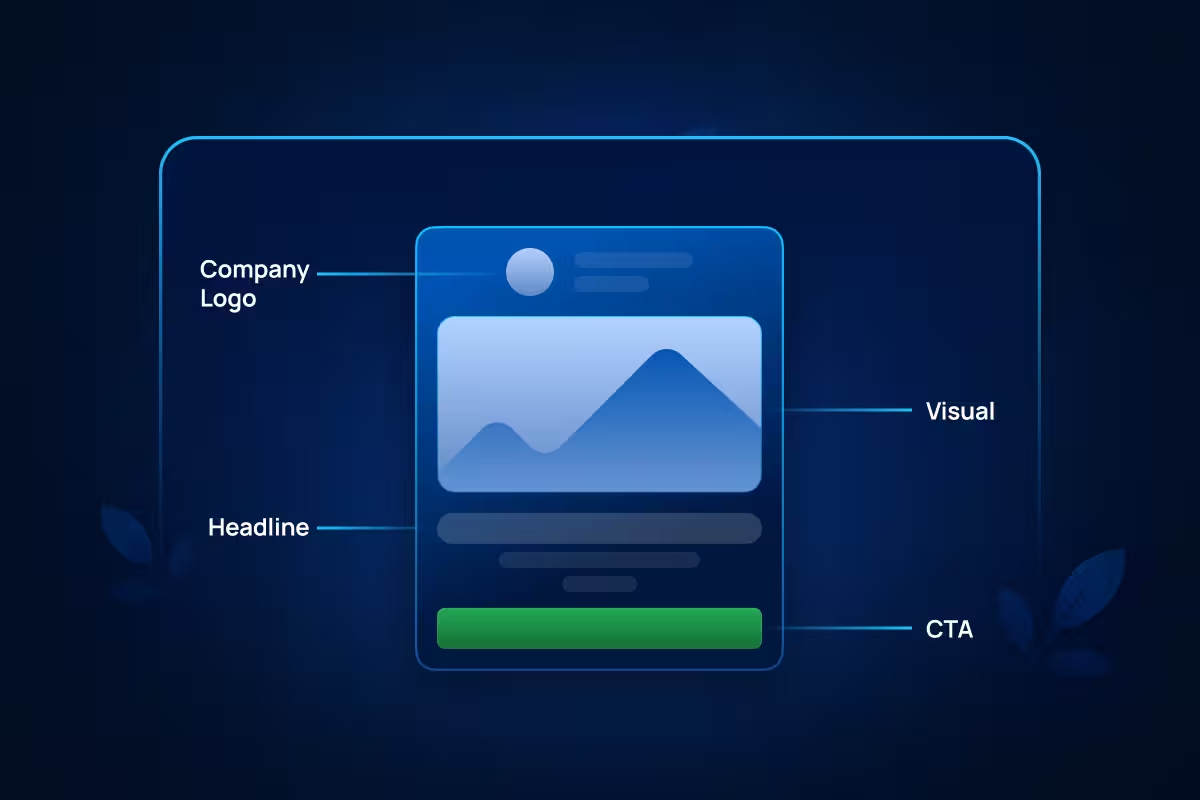
Standard static ad sizes:
These sizes are widely used because they fit common placements across websites and devices.
What Is Dynamic Advertising?
It adapts in real time based on user data, behavior, and context. This makes it one of the most powerful tools in modern performance marketing.
Dynamic Advertising Definition
Dynamic advertising refers to ads that automatically change their content (images, text, offers, or products) based on user data, behavior, or predefined rules.
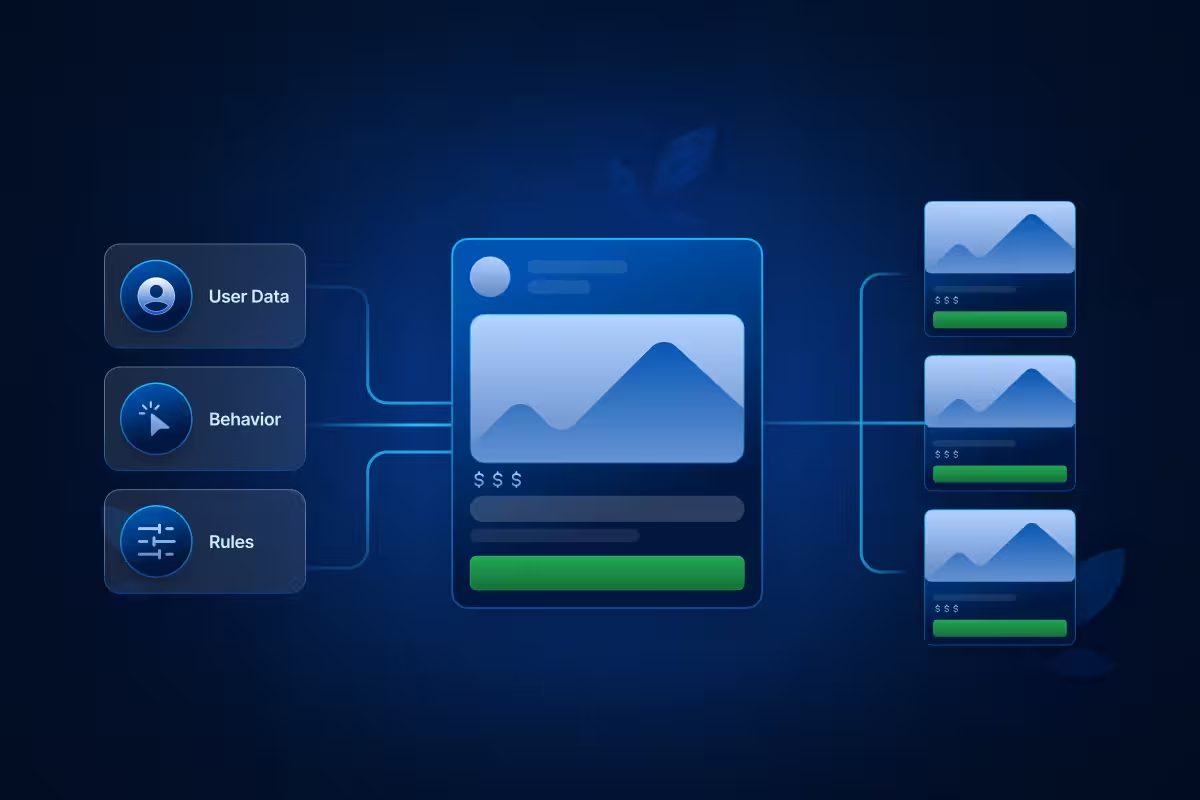
What makes an ad “dynamic”?
Dynamic ads:
- Pulls data from product catalogs or feeds
- Uses user behavior signals (e.g., browsing history)
- Automatically updates creatives in real time
- Delivers personalized content at scale
For example, if a user views a product on your website, a dynamic ad can later show that exact product with updated price and availability.
According to Meta, dynamic ads “automatically promote relevant products to people who have expressed interest across devices".
Types of Dynamic Ads
Dynamic advertising comes in several formats, each designed for different use cases.
Dynamic Product Ads (DPA)
DPAs are the most common type of dynamic advertising, especially in e-commerce.
How they work:
- Pull product data (image, price, title) from a product catalog
- Automatically show relevant products to each user
- Update in real time (pricing, availability, offers)
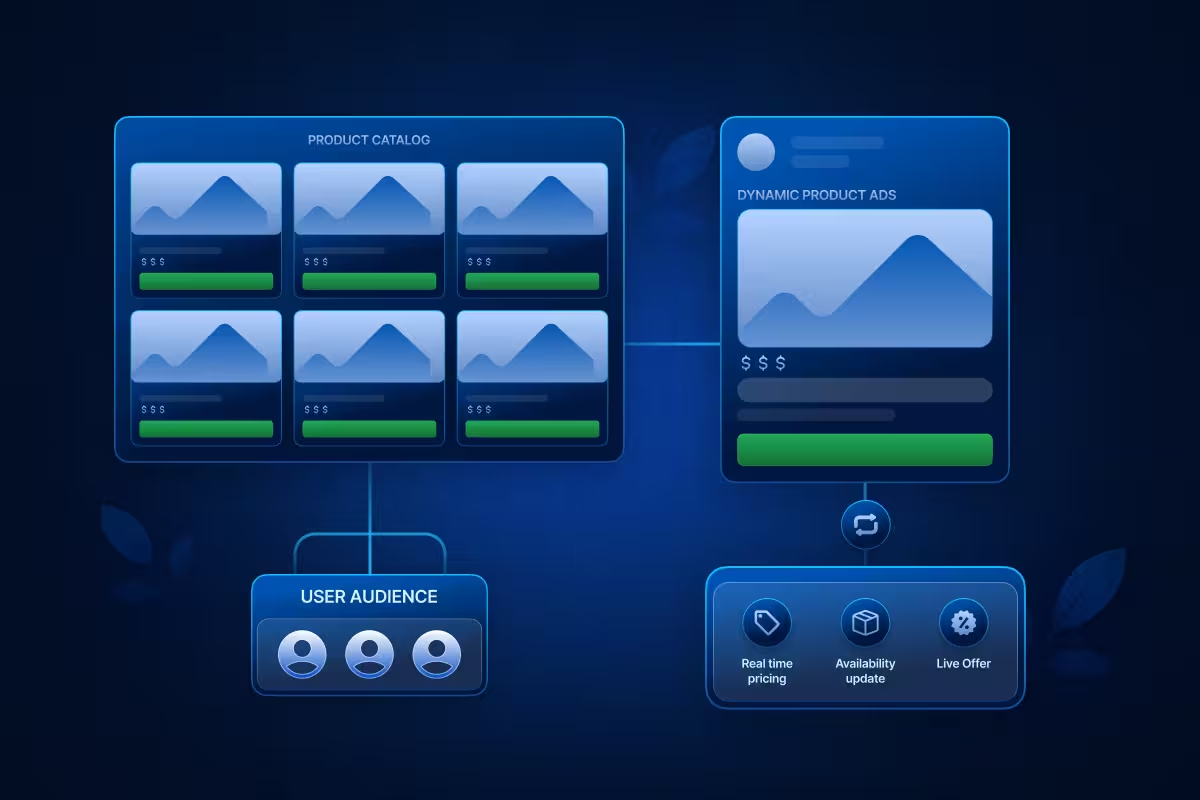
Where DPAs run:
- Meta (Facebook & Instagram)
- TikTok
- Google Shopping
DPAs support two advanced targeting functions beyond standard retargeting:
- Cross-selling: Automatically serves complementary items following a purchase. For example, a camera buyer may see ads for memory cards or lenses. This requires two product sets: one for the initial purchase and another for the promoted items.
- Upselling: Presents premium or higher-value versions of products a user viewed but did not purchase. This is most effective for brands with product tiers, subscriptions, or bundles.
Both functions are configured at the ad set level and depend on a properly structured product catalog.
According to Meta, DPAs help advertisers “reach people with products they are most likely to be interested in".
Dynamic Display Ads
Dynamic display ads adapt to different placements automatically. A key example is Responsive Display Ads in Google Ads.
How they work:
- You upload multiple assets (images, headlines, logos)
- Google automatically combines them
- Ads resize and adjust to fit any screen or placement
Dynamic Retargeting Ads
How it works:
- Tracks user behavior (e.g., viewed products, added to cart)
- Shows users the exact items they interacted with
- Updates messaging based on stage (view → cart → purchase)
Example: A user views a pair of shoes → later sees an ad with the same shoes + discount.
Dynamic Creative Optimization (DCO)
DCO takes personalization a step further.
How it works:
- Upload multiple assets:
- Headlines
- Images/videos
- CTAs
- The platform automatically mixes and matches them
- It tests combinations and optimizes for performance
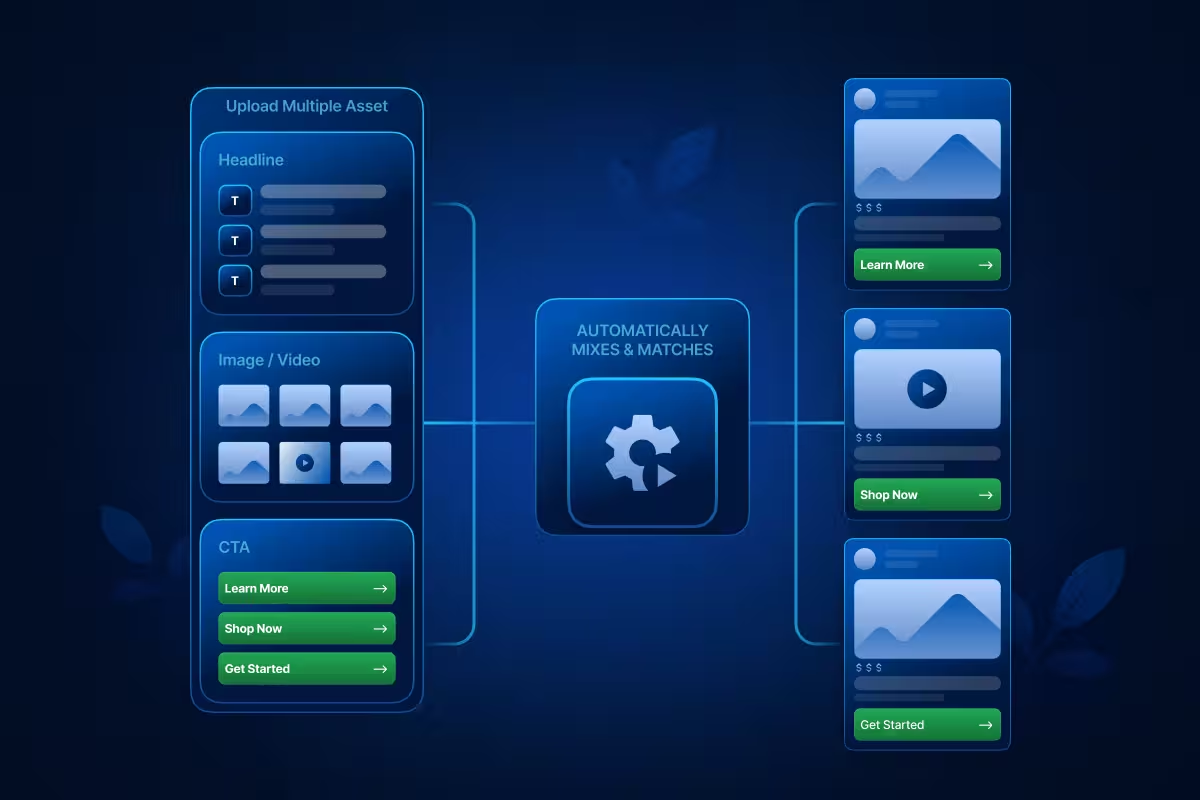
According to Google, machine learning can optimize ad combinations to improve engagement and conversions. This allows marketers to scale creative testing without producing additional creatives manually.
Static vs Dynamic Ads: The Core Differences
Here’s a clear comparison to anchor everything:
Creative Control: Static Wins, Dynamic Scales
When evaluating a static image vs dynamic format, the core question comes down to whether your priority is brand precision or algorithmic personalization.
With static ads, what you design is exactly what users see:
- Pixel-perfect layouts
- Strong brand consistency
- Carefully crafted messaging
This is why brands that rely heavily on visual identity often prefer static creatives.
Dynamic ads, on the other hand:
- Mix and match assets automatically
- Adjust layouts based on placement
- Optimize based on performance
Platforms like Google Ads automatically assemble creatives in responsive formats.
Personalization: Dynamic’s Biggest Advantage
Dynamic ad platforms utilize personalization signals beyond standard browsing behavior:
- Geographic location: Users in different regions see localized pricing, specific offers, or regional product availability within the same campaign.
- Psychographics: Platforms analyze engagement patterns to infer lifestyle values and aspirations. This data informs which creative variation best aligns with a user's inferred profile.
This multi-dimensional approach distinguishes high-performance campaigns from surface-level retargeting. More data signals mean more relevant ad delivery.
Display ads typically have a CTR of ~0.2%-1.0% across industries. Among them, more relevant and targeted ads (often dynamic) tend to perform better.
If you’re into benchmarking and want to know detailed stats, check out Google Ads Benchmarks.
Cost and Resource Investment: Which Format Costs More to Run?
Cost to Produce Static Ads
Static ads are straightforward, but not free. Costs include:
- Design time
- Creative revisions
- Copywriting
- Multiple versions for testing
Each variation must be created manually. Also, static creatives need regular refreshes to avoid ad fatigue. According to Meta, creative fatigue can reduce engagement over time, requiring frequent refreshes.
Cost to Set Up Dynamic Ads
Dynamic ads require more upfront work. Setup includes:
- Product feed creation
- Catalog integration
- Pixel or event tracking
- Platform configuration
This setup can be technically demanding, especially for teams without dedicated feed management.
Ongoing maintenance:
- Fixing feed errors
- Managing product availability
- Handling disapprovals
- Updating SKUs and pricing
Dynamic ads reduce creative workload, but increase technical dependency.
Static vs Dynamic Ad Performance: CTR, CVR, and ROAS Compared
Let’s look at how static vs dynamic ads compare in real performance.
Performance benchmarks highlight the measurable impact of relevance:
- Retailers: AI-generated dynamic ads often deliver CTR improvements of up to 20-40% over static formats, driven by automated personalization.
- Retargeting: Research indicates that highly personalized dynamic creatives can increase CTR by up to 161% when targeting users already familiar with a brand.
These figures represent performance ceilings rather than baseline guarantees. Actual results depend on creative quality, audience segmentation, and feed accuracy. However, they confirm that the relevance gap between static and dynamic ads is most significant in mid-to-lower funnel campaigns.
Performance Benchmarks
Many platforms (Meta, Google) promote DPAs specifically for performance-driven campaigns.
Speed to Launch: Which Ad Format Goes Live Faster?
When to Use Static Ads
Static ads work best when your message is simple, your brand identity is non-negotiable, or your campaign doesn't depend on user behavior data.
Use them when:
- Targeting Cold Audiences
- Running Brand Awareness Campaigns
- Small Product Catalogs
- Creative Storytelling
When to Use Dynamic Ads
Dynamic ads work best when scale, relevance, and real-time personalization matter more than design precision.
Use them when:
- Retargeting Warm Audiences
- Managing Large Catalogs
- Operating in High-Velocity Industries
- Scaling Proven Campaigns
Static vs Dynamic Ads: Platform-by-Platform Breakdown
Performance differences come down to each platform's algorithm, user behavior, and supported ad formats.
Meta (Facebook & Instagram)
Meta supports both static and dynamic formats, and this is where the comparison is most balanced.
When to use static image ads:
- Testing new offers or messaging
- Brand awareness campaigns
- Simple promotions with one clear product
When to use dynamic (Advantage+ catalog campaigns):
- Retargeting users who viewed products
- Scaling eCommerce campaigns
- Promoting large product catalogs
Meta’s ecosystem is built for both formats. It supports:
- Static image ads
- Carousel ads
- Dynamic product ads (DPAs)
Google leans heavily toward automation and dynamic formats.
Static display ads:
- Uploaded as fixed banners
- Full creative control
- Useful for branding campaigns
Dynamic alternatives:
- Responsive Display Ads (RDA) → automatically combine assets
- Performance Max → uses feeds + automation across all Google inventory
Google itself promotes responsive ads because they:
- Adapt to millions of placements
- Automatically test combinations
- Improve reach and efficiency
Google favors dynamic-first advertising, especially for performance campaigns.
TikTok
TikTok is fundamentally different, and that difference directly affects how static vs dynamic ads perform.
Static image ads on TikTok:
- Exist (carousel, simple formats)
- But generally underperform
Dynamic formats (DSA: Dynamic Showcase Ads):
- Pull from product catalogs
- Personalize content based on user behavior
Static ads struggle because they don’t match user behavior. Performance reality in 2026: TikTok CPMs are often lower (around $4-$8)
Programmatic Display
Programmatic advertising is where dynamic ads become the default.
When programmatic favors dynamic (DCO):
- Large-scale campaigns
- Multi-audience targeting
- Personalized messaging at scale
Dynamic Creative Optimization (DCO):
- Adjusts creatives in real time
- Uses audience, location, and behavioral data
- Improves relevance across impressions
Static ads in programmatic:
- Used in premium placements
- Preferred for brand safety and consistency
- Common in high-end publisher environments
How to Choose Between Static and Dynamic Ads for Your Campaign
Choosing between static vs dynamic ads isn’t about picking a winner. It’s about matching the format to your goal, audience, and resources. A simple framework can help you make quick decisions and avoid budget waste.
Decision Framework: Static or Dynamic?
Use these questions as a practical checklist:
Can You Run Both Static and Dynamic Ads Together?
Yes, and most high-performing campaigns do exactly that. Static and dynamic ads serve different stages of the funnel, so running both eliminates the gaps a single format leaves behind.
How to split them:
Static for prospecting: Use static ads to introduce your brand to cold audiences. One focused message, full creative control, no behavioral data needed.
Dynamic for retargeting: Once users have engaged, dynamic ads take over. They show the exact products users browsed or considered, which drives conversions more efficiently than any static creative can at this stage.
How to avoid overlap: Exclude website visitors from your prospecting campaigns. Exclude recent buyers from retargeting. This keeps your budget focused and prevents the same user from seeing conflicting messages.
Where to start with budget: A practical starting split is 60-70% toward prospecting with static ads and 30-40% toward retargeting with dynamic ads. As ROAS benchmarking data comes in, shift budget toward whichever is converting, while keeping static ads running to feed new audiences into the top of the funnel.
Static vs Dynamic Ads in 2026: What’s Changed?
As AI and automation have started to blur the line between static and dynamic ads, it’s no longer a simple comparison.
How AI Has Blurred the Line Between Static and Dynamic
In 2026, many “static” ads aren’t truly static anymore. Now:
- AI tools can generate multiple versions of a single creative
- Platforms test variations automatically, even with minimal input
- What looks like a static ad may still be optimized behind the scenes
For example:
- Meta Advantage+ campaigns use automation to optimize delivery and creative combinations
- Google Ads Performance Max blends dynamic feeds with creative assets across channels
The Rise of Dynamic Creative at Scale in 2026
Dynamic advertising has become more accessible than ever.
What’s changed:
- Easier product feed integrations
- Better AI-driven optimization
- Lower barriers to entry for small businesses
Even smaller advertisers can now:
- Launch dynamic campaigns quickly
- Test multiple variations automatically
- Scale without large creative teams
In 2026, dynamic ad signals include behavioral metrics like dwell time and scroll patterns. This shift makes ads anticipatory rather than reactive. Success requires high-quality first-party data and clean product feeds.
Data integrity is vital because prediction accuracy depends on input quality. Google confirms that automated campaigns like Performance Max use machine learning to maximize results across all inventory.
Is the Static Ad Dead in 2026?
No. Not even close. Despite automation, static ads remain essential for brand precision, message control, and privacy-compliant campaigns. According to benchmarks, display ads (often static) still deliver consistent reach and awareness at scale, even with lower CTRs.
With Uproas, you can get your hands on whitelisted agency ad accounts that will help facilitate both static and dynamic advertising by removing traditional scaling limitations and ban risks.
Final Verdict
Static ads provide control and brand consistency, making them ideal for establishing identity and delivering focused messages. In contrast, dynamic ads offer scale and automation, performing best during retargeting or high-intent phases where real-time personalization is required to convert.
The most effective campaigns balance both formats by using static creatives to attract new audiences and dynamic ads to scale performance. Success in 2026 relies on strategic placement within the funnel rather than choosing one over the other, ensuring that creativity and automation work together.
FAQs


Latest blogs

Google Ads Cost: What You'll Really Pay (By Industry, Campaign Type, and Business Size)
Stop wasting budget on vague pricing. See exact 2026 Google ads cost benchmarks by industry, real CPC data, and the formula to reduce your ad spend.

Types of Facebook Ads: A Complete Guide to Every Format in 2026
See all types of Facebook ads, including current specs, placements, and objectives, plus a matching table to pick the right format for your goal.
ABM Stats: 2026 Benchmarks, ROI & Trends
From ROI to pipeline velocity, these 2026 ABM stats show exactly why account-based marketing dominates B2B growth.
.jpg)
The Real Price of Social Media Advertising: A Cost Guide for Advertisers
Find out what social media ads actually cost these days. Get to know about CPC, CPM, CPL, industry verticals, budget ranges, and ROAS across major platforms.
Bing Ads Cost in 2026: Everything You Need to Know
Stop wasting money on ad spend. See the 2026 Bing Ads cost benchmarks, real industry CPAs, and hidden ROI data you need to outperform competitors.

6 Best AI UGC Video Creators for TikTok Ads in 2026
Avoid expensive creators. Find the 6 best AI UGC video platforms for TikTok ads in 2026. Cut production costs, test faster, and scale your ROI.
TikTok Ads Statistics 2026: Benchmarks, Rates and Performance Data
With 8.7M businesses competing, discover key TikTok ads statistics and different benchmarks to beat the competition and refine your ad performance.
Static vs Dynamic Ads: Key Differences, Examples & How to Choose in 2026
Compare static and dynamic ads, their key differences, examples, and when to use each format to improve targeting, conversions, and ROI in 2026.
Geographic Segmentation: Definition, Variables, Examples & How Marketers Use It
Stop wasting ad spend on guesswork. Geographic segmentation uses location data to reach the right audience at the right place and drive real ROI.