Bing vs Google Ads: Which Advertising Platform Is Better in 2026?

If we want to talk about digital advertising in 2026, Bing and Google Ads are the first ones that come to mind. And the question of which advertising platform is better among the two has now become more relevant than ever.
When it comes to businesses, most people no longer choose where to advertise. Instead, they’re deciding how to reach the right audience, managing increasing ad costs, and maximizing their ROI.
Google Ads continues to dominate the global search market with over 90% market share worldwide, as confirmed by the latest Google Ads statistics. Thus, making it the go-to platform for ad scaling and overall reach. However, Microsoft Advertising (formerly Bing Ads) offers less competition. But often results in lower cost per click (CPC) and higher ROI in certain niches.
In this article, we’ll break down the key differences between bing vs Google ads. It’ll include the cost, audience, performance, and ROI. Hopefully, this will help you decide which ad platform fits your goals best in 2026.
Quick Overview: Bing vs Google Ads
Let’s have a quick look at both Bing and Google Ads.
What Is Google Ads?
Google Ads is the world’s largest digital advertising platform. It allows businesses to display ads across Google Search, YouTube, Gmail, and millions of partner websites. The platform mainly operates on a pay-per-click (PPC) model. Here, advertisers bid on keywords to appear in search results.

With over 90% global search engine market share, Google offers unmatched reach and visibility. And this makes it ideal for businesses that are looking to scale quickly.
Supported ad formats include:
- Search ads
- Display ads
- Shopping ads
- Video ads (via YouTube)
- App promotion ads
What Is Microsoft Advertising?
Microsoft Advertising, formerly Bing Ads, is a PPC platform. It serves ads across the Bing search engine, Yahoo, AOL, and Microsoft partner networks. The platform also integrates with products like Windows, the Edge browser, and LinkedIn data targeting.

Although smaller in scale, Microsoft Ads reaches a unique audience that often includes older, higher-income users and desktop-heavy traffic. Its lower competition and cost structure make it attractive for businesses focused on efficiency and niche targeting.
Key Differences at a Glance
This shows a clear trade-off. While Google Ads offers scale and reach, Microsoft Advertising offers efficiency and lower costs.
Thinking about placing ads? Don’t have experience? Might cost you a fortune.
Get services of Uproas Today!
Audience Reach and Market Share
Let’s have a look at the size of the audience and the amount of reach each of them has. We’ll also look into their respective market shares.
Google Ads Audience Size and Global Reach
Based on reach, Google Ads has turned into the largest digital advertising platform. As of 2025:2026, Google holds over 90% of the global search engine market share, giving advertisers access to billions of daily searches worldwide.

One of Google’s biggest advantages is its mobile dominance. A significant portion of searches now comes from smartphones, and Google leads strongly in mobile search traffic across most regions. This makes it ideal for businesses targeting on-the-go users and global audiences.
In addition to search, Google Ads extends across:
- YouTube (video ads)
- Google Display Network (millions of websites)
- Gmail and Discover feeds
This wider ecosystem ensures global coverage across both developed and emerging markets. All these make it the top choice for large-scale campaigns.
Bing Ads Audience Demographics
Microsoft Advertising has a smaller but more defined audience. Globally, Bing accounts for roughly 3:4% of the search engine market. However, its share is higher in certain regions like the United States.
What makes Bing unique is who uses it:
- A larger share of users is aged 35+, compared to Google’s younger, mobile-heavy audience
- Users tend to have higher household incomes, making them attractive for premium products
- Traffic is more desktop-heavy, especially through Windows PCs and the Edge browser defaults
Microsoft also reports that its search network reaches over 1 billion unique monthly users globally, including Bing, Yahoo, and partner sites.
Geographically, Bing performs strongest in:
When Audience Differences Matter Most
The differences between Google and Bing audiences become critical depending on your business model.
In short, Google offers reach, while Bing offers precision. The right choice depends on who you’re trying to reach.
Cost Comparison: CPC, CPA, and ROI
Let’s dive into a detailed comparison of costs between the two platforms.
Average CPC on Google Ads
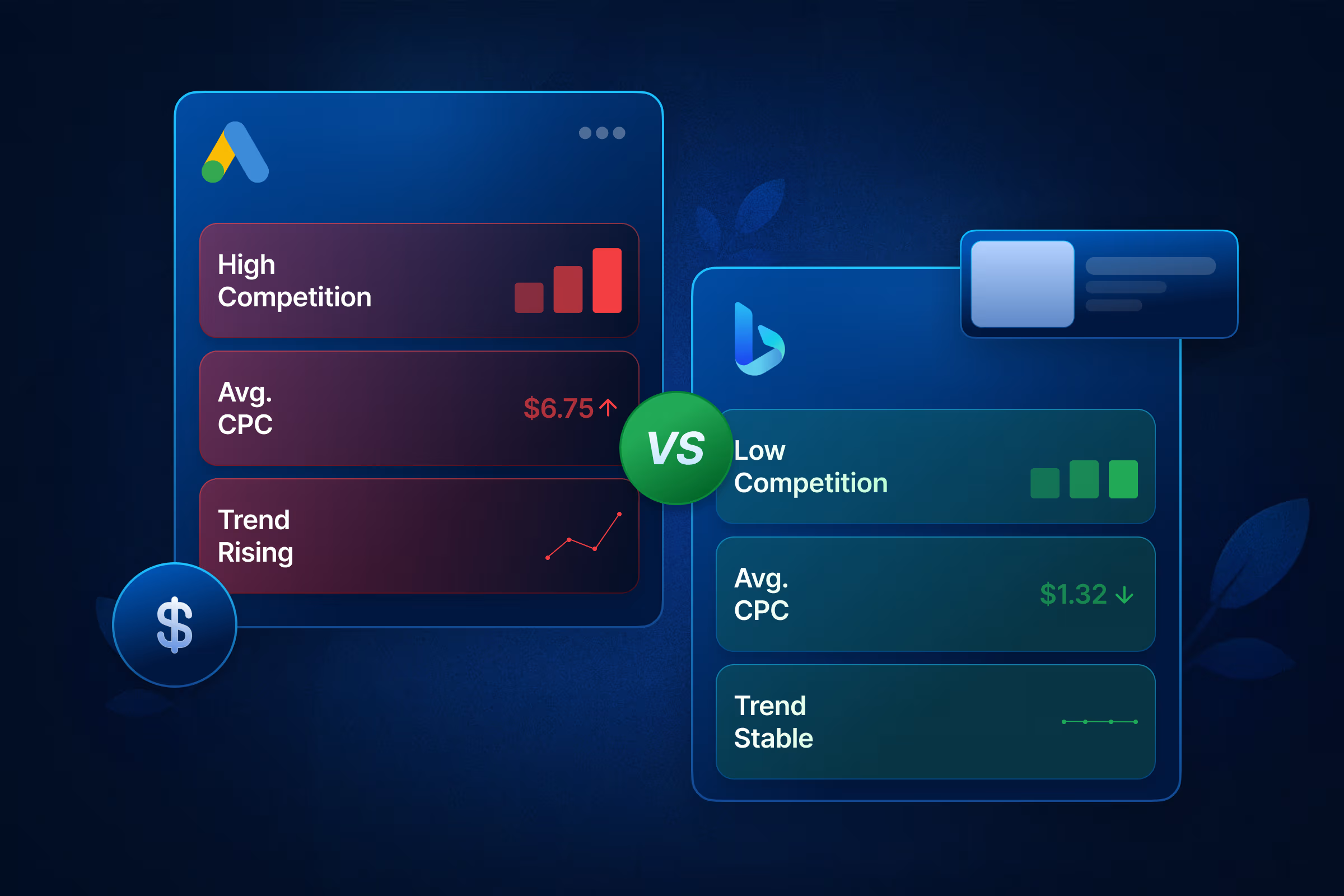
Google Ads tends to have a higher cost-per-click (CPC) due to intense competition across most industries.
The average CPC across industries is around $2 to $4 on the search network, according to the latest Google Ads benchmarks. However, it can exceed $5 to $10+ in competitive sectors like legal, insurance, and finance. Meanwhile, high demand for keywords increases bidding wars, particularly when it comes to high-intent commercial searches.
While costs are higher, Google compensates with massive search volume. It helps drive more conversions at scale.
Average CPC on Microsoft Advertising
Microsoft Advertising usually offers a lower CPC advantage. It has an average CPC of $1.54.
Studies show that for similar keywords, CPC on Bing Ads is often 20:33% lower than Google Ads. Lower advertiser competition means businesses can achieve similar visibility at a reduced cost.
This makes Bing especially attractive for small businesses or advertisers with limited budgets.
Which Platform Offers Better ROI?
ROI depends on how you balance cost vs conversion volume.
Google Ads:
- Higher CPC but larger traffic volume
- Ideal for scaling campaigns quickly
Bing Ads:
- Lower CPC and often strong conversion rates in niche segments
- Can deliver higher ROI for targeted campaigns
According to Microsoft data, advertisers may see higher conversion rates on Bing for certain industries due to less competition and more qualified traffic.
In simple terms:
- Google = volume + scale
- Bing = efficiency + cost savings
Competition and Keyword Difficulty
The level of competition, alongside the difficulties regarding keyword targeting, also sets Google and Microsoft apart.
Google Ads Competition Level
Competition on Google Ads is extremely high, especially in industries like-
- Legal services
- Insurance
- SaaS and tech
- E-Commerce
Because many advertisers bid on the same keywords, it leads to:
- Higher CPCs
- More complex bidding strategies
- Greater reliance on quality score and ad relevance
This means beginners may find it harder (and more expensive) to compete effectively.
Bing Ads Competition Level
Competition is significantly lower on Microsoft Advertising. This is because :
- Fewer advertisers bid on the same keywords
- Lower saturation makes it easier to rank ads
- Entry barriers are lower for new advertisers
This creates an opportunity to capture untapped traffic at lower costs, especially in less competitive niches.
Keyword Targeting Differences
Both platforms support similar keyword targeting options, but there are subtle differences:
1. Match Types
- Both Google and Bing offer broad match, phrase match, and exact match keywords.
- Google has evolved toward an AI-driven broad match, which can expand reach but reduce control.
2. Search Intent Differences
- Google users: More diverse, mobile-driven, and often exploratory
- Bing users: More desktop-based and intent-driven, often closer to purchase
3. Targeting Behavior
- Google prioritizes automation and smart bidding
- Bing allows more manual control, which is preferred by some advertisers
Overall:
- Google offers advanced automation and scale
- Bing offers simpler targeting and more control
Google is more competitive and complex. Bing provides a less crowded and often more cost-efficient alternative, particularly for advertisers who are looking to maximize their ROI with smaller budgets.
Ad Formats and Features
Let’s have a look at ad formats and features of both Google and Bing Ads.
This makes Bing especially strong for B2B advertising and professional targeting.
Unique Features Comparison
In short,
- Google Ads = advanced automation + multi-channel reach
- Bing Ads = simpler control + unique professional targeting
Conversion Rates and Performance
When it comes to performance and conversion rates, Google and Bing have differences regarding quality and quantity.
Google Ads Conversion Trends
Google Ads delivers high conversion volume, but performance can vary depending on targeting and competition. For Google Ads:
- The average conversion rate across industries is around 3:5% on search ads
- Strong performance on mobile devices, which account for a large share of Google traffic
- High traffic volume sometimes leads to mixed user intent, affecting conversion quality
This makes Google ideal for scaling conversions, even if efficiency varies.

Bing Ads Conversion Trends
Microsoft Advertising typically delivers lower traffic volume but higher-intent users. For Bing Ads-
- Conversion rates can be similar or slightly higher than Google's in certain industries, such as B2B and finance.
- Stronger performance on desktop, where users often have higher purchase intent
- Less competition means ads often reach more qualified audiences.
This results in more efficient conversions for targeted campaigns.
Which Platform Converts Better?
There is no one-size-fits-all answer. It depends on your business and goals.
Google Ads performs better when:
- You need high traffic and scalability
- You target mass-market or global audiences
- Your funnel includes mobile users and awareness stages
Bing Ads performs better when:
- You focus on niche or high-value audiences
- You run B2B campaigns or professional services
- You want a higher ROI with lower ad spend
Ease of Use and Platform Experience
While you will find it easier to begin your journey with Bing, Google offers more control for advanced users.
Google Ads Interface and Learning Curve
Google Ads is a powerful platform, but it comes with a steep learning curve, especially for beginners.
The platform:
- Offers advanced features like Smart Bidding, Performance Max, audience segmentation, and detailed analytics
- Highly customizable campaigns, but this also means more complexity in setup and optimization
- Frequent UI updates and automation features can be overwhelming for new users
Experienced marketers benefit from its depth. However, beginners often need time or training to use it effectively.
Bing Ads Interface and Setup
Microsoft Advertising is generally considered simpler and more beginner-friendly.
The platform is:
- Cleaner, more intuitive interface with fewer layers of complexity
- Allows easy import of campaigns directly from Google Ads, reducing setup time significantly
- Offers solid targeting and bidding features without overwhelming users
This makes it easier for small businesses or first-time advertisers to get started quickly.
Which Platform Is Easier for Beginners?
For most beginners, Microsoft Advertising (Bing Ads) is easier to use.
Setup time:
Bing Ads: Faster, especially with one-click Google Ads import
Google Ads: Slower due to more configuration options
Campaign management:
Google Ads: Requires ongoing optimization and understanding of advanced tools
Bing Ads: Easier to manage with simpler controls and less competition
Final takeaway:
- Beginners: Bing Ads is easier and quicker to start
- Advanced users: Google Ads offers more control and scalability
In short, Bing focuses on simplicity, while Google focuses on power and flexibility.
Targeting Capabilities
Let’s compare which platform has more relevant and specific targeting.
Google Ads Targeting Options
Google Ads offers one of the most advanced targeting systems in digital advertising, as the platform is designed for both scale and precision.
Demographics: Target users based on age, gender, parental status, and household income (in selected regions).
In-market audiences: Reach users actively researching or comparing products/services (high purchase intent).
Custom intent audiences: Create audiences based on specific keywords, URLs, or behaviors.
Google also uses AI-driven audience expansion. This helps advertisers reach users beyond their initial targeting based on behavior patterns. It allows for massive reach and automation, especially in large campaigns.
Bing Ads Targeting Options
Microsoft Advertising offers fewer targeting layers but includes some unique capabilities.
LinkedIn profile targeting: Target users based on job title, company, and industry, powered by LinkedIn data. It’s something Google does not offer.
Device targeting: Greater control over targeting desktop, tablet, or mobile users separately.
Standard options like location, demographics, and remarketing are also available. This makes Bing particularly strong for B2B and professional audience targeting.
Advanced Targeting Comparison
Pros and Cons of Google Ads
Let’s have a look at the advantages and disadvantages of using Google Ads-
Pros and Cons of Bing Ads
Now, let’s look at the advantages and disadvantages of Bing Ads.
Use Cases: When to Choose Each Platform
You may wonder which platform will be better for what. We’ll look into that in this segment.
Bing vs Google Ads for Different Industries
Let’s look at their utility across different industries.
Tips to Maximize Results on Both Platforms
Let’s have a look at the strategies you can go for to maximize your results on either platform:
Budget Allocation Strategy
A balanced budget strategy can improve overall performance. One of the common approaches is 70% budget on Google Ads and 30% on Bing Ads. This will allow you to capture volume from Google while benefiting from lower-cost conversions on Bing.
Try adjusting based on performance. Some B2B campaigns may shift more budget toward Bing.
Keyword Strategy Differences
Each platform performs differently with keywords.
Google Ads
- Prioritize high-volume, competitive keywords
- Works best for scaling traffic
Bing Ads
- Target low-cost, long-tail keywords
- Easier to rank due to lower competition
Effective strategy: Use Google for a broader reach, and Bing for cost-efficient niche targeting.
Ad Copy Optimization Tips
Ad messaging should be slightly tailored for each platform.
Google Ads
- Focus on urgency and action (“Buy now”, “Get started”)
- Optimize for mobile users
Microsoft Advertising
- Use more detailed, value-driven messaging
- Appeal to professional and older audiences
Test different headlines and CTAs. Small changes can significantly impact CTR and conversions.
Tracking and Analytics Setup
Accurate tracking is essential for both platforms. Make sure to-
- Set up conversion tracking in both Google Ads and Microsoft Advertising
- Use tools like Google Analytics to monitor behavior across platforms
- Implement attribution models (e.g., last-click, data-driven) to understand which platform contributes most to conversions
According to Google, using data-driven attribution can improve conversion insights by analyzing multiple touchpoints in the customer journey.
Key Takeaway
Without proper tracking, it’s impossible to accurately compare performance between platforms.
Common Mistakes to Avoid
While using these platforms, you’d like to avoid certain mistakes. They are:
Final Verdict
There's no single "winner" in this battle between Bing vs Google Ads. Both these platforms serve different purposes, which is why most serious advertisers run them in parallel using trusted agency ad account providers .
Google Ads offers massive reach, advanced AI and automation, and full-funnel ad formats. Meanwhile, Microsoft Advertising comes with a lower CPC (20:35% cheaper on average), less competition, and unique LinkedIn-based targeting.
So, to put it simply, Google Ads wins on scale and reach, while Bing Ads wins on efficiency and cost.
So, the smartest strategy in 2026 isn’t choosing either specifically. Rather, the perfect strategy is to use both platforms simultaneously. Google brings the traffic, and Bing improves efficiency. Together, they create a more balanced and profitable advertising approach.
FAQs


Latest blogs
ABM Stats: 2026 Benchmarks, ROI & Trends
From ROI to pipeline velocity, these 2026 ABM stats show exactly why account-based marketing dominates B2B growth.
.jpg)
The Real Price of Social Media Advertising: A Cost Guide for Advertisers
Find out what social media ads actually cost these days. Get to know about CPC, CPM, CPL, industry verticals, budget ranges, and ROAS across major platforms.
Bing Ads Cost in 2026: Everything You Need to Know
Stop wasting money on ad spend. See the 2026 Bing Ads cost benchmarks, real industry CPAs, and hidden ROI data you need to outperform competitors.

6 Best AI UGC Video Creators for TikTok Ads in 2026
Avoid expensive creators. Find the 6 best AI UGC video platforms for TikTok ads in 2026. Cut production costs, test faster, and scale your ROI.
TikTok Ads Statistics 2026: Benchmarks, Rates and Performance Data
With 8.7M businesses competing, discover key TikTok ads statistics and different benchmarks to beat the competition and refine your ad performance.
Static vs Dynamic Ads: Key Differences, Examples & How to Choose in 2026
Compare static and dynamic ads, their key differences, examples, and when to use each format to improve targeting, conversions, and ROI in 2026.
Geographic Segmentation: Definition, Variables, Examples & How Marketers Use It
Stop wasting ad spend on guesswork. Geographic segmentation uses location data to reach the right audience at the right place and drive real ROI.
How to Manage Multiple Facebook Accounts on One Device
Learn how to manage multiple Facebook accounts on one device safely using browser isolation, account separation, AdsPower, and Uproas tools.

Bing vs Google Ads: Which Advertising Platform Is Better in 2026?
Confused between Bing vs Google ads? Learn the key differences, including cost, reach, and performance. Pick the right ad platform for your business.