Best Brand Protection Tools for Ecommerce Brands in 2026

Finding the best brand protection tools for ecommerce brands is no longer optional. With thousands of copycats trying to steal your brand’s features, content, and even its identity, you need to have a strong layer of protection.
Counterfeit sellers, phishing sites, unauthorized resellers, and marketplace copycats want to steal your years of hard work. Ecommerce businesses need proactive monitoring and fast enforcement solutions to protect revenue and reputation.
Whether you sell on Shopify, Amazon, or multiple global marketplaces, the right brand protection platform can help detect infringements early and remove them efficiently.
Leading solutions like Bustem, Red Points, MarqVision, and BrandShield offer varying strengths, from AI-powered detection to marketplace takedowns and phishing prevention.
Today, we break down what makes each platform effective so you can choose the right solution for your ecommerce growth and long-term brand security.
1. Bustem – Ecommerce Focused Brand Protection & Takedown Automation
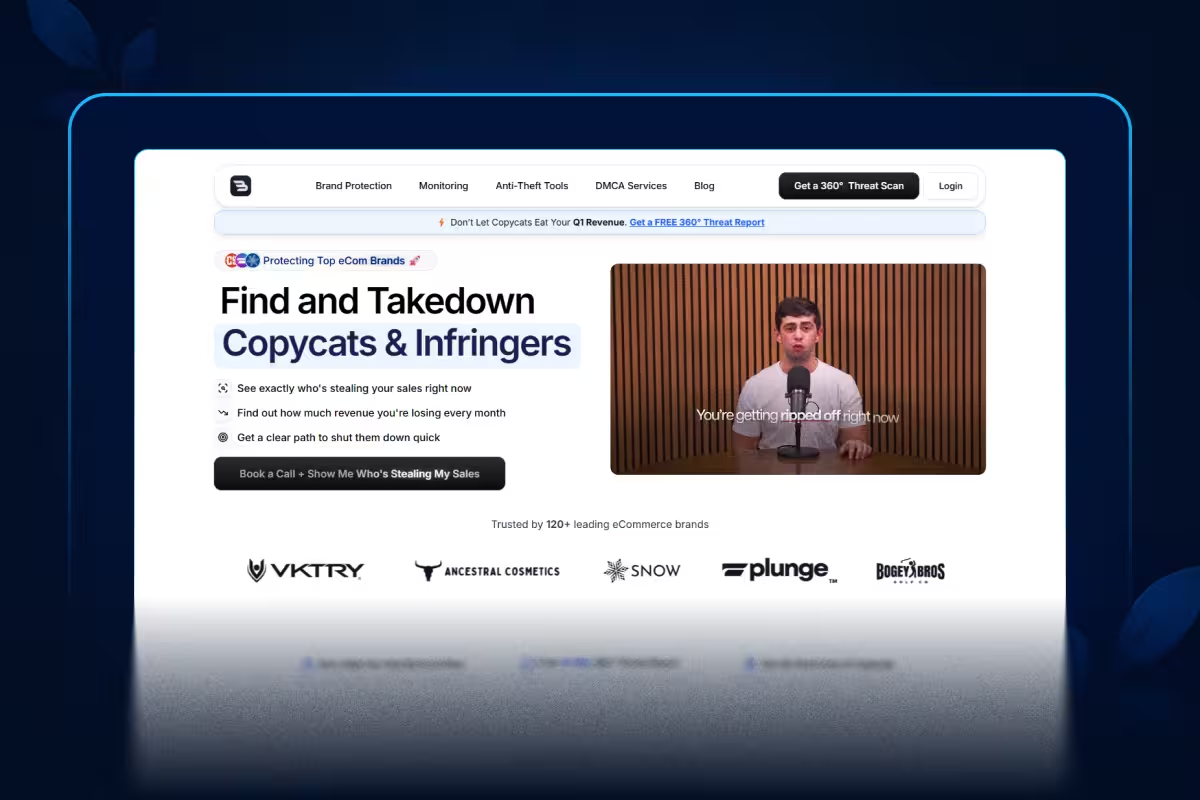
Bustem is built specifically for ecommerce brands that need fast, scalable enforcement against counterfeit sellers, impersonators, and unauthorized marketplace listings.
Bustem goes beyond infringement detection by quantifying revenue loss and actively recovering stolen revenue, rather than stopping at alerts and reports. The focus is on measurable impact, not surface-level monitoring.
Unlike broad monitoring platforms that generate tons of alerts, Bustem focuses on actionable threats and rapid takedown execution.
It scans online marketplaces, standalone ecommerce sites, and social platforms to identify infringements, then initiates structured removal workflows.
The company also stands out with real-time Slack support and sub-30-minute response times, replacing the slow, email-only workflows common across the industry.
When enforcement requires escalation, Bustem works directly with lawyer partners to handle trademarks, copyrights, cease-and-desist letters, and broader legal action as needed.
The platform is particularly effective for Shopify and DTC brands facing cloned websites, stolen product images, or unauthorized resellers undercutting pricing. Bustem focuses on efficient DMCA issuance, evidence documentation, and repeat offender tracking. The enforcement is more systematic instead of reactive.
Moreover, Bustem offers flexible pricing through a pay-per-takedown option, making effective enforcement accessible to smaller and growing brands without long-term commitments.
For growing ecommerce brands that need protection without enterprise-level pricing, Bustem offers a simple approach centered on detection, documentation, and removal.
It’s designed to protect revenue channels while maintaining brand trust across digital ecosystems.
Key Highlights
- Marketplace monitoring & counterfeit detection
- Website cloning identification
- Automated DMCA workflows
- Evidence tracking for legal steps
- Real-time stolen revenue data
- E-commerce-focused enforcement strategy
- Multi-platform coverage
- Protected more than 120 brands
Pros
- Built specifically for ecommerce brands
- Free 15-Min 360° threat report
- Slack-support with under 30-minute response support
- Action-oriented takedown workflows
- Clear and transparent dashboard
- Flexible pricing (pay-per-takedown available)
- Lawyer partnership for a wide variety of legal assistance
- Scalable for agencies and multi-brand operators
Cons
- Less focus on enterprise IP portfolio management
2. Red Points
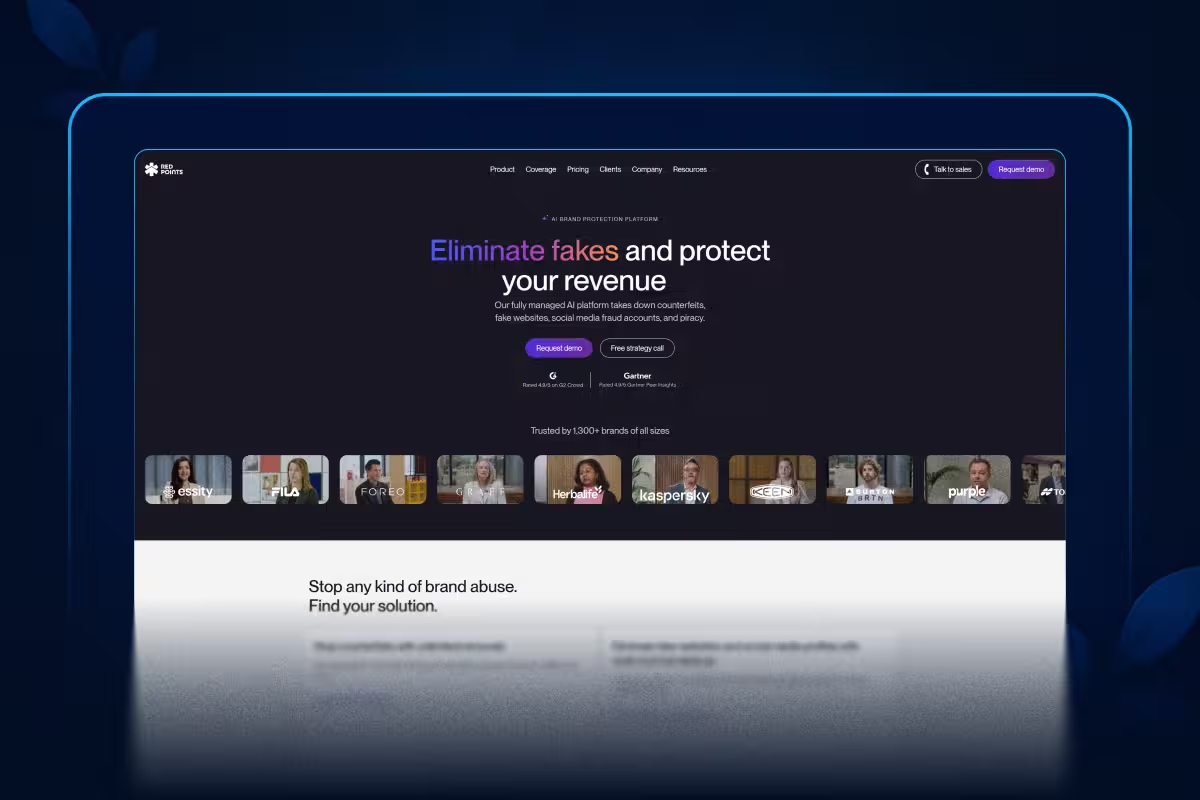
Red Points is widely recognized as one of the leading marketplace-focused brand protection platforms for ecommerce businesses. It specializes in detecting and removing counterfeit listings across major marketplaces such as Amazon and Alibaba. They genuinely help brands protect revenue and maintain pricing integrity.
The platform uses AI-powered image recognition and data analysis to identify infringing listings, even when sellers attempt to modify product photos or descriptions. Red Points also automates the takedown process.
For ecommerce brands heavily exposed to marketplace risk, Red Points provides structured enforcement workflows and performance dashboards that track removals and estimated revenue recovery.
Its global coverage and automation make it particularly suitable for brands operating internationally or scaling rapidly across multiple sales channels.
Key Highlights
- AI-based counterfeit detection
- Automated marketplace takedowns
- Amazon & global marketplace coverage
- Image and logo recognition technology
- Enforcement performance tracking dashboard
- Scalable international protection
Pros
- Strong marketplace integrations
- High-volume automated removals
- Established industry reputation
- Clear enforcement reporting
Cons
- Premium pricing structure
- Less focus on phishing and domain monitoring
3. MarqVision

MarqVision is an advanced, AI-powered brand protection platform designed for ecommerce brands operating across global marketplaces.
It focuses on large-scale infringement detection, combining artificial intelligence with automated enforcement workflows to identify and remove counterfeit listings, unauthorized sellers, and IP violations.
The platform leverages image recognition, logo detection, and machine learning to uncover infringing products, even when bad actors attempt to disguise listings.
MarqVision also integrates structured case management tools, allowing legal and brand teams to track takedowns, document evidence, and escalate repeat offenders when necessary.
For ecommerce businesses expanding internationally, MarqVision offers broad marketplace coverage across North America, Europe, and Asia-Pacific. Its technology-first approach makes it particularly suitable for brands managing high SKU volumes or complex distribution networks.
While positioned toward mid-to-large ecommerce companies, its automation capabilities significantly reduce manual enforcement workload and operational strain.
Key Highlights
- AI-powered image and logo recognition
- Global marketplace monitoring
- Automated takedown workflows
- Case management & legal documentation tools
- Repeat offender tracking
- International enforcement coverage
Pros
- Strong AI detection capabilities
- Excellent global reach
- Structured legal workflow integration
- Scalable for high-volume brands
Cons
- Enterprise-oriented pricing model
- May be complex for smaller DTC teams
You may also be interested to find out the 7 Best Anti-Detect Browsers for Multiple Account Management.
4. BrandShield
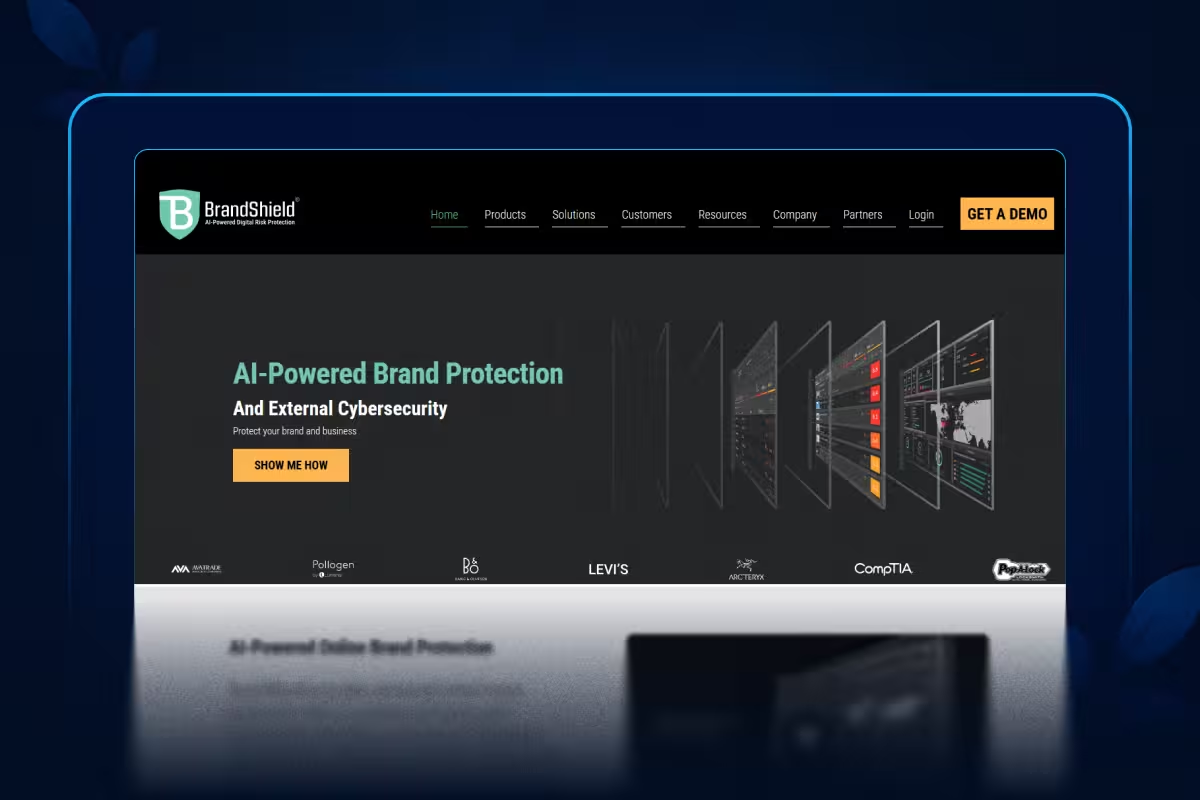
BrandShield specializes in protecting ecommerce brands from phishing attacks, domain abuse, and digital impersonation threats.
While many brand protection tools focus heavily on marketplace counterfeits, BrandShield concentrates on cyber-enabled risks that directly impact customer trust and payment security.
The platform monitors typosquatted domains, fake ecommerce storefronts, scam advertisements, and fraudulent social media accounts. Using advanced threat intelligence and AI-driven detection systems, BrandShield identifies malicious campaigns early and initiates coordinated takedown actions.
e-commerce brands often experience phishing scams, cloned checkout pages, or fraudulent ad funnels. BrandShield offers strong defensive coverage and monitors dark web activity to detect leaked credentials or threat signals.
This makes it particularly valuable for brands with high transaction volumes or strong brand recognition.
BrandShield is typically positioned toward mid-to-enterprise ecommerce businesses.
Key Highlights
- Phishing and fake website detection
- Typosquatting domain monitoring
- Dark web threat intelligence
- Social media impersonation tracking
- Coordinated takedown services
- Enterprise-grade reporting dashboard
Pros
- Strong cybersecurity-focused protection
- Early phishing detection capabilities
- Comprehensive digital risk coverage
- Suitable for high-traffic ecommerce brands
Cons
- Less emphasis on marketplace counterfeit enforcement
- Enterprise pricing structure
5. Corsearch
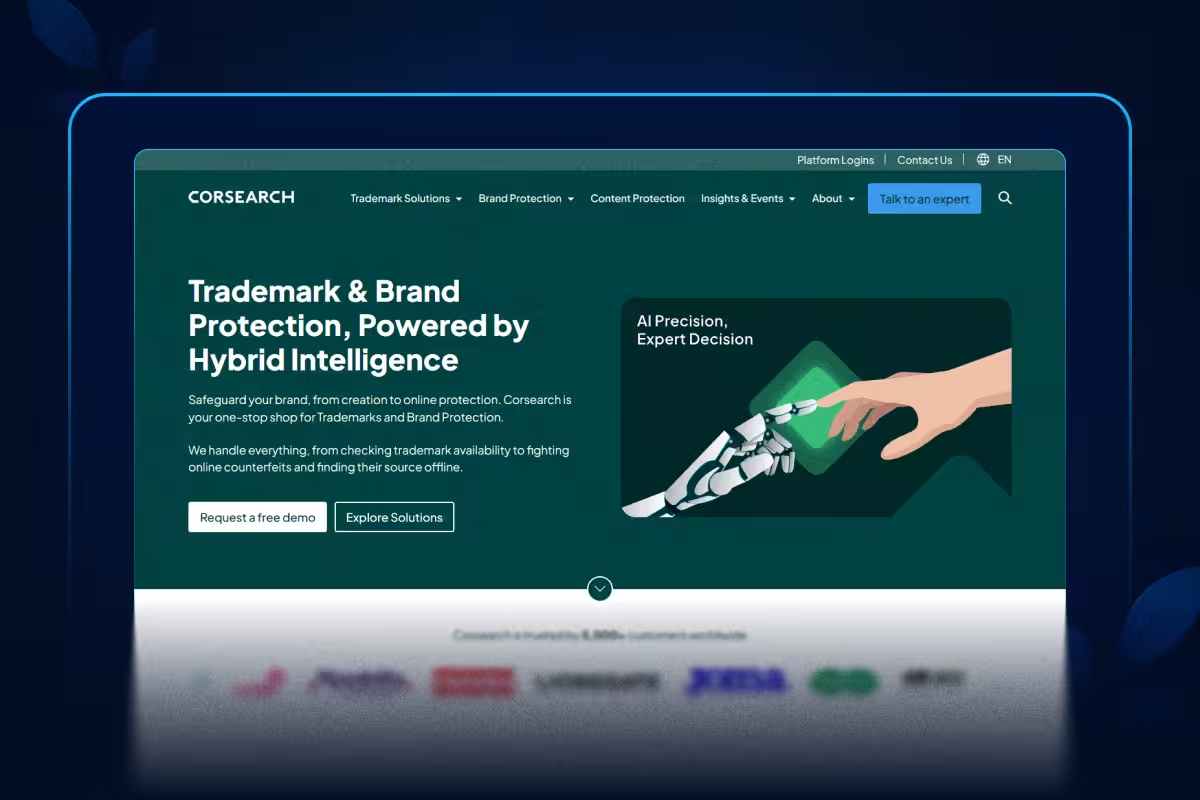
Corsearch is an enterprise-grade brand protection and trademark management platform designed for large ecommerce brands and global enterprises. Unlike tools focused purely on marketplace takedowns, Corsearch combines brand monitoring, trademark management, and enforcement strategy into one structured ecosystem.
The platform provides extensive marketplace monitoring, domain surveillance, and global IP protection services. Corsearch is particularly known for its strong trademark search database and portfolio management tools.
For ecommerce businesses expanding internationally or managing complex product catalogs, Corsearch offers deep visibility into infringement risks. Its workflows allow brands to track cases, coordinate with legal teams, and manage disputes systematically.
While more enterprise-oriented, it delivers a proper solution for brands that require both detection and long-term IP strategy alignment.
Key Highlights
- Global trademark search & portfolio management
- Marketplace and domain monitoring
- Counterfeit detection across regions
- Structured case management system
- Legal workflow integration
- International enforcement coordination
Pros
- Strong trademark intelligence database
- Enterprise-level solution
- Global enforcement capabilities
- Suitable for large ecommerce operations
Cons
- Enterprise pricing model
- May be overly complex for small DTC brands
6. Tracer.ai
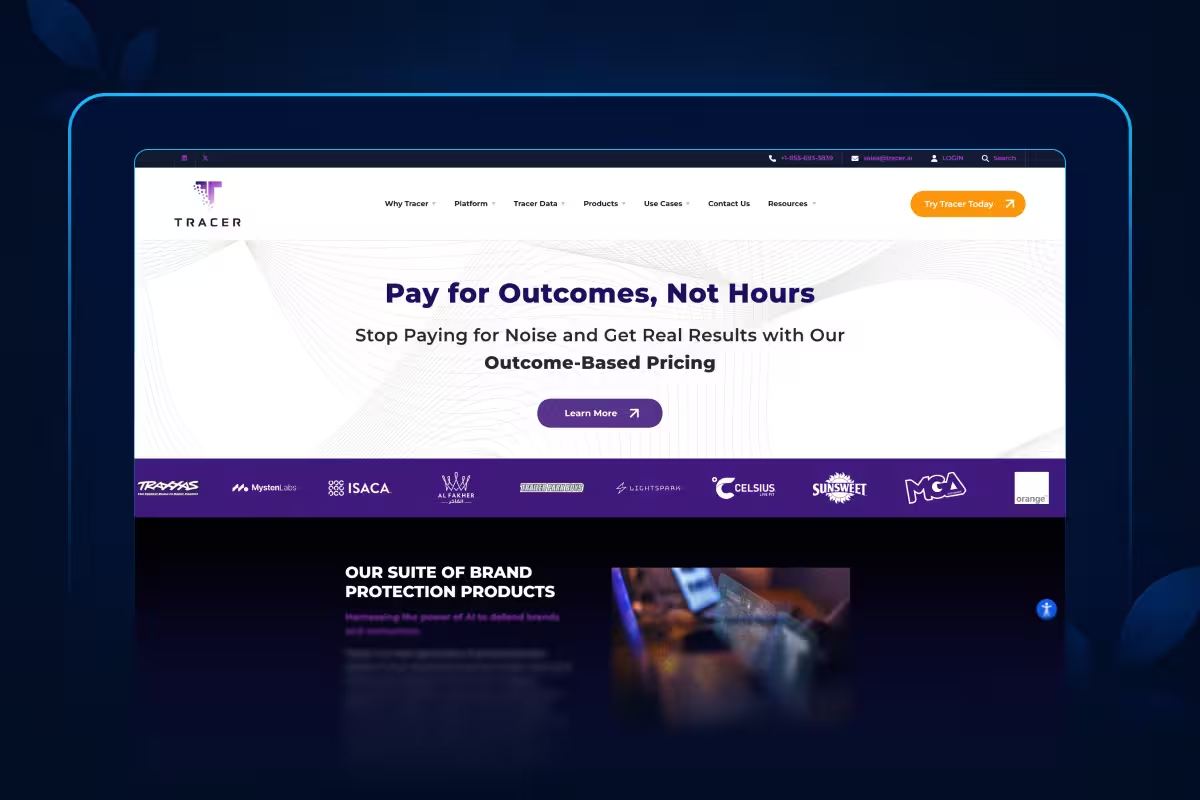
Tracer.ai specializes in using AI and machine learning to detect, monitor, and act on intellectual property violations across global ecommerce marketplaces and social platforms.
Its advanced threat detection focuses on counterfeit goods, typosquatting, and unauthorized resellers that evade conventional monitoring.
Unlike simpler tools, Tracer.ai uses semantic analysis and AI-driven image recognition to identify subtle branding misuse.
Even when logos are partially obscured or product titles are intentionally misspelled, they locate them.
The platform offers automation for takedowns, including DMCA requests and marketplace reports.
Its dashboard provides real-time alerts and analytics. It allows brands to prioritize high-impact threats based on estimated traffic, potential revenue loss, and seller credibility.
Tracer.ai’s global reach covers major platforms like Amazon, eBay, Alibaba, and social networks, with additional monitoring for regional marketplaces in LATAM and Southeast Asia.
Tracer.ai is best suited for ecommerce brands seeking a mix of automation and AI intelligence, especially for companies with medium-to-large portfolios where manual enforcement is impractical.
Key Highlights
- AI-driven image recognition and semantic analysis
- Automated DMCA and marketplace takedowns
- Real-time threat alerts and analytics
- Global marketplace and social media coverage
- Prioritization of high-impact violations
- Dashboard for enforcement and reporting
Pros
- Strong AI detection for subtle infringements
- Automation reduces manual workload
- Global coverage across marketplaces
- Advanced analytics for ROI tracking
Cons
- May require training to use the dashboard effectively
7. BrandVerity
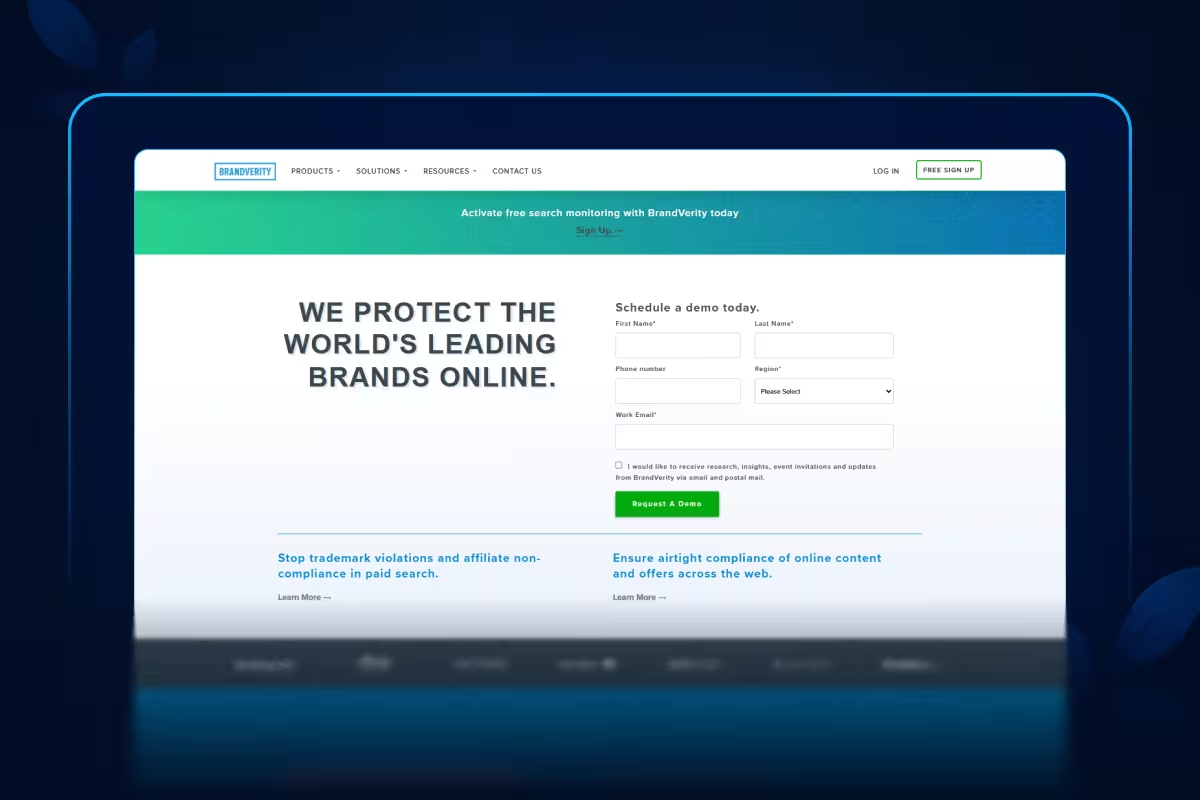
BrandVerity focuses on protecting brand integrity in affiliate marketing, search advertising, and digital campaigns.
Its core strength lies in detecting violations where affiliates, resellers, or competitors bid on brand keywords, promote products incorrectly, or use unauthorized content. The tool monitors search engines, social media platforms, and affiliate networks in real time. It instantly flags suspicious activity before it impacts revenue or brand reputation.
BrandVerity provides automated reporting, evidence collection for legal action, and alerts for non-compliant partners.
The platform also allows businesses to track global campaigns and ensure MAP (Minimum Advertised Price) adherence indirectly through affiliate channels.
It’s a niche solution that works best when brand protection priorities revolve around online marketing, search ads, and affiliate networks rather than general ecommerce marketplaces.
Key Highlights
- Monitors affiliate marketing & search compliance
- Detects keyword bidding and unauthorized promotions
- Automated reporting and evidence collection
- Real-time alerts for policy violations
- Global monitoring for digital campaigns
- Integration with marketing and compliance teams
Pros
- Specialized in affiliate and search marketing
- Automated evidence for enforcement
- Prevents revenue loss from non-compliant partners
- Real-time alert
Cons
- Limited marketplace counterfeit monitoring
- Focused on marketing compliance, not general IP enforcement
8. Netcraft
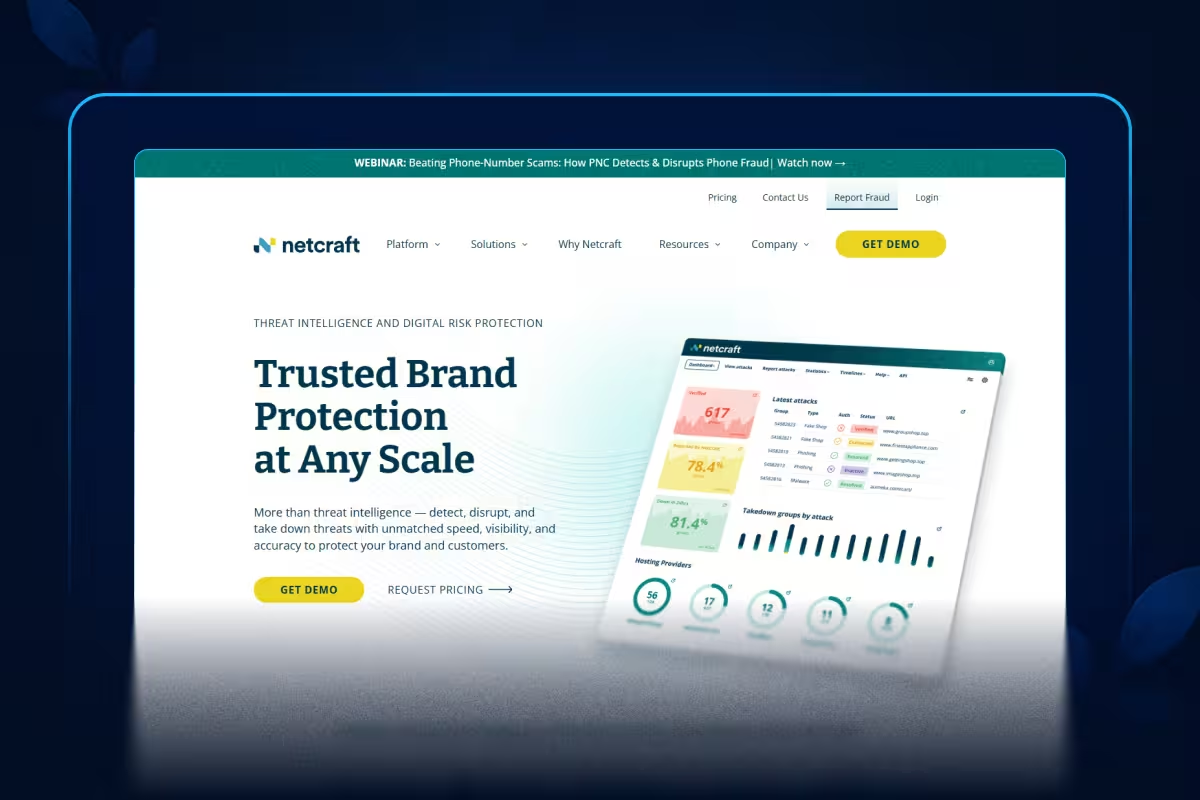
Netcraft provides web-based threat intelligence focused on domain monitoring, phishing detection, and brand protection across the internet.
Its platform excels at identifying typosquatting domains, phishing attempts, and malicious web activity that could harm brand reputation or lead to customer data loss.
Unlike marketplace-focused tools, Netcraft is oriented toward cybersecurity and web-based brand integrity rather than direct ecommerce enforcement.
The platform continuously scans millions of websites globally, maintaining a database of known malicious domains and potential threats.
Brands receive alerts for new typosquatting or scam domains that could impersonate their storefront, and the platform offers trends and risk scoring to prioritize response. Its value is strongest for organizations concerned with domain-level threats, social engineering attacks, and large-scale web risk monitoring.
Netcraft is best for brands that want a web security approach in addition to traditional IP enforcement.
Key Highlights
- Continuous global domain monitoring
- Phishing and typosquatting detection
- Web-based risk scoring and historic trends
- Alerts for new potential threats
- Complements the ecommerce brand enforcement tools
- Focus on cybersecurity alongside brand protection
Pros
- Excellent for typosquatting & phishing detection
- Global coverage and risk scoring
- Provides historic trend data for threat analysis
Cons
- Limited automation for marketplaces
How to Pick the Best Brand Protection Tool for Your Ecommerce Business?
Choosing the best brand protection tool isn’t about picking the biggest name; it’s about matching the solution to your specific risk profile and growth stage.
Ecommerce brands face different threats depending on where they sell, how fast they scale, and how recognizable their brand has become.
Here’s how to evaluate the right platform:
Identify Your Primary Threat
Are you losing revenue to:
- Counterfeit marketplace sellers?
- Unauthorized resellers?
- Website clones?
- Phishing or scam domains?
If marketplaces are your biggest risk, prioritize tools with strong automated takedown integrations. If phishing is the issue, choose a platform specializing in domain and impersonation detection.
Evaluate Detection Technology
Look for AI-powered image/logo recognition, marketplace API integrations, and domain and social monitoring. The more automated the detection, the less manual work your team handles.
Assess Enforcement Capabilities
Detection without removal is useless. Make sure the tool assures automated takedowns, tracks removal success rates, provides documentation for legal steps, and supports global enforcement if you sell internationally.
Consider Scalability
If you're scaling SKUs or expanding internationally, ensure the platform can handle:
- High listing volumes
- Multi-marketplace coverage
- Cross-border enforcement
Review Reporting & ROI Transparency
The best tools provide dashboards showing:
- Number of infringements detected
- Removal success rates
- Revenue impact or recovery estimates
Clear reporting helps justify the investment.
Balance Budget vs. Risk Exposure
Smaller DTC brands may prefer simple, e-commerce-focused tools. Enterprise brands often require deeper IP portfolio management and global legal coordination.
Final Words
Selecting the best brand protection tools for ecommerce brands depends on your risk exposure, sales channels, and enforcement priorities.
If your biggest threat is counterfeit marketplace sellers, platforms like Bustem offer stronger takedown capabilities for marketplaces. If phishing attacks and domain impersonation are eroding customer trust, BrandShield provides more comprehensive digital risk monitoring.
For global IP portfolio management and trademark strategy, Corsearch delivers enterprise-grade coverage, while MarqVision stands out for AI-driven international enforcement.
No single solution fits every ecommerce business. Fast-scaling DTC brands may prioritize takedown automation, while multinational brands often require structured legal workflows and global monitoring.
The key is choosing a platform that not only detects infringements but also actively removes threats and protects long-term brand equity.


Latest blogs
Marketing Mix Modeling: Master Revenue Growth
Stop trusting broken attribution data. Learn how marketing mix modeling bypasses tracking limits to uncover true revenue and optimize ad spend.
Types of Retargeting: The Full Guide for Marketers
Explore major types of retargeting, from pixel-based to dynamic and sequential, and learn how to combine them into a converting campaign.
Targeted Advertising: How It Works and How to Use It Well
Build a bulletproof targeted advertising strategy. Turn raw behavioral data into profitable segments using our step-by-step optimization plan.
Retargeting vs Remarketing: The Difference Every Marketer Needs to Know
Stop treating Retargeting vs Remarketing as identical. Use a precise, high-impact framework to weaponize your data and maximize conversions.

Google Ads Cost: What You'll Really Pay (By Industry, Campaign Type, and Business Size)
Stop wasting budget on vague pricing. See exact 2026 Google ads cost benchmarks by industry, real CPC data, and the formula to reduce your ad spend.

Types of Facebook Ads: A Complete Guide to Every Format in 2026
See all types of Facebook ads, including current specs, placements, and objectives, plus a matching table to pick the right format for your goal.
ABM Stats: 2026 Benchmarks, ROI & Trends
From ROI to pipeline velocity, these 2026 ABM stats show exactly why account-based marketing dominates B2B growth.
.jpg)
The Real Price of Social Media Advertising: A Cost Guide for Advertisers
Find out what social media ads actually cost these days. Get to know about CPC, CPM, CPL, industry verticals, budget ranges, and ROAS across major platforms.
Bing Ads Cost in 2026: Everything You Need to Know
Stop wasting money on ad spend. See the 2026 Bing Ads cost benchmarks, real industry CPAs, and hidden ROI data you need to outperform competitors.