Facebook Disabled Account Appeal: How to Recover a Suspended or Disabled Facebook Account

There is nothing more frustrating than waking up one day to find your Facebook account suspended. It’s so common that most of us have probably been in this situation at some point.
It’s very normal to dread seeing a “Facebook has suspended your account” or “Your account has been disabled” message and wonder what you actually did wrong.
Don’t feel guilty just yet. Facebook works on automated systems that assess billions of accounts around the world continuously.
As internet safety becomes more of an important issue, Facebook keeps tightening its security and enforcing stricter standards on users. The by-product of this debacle is that sometimes, even the best users get locked out.
But the good news is, it has become a common enough problem that you can easily find a fix for it. It is very simple to file a Facebook disabled account appeal and get it back quickly.
However, if you’re searching frantically for a solution and nothing you find on the internet works, your frustration may be reaching a tipping point. Fortunately, this blog has the answers.
This blog contains the step-by-step approach to recover a suspended or disabled Facebook account without delays so that you can get back online to your regular life like nothing happened.
Facebook Account Disabled vs. Facebook Account Suspended
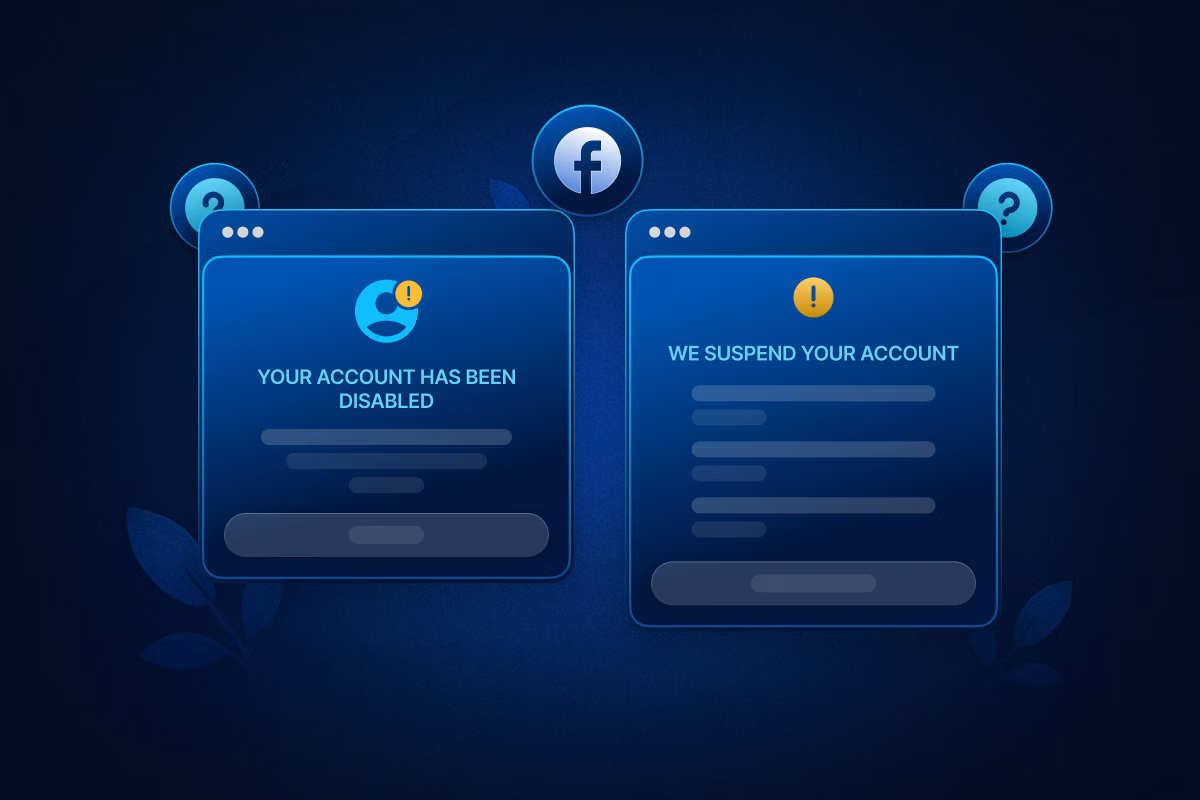
Before we begin, it’s important to note the difference between getting your Facebook account suspended and getting it disabled.
In a nutshell, suspended means you’ve gotten a temporary restriction from Facebook. It means you need to take a break that can last anywhere from 24 hours to a month.
On the other hand, getting your Facebook account disabled is much more serious. A disabled account means you are locked out completely, and your Facebook account isn’t available in anyone’s feed anymore.
Suspensions tend to be given quite often due to any sort of breach in community standards. This can be anything from an inappropriate comment to prohibited advertising practices.
However, they tend to be more lenient and are not really much to worry about if you don’t have a problem being locked out for a couple days. Repeated suspensions can lead to getting an extended ban, which increases the more suspensions you receive.
Getting your account disabled is a whole different issue. It is generally due to serious infractions or suspicion of your account being hacked.
Common Reasons Facebook Disables Accounts
Since disabling your account is a big deal, Facebook rarely does it without a trigger. These triggers are pre-set in the automated systems of Facebook’s algorithm.
They are there to check for safety concerns to you or other users on Facebook. Generally, your account may be disabled if someone tried to hack it or use it for hacking or spamming other accounts.
Policy violations and identity issues also act as reasons for Facebook to disable your account.
Some of the major reasons your Facebook account may be disabled include:
- Suspicious login activity or IP changes: Logging in from widely different geographical locations in a short timeframe. This makes Facebook think that your account was hacked and operated from a different location, causing them to block it automatically.
- Rapid friend requests or messages: Behaving in a spam-like manner can make the system think you’re a bot and not a real human user.
- Policy violations (real or mistaken): Posting content flagged as hate speech, misinformation, or other Community Standards breaches.
- Using automation or browser extensions: Tools that violate Facebook’s Terms of Service are a big reason for Facebook accounts to get deactivated.
- Ad account policy violations linked to personal profiles: Repeated violations in a connected ad account can lead to your main account getting disabled.
- Multiple accounts tied to one identity: Operating duplicate profiles is against Facebook policy, mainly to prevent fake Facebook accounts of real people.
- Identity verification issues: Failure to prove your identity when prompted can cause Facebook to disable your account. Identity verification is usually prompted when Facebook suspects something is wrong with your account usage.
In any case, it is a big hassle to get your Facebook account back once it’s suspended or disabled. Following the rest of this guide will make this process seem much easier and seamless.
Make sure to apply every method one after the other to reliably get back your account at the earliest.
Is Your Facebook Account Recoverable? How to Tell
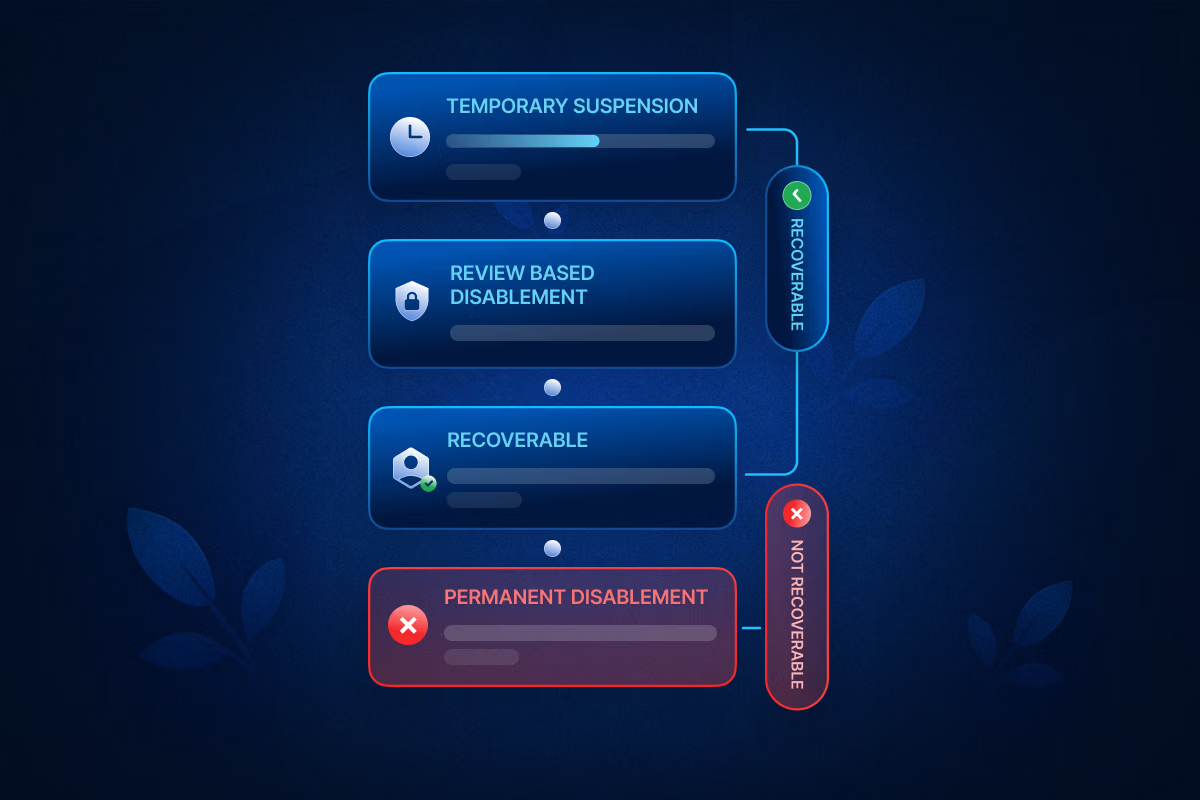
In many cases, your account may be beyond recovery. Figuring out the difference can save you a lot of time from wasted appeals and waiting.
Certain restrictions from Facebook, especially the ones occurring through repeated offenses, cannot be lifted.
So, it is important to understand the difference between the types of suspensions you may receive.
Temporary Suspension (Time-Bound)
This is the best-case situation. Temporary suspensions usually result from minor policy violations, suspicious login behavior, or automated security triggers.
Facebook typically specifies a waiting period (for example, 24 hours, 7 days, or 30 days).
The best way to solve this suspension is to wait. Facebook will return access to your account after the waiting period and everything will go straight back to normal.
Appealing doesn’t usually help in this situation. But the good news is, most suspensions only last a few days and aren’t that damaging.
Review-Based Disablement
In these cases, Facebook has disabled the account but offers an appeal or review option. This often happens due to content reports, ad policy violations, or unusual activity patterns.
This is good too, because Facebook tends to be lenient during reviews. If you can submit accurate information and proper documents, you are likely to recover your account and have everything the way it was.
Permanent Disablement (Non-Appealable)
In some cases, Facebook can permanently disable your account. In these cases, you will typically get a message stating how your account was deleted and you cannot get it back.
This situation comes with no option to appeal and no hopes of recovery. Unfortunately, it is quite impossible to get your account back at this point.
Identity-Based Lockouts
Identity based lockouts are very common and can be resolved quite easily. All you have to do is provide proper identification, like your passport or national ID to Facebook.
If the information on your account matches that on your ID, your account will be recovered without too much trouble.
The review is done typically by humans and takes a couple of days. But there is a high potential of getting your account back.
Repeat-Offender Flags
Repeat offenders can get suspended for a long time or permanently disabled. The more you commit an offence against Facebook policies, the longer your suspension will be.
These cases can still be solved. However, the outcome depends on how severe the breach was and how many times your account has received a warning prior to this.
How to Appeal for a Disabled Facebook Account (Official Process)
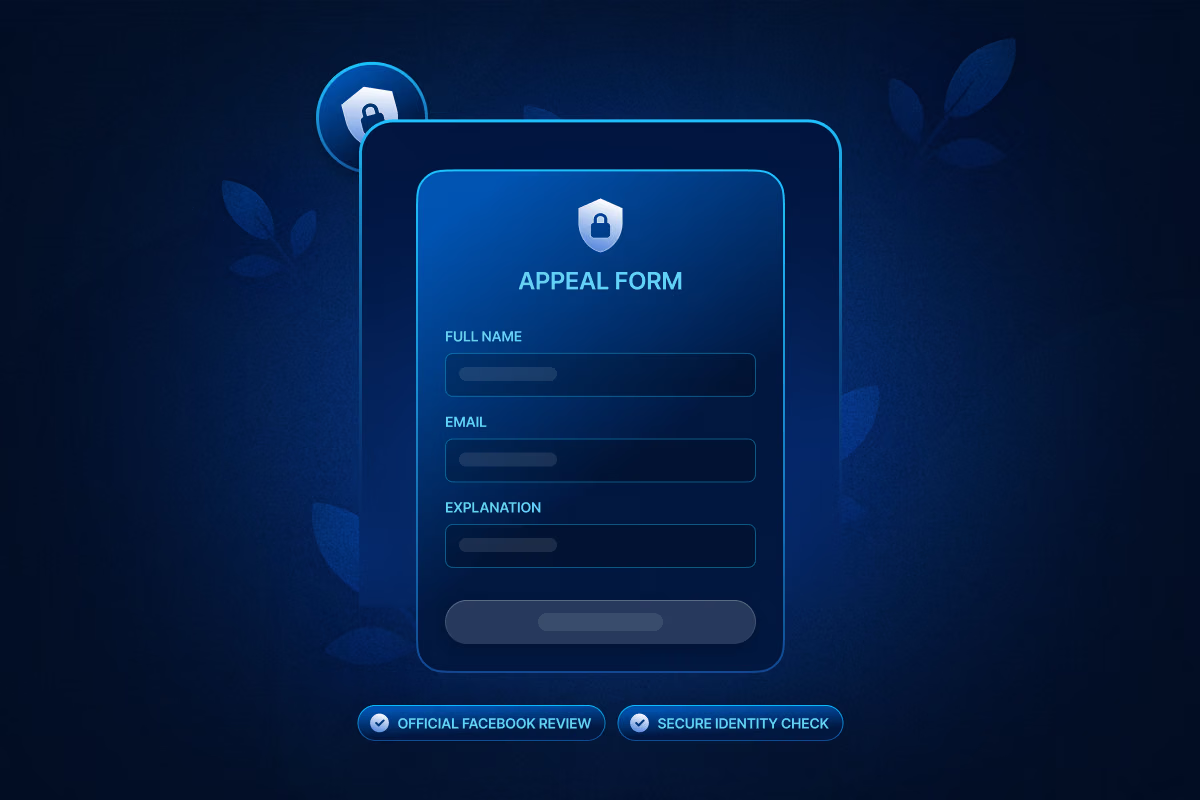
If your account is disabled by Facebook, Facebook is the only entity that can give it back. The main idea is to appeal to Facebook in an effective manner so you can get back your account quickly.
Contacting third parties or exploring guarantees offered by paid services will never work and probably end in you losing a bunch of money. The only way to move forward is to follow Facebook’s official instructions and appeal your case.
Where to Find the Appeal Form
When an account is disabled, Facebook usually places a notice directly on the login screen. That notice contains a link to the appeal form. In some cases, the form is also accessible through Facebook’s Help Center under account access issues.
If you still have limited access, this is where you submit Facebook disabled account appeal requests officially.
What Information Does Facebook Request
The appeal form is intentionally minimal. Facebook typically asks for:
- Your full name (as it appears on the account)
- The email or phone number associated with the account
- A short explanation of what you believe happened
Sometimes, identity verification is requested immediately; other times, it comes later. Avoid oversharing. Being clear in your message is more important than being elaborate.
How Long Facebook Typically Takes to Respond
Response times vary widely. Some users hear back within 24–72 hours; others wait weeks. High volumes, security reviews, and account history all affect timing.
A delay doesn’t automatically mean rejection. It often means your case is sitting in a queue.
What to Expect After Submission
After you appeal FB account disabled status, one of three things usually happens:
- Your account is restored
- Your appeal is rejected
- Facebook asks for more verification
Silence is frustrating, but it’s common. Avoid submitting multiple appeals unless explicitly allowed.
Appeals can take days or weeks depending on volume, risk level, and whether manual review is triggered. Delays often occur because cases are batched and reviewed in stages.
If Facebook provides a timeframe, respect it. Submitting repeated appeals too soon can hurt credibility. If no timeline is given, waiting at least 7–14 days before attempting a follow-up (if allowed) is generally advisable.
How to Write the Perfect Appeal Message
Your message should sound composed, not defensive. Briefly explain what you believe triggered the disablement and emphasize your intent to follow platform rules.
A calm, respectful tone signals credibility.
- Avoid emotional or aggressive language. Appeals filled with anger, blame, or threats are often dismissed quickly.
- Admit mistakes only when appropriate. If you genuinely violated a rule unknowingly, acknowledging it can help. If you’re unsure, don’t speculate.
- Request manual review respectfully. A simple line asking for a human review, without demanding one, can be effective.
How to Recover a Suspended Facebook Account
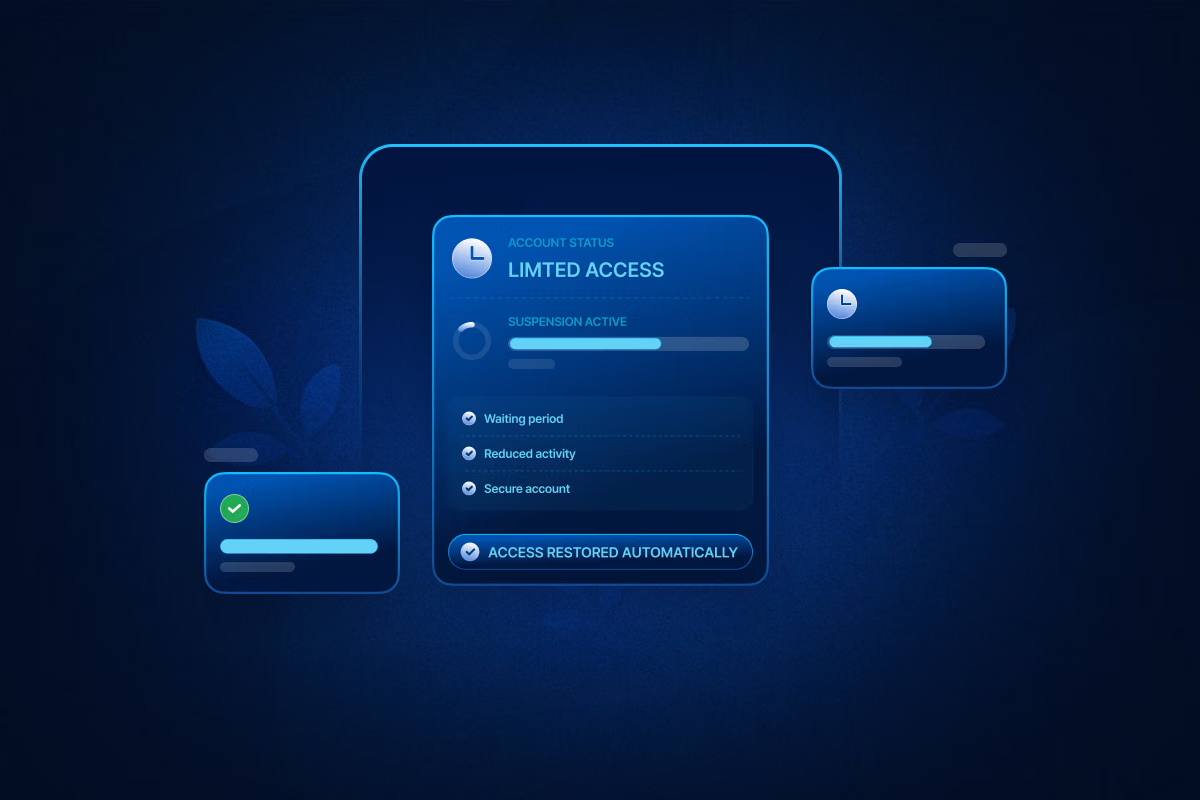
Suspensions are different from permanent disablements. They’re usually temporary and often resolve on their own if handled correctly.
Suspensions can fully lock you out for a couple days or just be a partial restriction. Typically, you will be blocked from making posts or commenting but free to send messages. In any case, it is good to follow the community standards properly during the duration of suspensions so that the period doesn’t get any longer.
Typical Suspension Durations
Most suspensions last anywhere from a few hours to 30 days. The duration is usually tied to the severity and frequency of the behavior that triggered it.
Actions That Speed Up Recovery
- Stop posting or interacting aggressively
- Avoid logging in from multiple devices or locations
- Secure your account (change password, enable two-factor authentication)
These actions reduce risk signals while the suspension is active.
When Suspensions Lift Automatically
Many suspensions expire without any action required. If Facebook specifies a time window, waiting it out is often the fastest solution.
When Appeals Are Required
If the suspension doesn’t list an end date or blocks access entirely, an appeal may be necessary. This is common when spam-like behavior or login anomalies trigger automated systems.
How to Recover a Disabled Facebook Account Without ID
This is a sensitive and often misunderstood topic. While identity verification is common, it’s not always unavoidable.
However, it may be difficult for you to provide ID at the time of recovery. Your ID might need correction, or your account may be in a different name. Facebook still offers solutions in these cases, but they are often trickier than just showing them your ID.
When Facebook Requires ID Verification
Facebook typically requests ID when it cannot confirm that the account belongs to a real person or when suspicious activity is detected. This is common after hacking incidents or name-policy flags.
There’s no reason to be alarmed. Facebook doesn’t want to know anything about you personally.
However, you may be inclined to not submit your ID and information to Facebook. In these cases, there are a couple of workarounds you can try. Facebook may rely on other trust indicators instead.
Alternative Verification Signals Facebook May Accept
In limited cases, Facebook evaluates:
- Long-term account activity
- Consistent login behavior over time
- Connections with established accounts
- Past compliance history
These signals sometimes allow recovery without a formal ID, which is why how to recover disabled Facebook account without an id depends heavily on context. In such cases, an appeal may go a long way.
Facebook will typically offer you an option to contact them or appeal in cases of not being able to provide an ID. However, in cases where the option to appeal is unavailable, recovery may not be possible.
Why Recovery Without ID Is Difficult but Sometimes Possible
ID verification is the fastest path for Facebook, so alternatives are rarely prioritized. However, older accounts with stable behavior and strong trust signals occasionally succeed without it.
Success depends on account age, activity patterns, and overall credibility—not persistence alone.
How Facebook Reviews Disabled Accounts (Automation vs Manual Review)
When an account disappears overnight, the silence feels louder than the lockout itself. No warning. No clear explanation. Just a cold notification.
What many people don’t realize is that Facebook rarely evaluates disabled accounts with human judgment at the outset. The system is engineered for volume, not nuance.
Automated Flags vs. Human Review
The initial verdict is almost always rendered by machines. Facebook’s enforcement systems quietly observe behavior over time.
Things like posting cadence, interaction velocity, device changes, geographic jumps, reporting frequency, and historical infractions are assessed and compared to standards set in the algorithm. When enough irregularities accumulate, the system acts decisively and without ceremony.
Human eyes enter the picture only later, and only selectively. Manual review is reserved for cases that appear ambiguous, defensible, or worth salvaging.
Accounts with turbulent histories or repeated warnings often never cross that threshold. In effect, automation filters ruthlessly; humans intervene sparingly.
Why Appeals Take Time
Appeals don’t move linearly, nor are they handled in the order they’re submitted. They’re sorted, clustered, deprioritized, and sometimes paused mid-process.
Some wait on secondary verification layers; others are delayed by sheer volume. Millions of appeals funnel through the same pipelines.
This waiting period feels interminable because it is opaque. Silence doesn’t equal rejection, it usually means your appeal is dormant in a queue, pending either automated reevaluation or limited human bandwidth.
Why Repeated Appeals Reduce Credibility
Persistence is often mistaken for diligence. In reality, repeated appeals can erode trust.
Each submission leaves a footprint, and excessive retries can resemble system abuse rather than genuine confusion. Over time, this behavior chips away at the account’s internal credibility markers.
Once that confidence drops, future appeals are more likely to be dismissed reflexively, sometimes without ever being fully parsed.
What feels like determination from your side can look like noise from theirs.
Why Identical Appeal Messages Fail
Facebook’s systems are adept at detecting linguistic deja vu. Recycled templates, popular “appeal scripts,” and copy-pasted pleas are instantly recognizable.
When the language lacks specificity or originality, it’s treated as low-signal content.
Human reviewers aren’t persuaded by absolutes either. Statements like “I did nothing wrong” offer no verifiable substance.
Appeals that acknowledge context, explain anomalies, and sound unmistakably human are harder to ignore, and easier to validate.
What NOT to Do During a Facebook Disabled Account Appeal
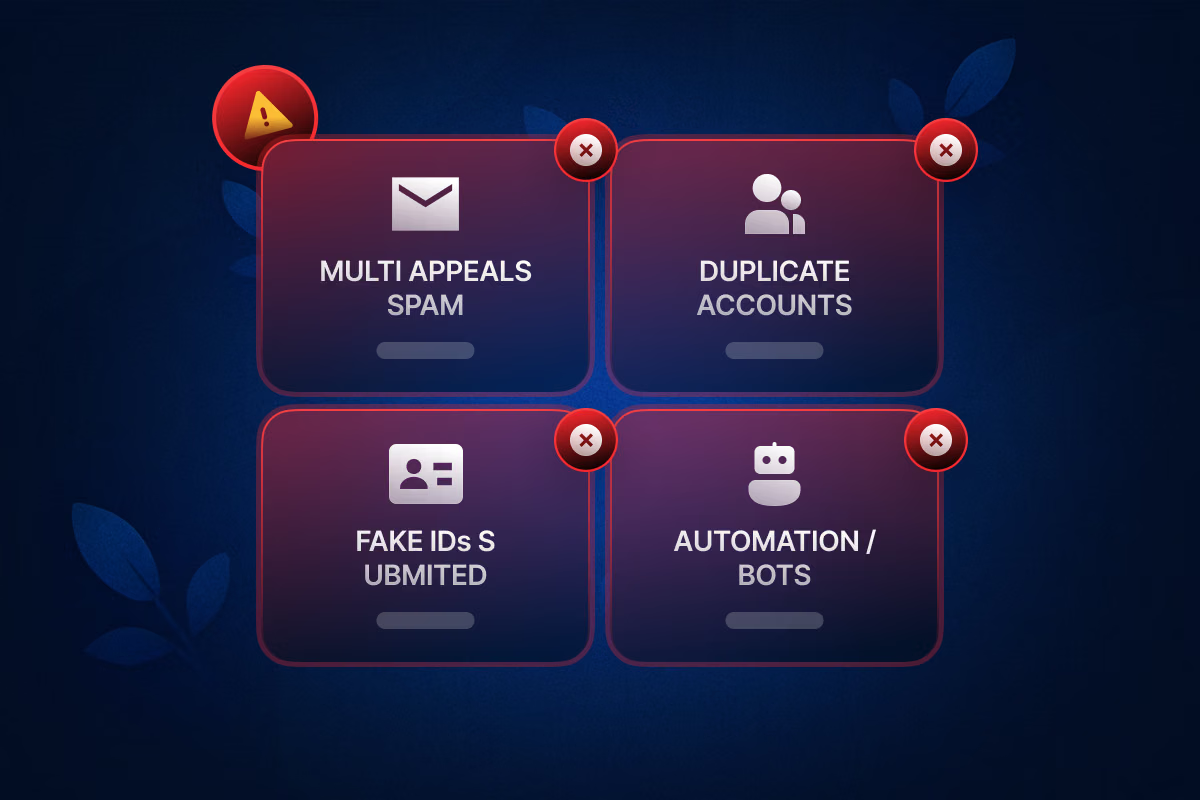
When an account is disabled, panic often leads people to make choices that quietly destroy their chances of recovery.
These mistakes don’t just fail to help; they actively reduce trust inside Facebook’s review systems.
Submitting Multiple Appeals in a Short Time
Flooding the system with appeals signals impatience or automation abuse. Each submission is logged.
When too many arrive too quickly, credibility drops and future appeals are more likely to be auto-dismissed without review.
Creating Duplicate Accounts
Opening new accounts while appealing an old one is a major red flag. Facebook links accounts through devices, IP patterns, cookies, and behavior.
Duplicate profiles often result in both accounts being restricted or permanently disabled.
Using Fake IDs
Submitting altered or fake identification almost always ends recovery attempts permanently.
Once Facebook detects falsified documents, the account is marked as untrustworthy and that label is rarely reversible.
Using VPNs Inconsistently
Logging in from different countries or IP ranges during an appeal creates security anomalies.
Instead of helping, VPN hopping reinforces the idea that the account is compromised or being manipulated.
Contacting Random “Facebook Support” Emails
Facebook does not provide recovery through unofficial emails, WhatsApp numbers, or Telegram “agents.”
Reaching out to these sources often leads to scams, data theft, or wasted money, none of which help reinstatement.
When Appeals Fail: Long-Term Recovery Options
Not all accounts can be recovered. Acknowledging that is part of making smart decisions.
When Recovery Is Realistically Not Possible
- Permanent policy violations: Severe or repeated breaches often carry final decisions.
- Identity issues: If Facebook cannot verify ownership, recovery may end.
- Repeated suspensions: A long history of restrictions lowers tolerance for future mistakes.
- Linked ad policy abuse: Personal accounts tied to abusive ad behavior face harsher outcomes.
What You Can Do Instead (Cautiously)
- Start fresh with a fully compliant setup: New account, clean behavior, no shortcuts.
- Build trust slowly: Minimal activity at first, authentic interactions only.
- Avoid risky tactics: No automation, no mass actions, no policy gray areas.
About Buying Old Facebook Accounts
Many people look to buy old Facebook accounts because they believe age alone helps bypass restrictions. In reality, that assumption is flawed. While older accounts often appear more trustworthy and may have higher limits, age by itself is not enough to guarantee safety.
Facebook evaluates much more than registration date. Activity patterns, login behavior, and account history matter far more than simple age.
Why Most Purchased Accounts Get Banned
Facebook treats accounts as personal and non-transferable. Buying or selling them violates platform rules, regardless of account age. Because of this, many purchased accounts are flagged quickly.
Common risks include:
- Instant disablement after login
- Identity mismatches triggering verification
- Seller scams and lost payments
- Pre-flagged or shadow-banned profiles
- Poor-quality or fake activity history
Facebook closely monitors behavioral changes such as new devices, new locations, sudden posting activity, and unfamiliar networks. When an account changes hands, these signals stand out fast.
Uproas: Best Place to Buy Aged Facebook Accounts
Most account bans happen because sellers provide low-quality, recycled, or compromised profiles. Many of these accounts already carry warning signs before buyers ever log in.
This is why professional marketers and agencies rely on trusted providers like Uproas.
We deliver properly aged, clean, and warmed-up Facebook accounts with realistic usage history. Each account is prepared to blend naturally into Facebook’s system, reducing risky behavioral spikes.
Key advantages of Uproas include:
- Verified account histories
- Gradual and natural activity patterns
- Device and IP consistency
- Low-risk login environments
- Replacement support
Buying Facebook accounts always carries some risk. However, choosing the right provider makes a major difference between instant bans and long-term usability.
If you use Facebook for advertising, outreach, or business growth, investing in high-quality accounts from Uproas helps you avoid common traps and protect your campaigns from unnecessary shutdowns.
In the long run, account quality and sourcing matter far more than age alone.
How to Prevent Facebook Account Suspension in the Future
Prevention is quieter, cheaper, and far more effective than recovery. Best practices to prevent your account from being suspended in the future include:
- Use consistent login devices and locations
- Avoid automation or growth tools
- Warm up new accounts gradually
- Follow Community Standards meticulously
- Separate personal profiles from ad activity properly
- Enable two-factor authentication
Small habits compound into long-term trust. Once trust is established, suspensions become far less likely.
Conclusion
Having a disabled Facebook account is undoubtedly frustrating, but it's important to remember that it's not always a permanent situation. While the process can test your patience, a well-written appeal following Facebook's guidelines gives you the best possible chance of recovery.
Approach your appeal with clarity, patience, and full compliance, as these are the keys to a successful outcome. Resist the temptation for shortcuts, which often lead to repeated suspensions and, ultimately, permanent loss of your account.
For business page owners, try getting Facebook agency ad accounts from services like Uproas to get fewer bans and a more seamless experience. Uproas accounts offer you all the comforts in your usual business page plus the reliability of not getting banned from advertising issues.
Frequently Asked Questions
Why did Facebook suspend my account without warning?
Most actions are automated. Suspensions often trigger instantly once risk thresholds are crossed.
How long does a Facebook disabled account appeal take?
Anywhere from a few days to several weeks, depending on volume and review type.
Can I submit multiple appeals?
Only if Facebook explicitly allows it. Otherwise, repeated appeals usually hurt more than help.
Will creating a new account help?
Not during an active appeal. Duplicate accounts often worsen outcomes.
Can a permanently disabled account ever be recovered?
In rare cases, but most permanent decisions are final.


Latest blogs

Google Ads Cost: What You'll Really Pay (By Industry, Campaign Type, and Business Size)
Stop wasting budget on vague pricing. See exact 2026 Google ads cost benchmarks by industry, real CPC data, and the formula to reduce your ad spend.

Types of Facebook Ads: A Complete Guide to Every Format in 2026
See all types of Facebook ads, including current specs, placements, and objectives, plus a matching table to pick the right format for your goal.
ABM Stats: 2026 Benchmarks, ROI & Trends
From ROI to pipeline velocity, these 2026 ABM stats show exactly why account-based marketing dominates B2B growth.
.jpg)
The Real Price of Social Media Advertising: A Cost Guide for Advertisers
Find out what social media ads actually cost these days. Get to know about CPC, CPM, CPL, industry verticals, budget ranges, and ROAS across major platforms.
Bing Ads Cost in 2026: Everything You Need to Know
Stop wasting money on ad spend. See the 2026 Bing Ads cost benchmarks, real industry CPAs, and hidden ROI data you need to outperform competitors.

6 Best AI UGC Video Creators for TikTok Ads in 2026
Avoid expensive creators. Find the 6 best AI UGC video platforms for TikTok ads in 2026. Cut production costs, test faster, and scale your ROI.
TikTok Ads Statistics 2026: Benchmarks, Rates and Performance Data
With 8.7M businesses competing, discover key TikTok ads statistics and different benchmarks to beat the competition and refine your ad performance.
Static vs Dynamic Ads: Key Differences, Examples & How to Choose in 2026
Compare static and dynamic ads, their key differences, examples, and when to use each format to improve targeting, conversions, and ROI in 2026.
Geographic Segmentation: Definition, Variables, Examples & How Marketers Use It
Stop wasting ad spend on guesswork. Geographic segmentation uses location data to reach the right audience at the right place and drive real ROI.