How to Spy on Competitors’ Ads: Tools, Strategies, Insider Insights

Digital advertising is a highly competitive industry. You will be contesting everyday for getting the most out of the available audience.
And the best way to get ahead in this race? Know what your competitors are up to. And that’s why knowing how to spy on your competitor’s ads is important.
Researching ad strategies your competitors are using is actually an essential part of building better campaigns. A lot of the time, it helps you recognize trends and industry standards you can follow.
You can optimize your ads better by comparing benchmarks and ad insights. Moreover, looking at other ads in the market helps you flow your creative juices and gain new perspectives.
None of this is about copying someone’s work or stealing ideas. Deriving inspiration is a keystone in any type of creative process.
This blog shows you how to spy on your competitors’ ads effectively and ethically and use it to your advantage.
Why Spying on Competitors’ Ads Matters
Figuring out your competitors’s ad strategies is more than about the content they are using. Researching and keeping up with insights and data about ad campaigns in your industry is an essential step in taking better advertising decisions.
Staying informed about what works and what doesn’t, what others are paying for a type of ad and how they are dealing with existing issues helps make your own ad campaigns better and cheaper.
Below are some of the most important reasons why taking a look at your competitor’s ads matters.
Understand Market Expectations
Figuring out your audience’s expectations helps you make important adjustments to your campaign.
Advertising in a market you don’t know may turn up challenging, as you don’t know how much of what ads are best for getting the highest conversions. A sneak peak into what others are doing helps you in designing a more relevant ad campaign for your market.
Benchmark performance
Knowing what your competitors’ are doing isn’t enough. Benchmarks are an important part of comparing performance and costs of ads. Comparing your own metrics with industry benchmarks help you identify what you’re lacking and what you need to focus on improving.
Reveal gaps and missed opportunities
Following up on your competition helps you fill up any gaps you may have in your campaign. There will always be ad placements and audience groups you may be missing out on.
As you view your competitors’ ads, you will find more and more opportunities you have missed and include them in your strategy.
Improve Your Creative Strategy
Of course, there is the factor of creative content. Creativity has always been inspired by similar material, so there is nothing wrong with using your competitors’ work for reference.
You won’t be stealing from them. Instead, you’ll take ideas and note down popular trends you can work on to make something original.
- Reduce costly trial-and-error: Traditionally, the only way to test out your ad strategy is through A/B testing. To do this effectively, it is important to observe the metrics that indicate the performance of your competitors’ ads.
- Stay ahead of industry movements: Finally, you will never miss a seasonal push or change in the industry. Utilizing industry changes will help you cash in on incredible advertising opportunities which you would otherwise skip.
The Ethics and Purpose of Competitor Ad Spying
Don’t get us wrong. We do not encourage the use of unethical and illegal means to gain access to private data.
Competitor analysis can be done using completely ethical practices, not involving any form of intellectual property theft.
Many marketers hesitate to analyze competitors' ads because they misunderstand the nature of competitive intelligence.
But spying on ads does not mean hacking, breaching servers, or extracting private data.
Competitive ad analysis means using publicly available information and legitimate marketing tools.
What Ethical Ad Spying Actually Is
- Reviewing ads openly displayed on platforms (Facebook Ad Library, Google Transparency Center).
- Studying sponsored posts that appear in your feed.
- Exploring public landing pages and funnels.
- Using analytics tools that compile non-sensitive, legally accessible data.
- Observing trends and patterns without extracting private data
It is true that unethical forms of spying on competitors’ exists and many companies end up adopting this. But as you will see, there is no need to resort to such measures.
You can gain perfectly legal information about your competition and still use that to gain a significant advantage, only if you know where to look.
How to Spy on Competitors’ Ads: Step-by-Step
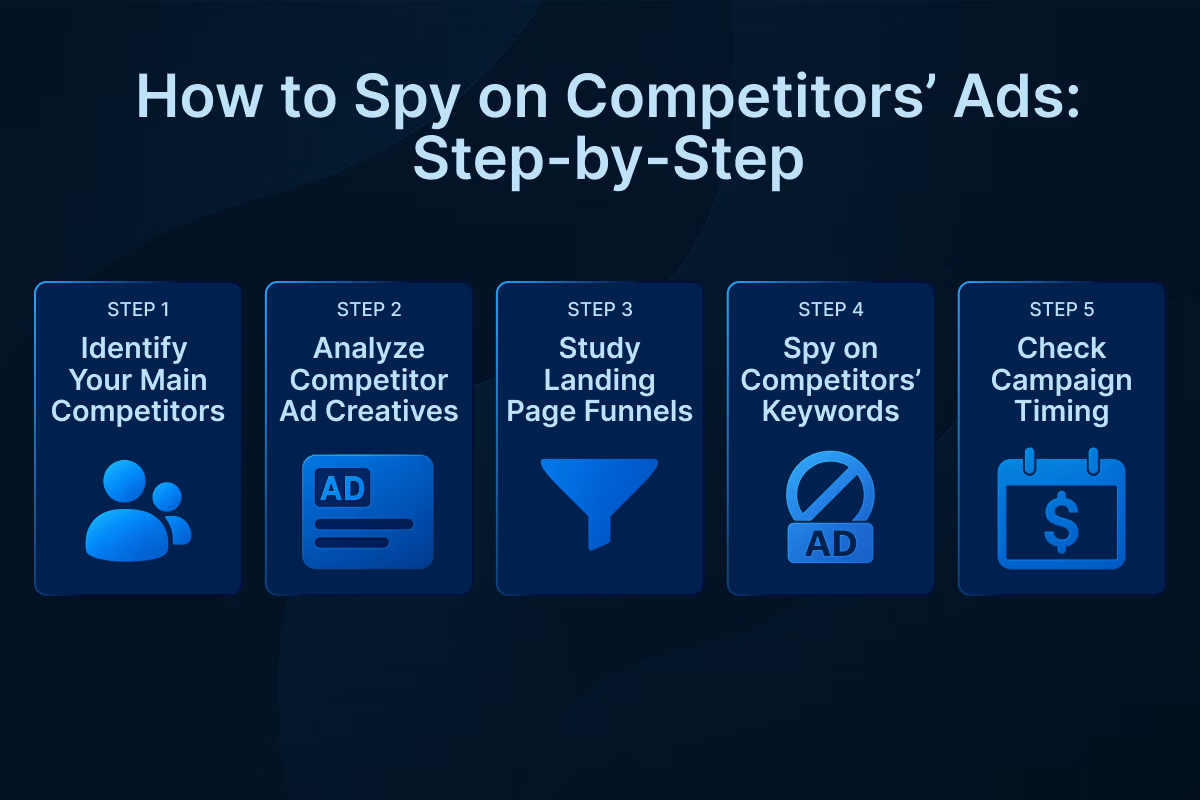
Every successful competitive analysis follows a structured process. Below is the step-by-step approach used by experienced media buyers.
Step 1: Identify Your Main Competitors
There’s no point comparing your ads strategy with someone who isn’t relevant. Competitor analysis is more than about observing the brands in your industry.
Depending on what you want to gain, it is important to first figure out who the best candidates are to make a comparison.
Many brands only focus on the industry leaders. But sometimes, industry leaders may not be the right candidate as your competitor.
There may be aspects you need to compare that industry leaders are simply not right for. Often, the niche players reveal the most innovative ideas.
How to identify the right competitors:
- Use Google search results to find brands ranking for your core keywords.
- Explore industry directories and category listings.
- Check the SEMrush Competitors tab to uncover sites targeting similar keywords.
- Use Meta Audience Insights to analyze overlapping audiences.
Your competition for analysis needs to be a mixed basket. You need to be able to compare between the giants and the up-and-comers. Another mistake you should steer clear of is choosing too many companies.
The appropriate competitor list should have a few brands closely related to your market or the advertising angle you want to go through with.
In a nutshell, try to make a list of competitors with:
- 3 to 5 brands relevant to your industry or campaign
- A couple of more trendy advertisers providing a fresh take on the market
- At least one major brand leading the industry
Step 2: Analyze Competitor Ad Creatives
The heart and soul of advertising lies in the content, and the creativity behind it. As we mentioned, no one is proposing you steal or copy someone’s ideas.
But having a reference largely helps to improve the content you already have. Trying to come up with something original starts from the initial phase of reviewing what is already out there and working.
What to look for in Facebook/Instagram ads:
- Visit the Facebook Ad Library for each competitor
- Observe ad formats: video, carousel, static image, stories, reels.
- Note visual style: colors, typography, layouts, and recurring motifs.
- Identify hooks and angles: testimonials, urgency, problem-solution, lifestyle framing.
- Look for interesting offers: discounts, bundles, free trials, limited-time offers.
How long an ad runs may be a good indicator of how well it is performing. Ads that stay live for more than 60 days can be considered successful and a good point of reference.
It is important to understand the difference between a regular innovative ad campaign and an idea that actually works and resonates with the audience.
Step 3: Study Landing Pages and Funnels
If all else is the same and you’re still not getting results, the problem may be with your landing page. The landing page is one of the key components of getting a better conversion rate on your ads. One of the key things to note as you spy on competitors' ads is where they lead and how they follow through.
Try to compare your landing page with those of your competitors and take a look at what stands out. Successful competitors may be getting their edge because of having effective ad funnels and destinations.
Analyze the following:
1. Landing Page Structure
Your landing page should have an intuitive and associable structure. What appears first, what information comes next, and how the user is guided through the content are all things you need to look out for.
Elements often included:
- A hero section with the main headline and visual
- Value propositions that explain why the product/service is unique
- Social proof (reviews, ratings, client logos, testimonials)
2. Copywriting Tone
This is the style and personality of the text on the page. Different tones create different emotional reactions. The tone helps align the message with the audience mindset.
3. CTA Placement
CTA (Call-To-Action) buttons tell users what to do next—“Buy Now,” “Sign Up,” “Get a Quote,” etc. Where these buttons appear dramatically affects conversion rates.
4. Funnel Type
The funnel type refers to the purpose of the landing page and what action the brand wants the visitor to take. The funnel determines both the page design and the user experience.
5. Form Design
If a landing page has a form, its design affects how many people complete it. Complicated forms scare visitors away; simple forms convert better.
Factors include:
- Number of fields
- Step-by-step vs. single-page
- Required vs optional fields
- Ease of use
Step 4: Spy on Competitors’ Keywords
SEO and PPC campaigns depend noticeably on keywords. Oftentimes, the difference between getting the most out of your ads or not is in choosing your keywords.
It’s impossible to just know what keywords work without doing any market research. As always, it is best to sneak a peak into what others in the industry are using to get the most traction.
Keyword spying shows what your competitors consider valuable enough to spend money on. Comparing lists of keywords from different brands can help you find the perfect combination that outperforms all of your competitors.
However, no one wants to give out their keyword list easily. You need to use tools dedicated to this task. Fortunately, there are a few options in the market.
- SEMrush
It’s necessary to make a distinction between keywords that actually work and those are not really contributing. You need to find the keywords that will be most relevant to your ads and concoct a recipe that fits your needs best.
Here’s what you should look for in Keywords:
- High-traffic, low-competition keywords your competitors consistently target
- Commercial vs informational intent
- Long-tail phrases competitors rank for organically but don’t bid on
- Keyword gaps you can exploit
Step 5: Check Competitor Campaign Timing and Budget
Saving money on ads when they are less effective and choosing times of seasonal boom are important decisions as well. Getting the most bang for buck out of your ads campaign is only possible if you know what timing and costs are best. Competitor analysis, especially on how much they are spending on ads and when, can make your budget smaller or increase the volume of ads you can run.
- Use AdSpy or PowerAdSpy for ad launch dates.
- Identify seasonal spikes (holidays, end-of-quarter pushes, new product launches).
Brands often follow repeatable cycles. The only way to get a feel for advertising cycles is either test it out yourself or see what others are doing. It doesn’t take a lot of maths to figure out that observing others is way cheaper than testing by yourself.
How to Spy on Competitors’ Google Ads

Google’s Transparency Center is one of the most powerful tools for analyzing search and display ads. It helps you find competitor brands and review their current and past ads. You can use the transparency center to analyze:
- Headline patterns (keyword placement, urgency words)
- Display URLs (landing page naming insights)
- Ad extensions (sitelinks, callouts, price extensions)
You can also try using third-party tools to get better insights on Google Ads. Tools like SemRush or SpyFu can help you gather:
- Competitor PPC keywords
- Average ad positions
- Bid estimates
- Historical changes in ad copy
How to View Competitor Display Ads
Display ads are one of the main Google Ad formats you need to analyze. They have the largest network of webpages that show ads and generate results. Getting to know Google Ads statistics, especially related to your industry, can help you make better choices in display ads.
You can use the following tools to get more insights:
When going through your competitors’ display ads, analyze the following:
- Ad size and format
- Frequency of content
- Landing page types
- Publisher sites to advertise on
- Traffic sources (native, display, direct, social)
Comparing display vs search strategies helps you understand how competitors structure their overall acquisition funnel.
Analyzing Competitor Funnels and Retargeting
The real power of competitive intelligence lies in understanding how brands nurture and convert leads. You need to learn to figure out the funnel strategies of your competitors and implement them on your own ads. Retargeting methods are also an aspect that may require nuanced planning and execution.
Funnelling methods and retargeting strategies aren’t things your competitors will give out for free. But there are ways to figure out the details without doing anything unethical. A basic method of discovering your competitors’ funnel strategy is described below.
Steps to Reverse-engineer Competitor Funnels
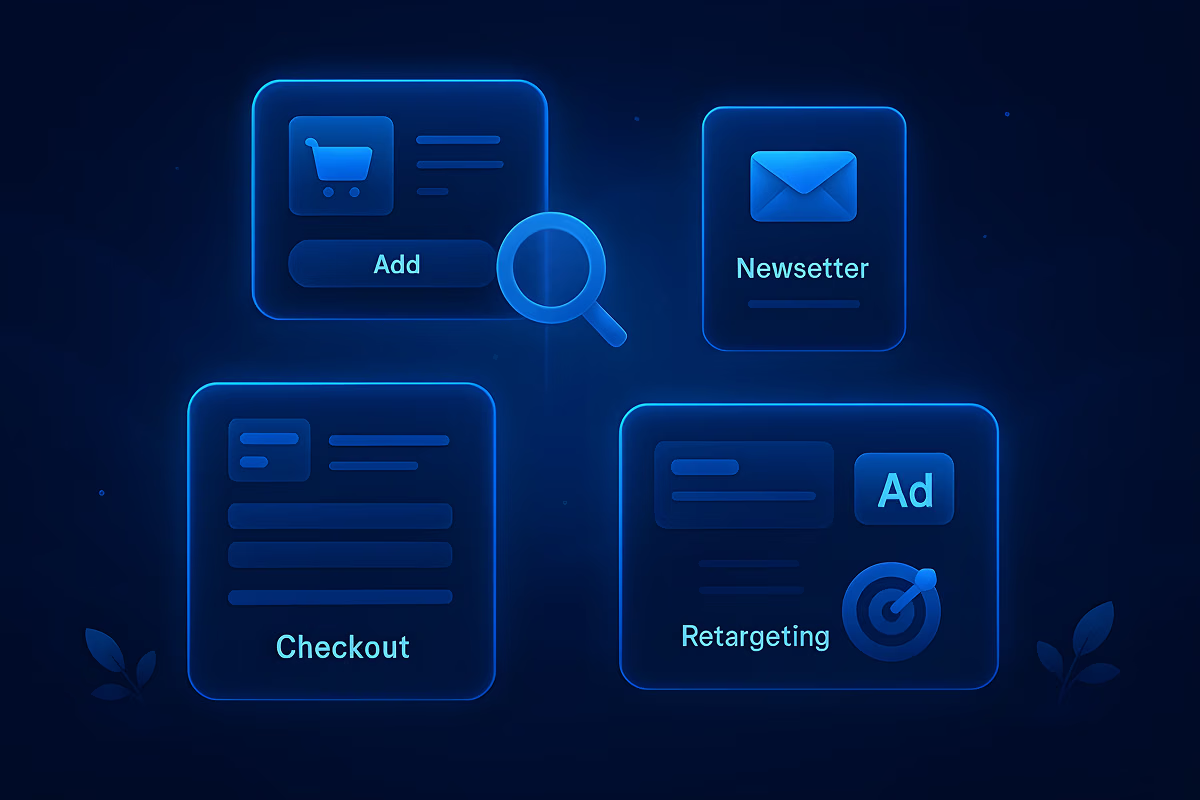
Following are the steps to reverse engineer your competitors' funnels:
Step 1: Add products to the cart
Step 2: Sign up for newsletters
Step 3: Initiate checkout
Step 4: Wait for retargeting campaigns
As you go through this process, try to keep track of the important metrics that give away the brand's funnel strategy. Some key points to follow are:
- Frequency of remarketing ads
- Delay between touchpoints
- Messaging progression
- Discount strategy
Use tools like Ghostery to identify pixels and scripts. This gives clues about their automation tools and remarketing stack. Analysis of this kind helps you map out the rhythm of successful funnels and avoid ad fatigue.
Leverage the Facebook Ad Library (Your Free Starting Point)
The Facebook Ad Library is the easiest and most accessible place to begin. Most importantly, it’s free and can be used to get a big advantage in your campaign design.
You can also compare your stats with Facebook ad benchmarks to get a good read on how your ads are holding up compared to others in your industry.
Following strategies are quite effective:
- Search by brand, industry, or keyword
- Filter by country, platform, or ad type
- View all active ads, no login required
- Download creatives for inspiration
- Track long-running ads for proven winners
Using Advanced Tools to Spy on Competitors
Free tools give you visibility, but advanced tools give you power.
Common Mistakes to Avoid When Spying on Competitors
Competitive analysis is powerful, but only when done correctly. Some simple mistakes can tank your ad performance when you try to utilize your competitors’ strategies. Before you finalize your new strategy, take a look at the following to ensure you’re not making an obvious mistake.
- Copying ads directly: It kills performance and violates IP.
- Ignoring landing pages: The ad is only step one.
- Forgetting audience targeting clues.
- Over-relying on a single tool or platform.
- Failing to benchmark insights against your own KPIs.
How Uproas Gives You a Competitive Advantage
Once you are done spying on your competitors’ ads, it’s time to make sure you organize your own ads strategy to beat them. Uproas is here to help you out with it. Our agency ad accounts provide high ROI, low CPMs and CPAs, quick approval time, and tons of other benefits.
We provide:
With our agency ad accounts, you can scale your business without the fear of your ads getting banned. Plus, we have a 24/7 customer service team to help you out!
We aim to help you gain a competitive advantage and access to resources for utilizing competitor insights to the max.
Frequently Asked Questions
Is it legal to spy on competitors' ads?
Yes, as long as you’re only viewing publicly available ads and metrics. Platforms like Facebook, Google, and TikTok make ads transparent for regulatory reasons, so checking them is fully legal. What’s illegal is hacking, scraping private data, or accessing anything not publicly available.
What tools show competitor Facebook ads?
You can use Facebook Ads Library, which is free and lets you search any page and see all their active ads. Third-party tools like AdSpy, PowerAdSpy, BigSpy, and Semrush Social also help find creative trends, ad copies, and targeting patterns.
How do I view competitors’ Google ads?
Search your competitor’s main keywords on Google. In most cases, their ads will appear. For deeper research, use tools like Google Ads Transparency Center, Semrush, Ahrefs, or SpyFu, which show ad copies, spend estimates, and keyword strategies.
How can I find competitor keywords?
Use SEO and PPC research tools like Ahrefs, Semrush, Moz, and SpyFu. Enter your competitor’s domain and you’ll see the keywords they rank for, their paid keywords, and the ones driving the most traffic. You can also manually review their site structure to identify keyword themes.


Latest blogs
ABM Stats: 2026 Benchmarks, ROI & Trends
From ROI to pipeline velocity, these 2026 ABM stats show exactly why account-based marketing dominates B2B growth.
.jpg)
The Real Price of Social Media Advertising: A Cost Guide for Advertisers
Find out what social media ads actually cost these days. Get to know about CPC, CPM, CPL, industry verticals, budget ranges, and ROAS across major platforms.
Bing Ads Cost in 2026: Everything You Need to Know
Stop wasting money on ad spend. See the 2026 Bing Ads cost benchmarks, real industry CPAs, and hidden ROI data you need to outperform competitors.

6 Best AI UGC Video Creators for TikTok Ads in 2026
Avoid expensive creators. Find the 6 best AI UGC video platforms for TikTok ads in 2026. Cut production costs, test faster, and scale your ROI.
TikTok Ads Statistics 2026: Benchmarks, Rates and Performance Data
With 8.7M businesses competing, discover key TikTok ads statistics and different benchmarks to beat the competition and refine your ad performance.
Static vs Dynamic Ads: Key Differences, Examples & How to Choose in 2026
Compare static and dynamic ads, their key differences, examples, and when to use each format to improve targeting, conversions, and ROI in 2026.

Geographic Segmentation: Definition, Variables, Examples & How Marketers Use It
Stop wasting ad spend on guesswork. Geographic segmentation uses location data to reach the right audience at the right place and drive real ROI.
How to Manage Multiple Facebook Accounts on One Device
Learn how to manage multiple Facebook accounts on one device safely using browser isolation, account separation, AdsPower, and Uproas tools.

Bing vs Google Ads: Which Advertising Platform Is Better in 2026?
Confused between Bing vs Google ads? Learn the key differences, including cost, reach, and performance. Pick the right ad platform for your business.