Native Advertising - How It Works, Platforms, and Examples

In a world where highly invasive ads are constantly popping up in our faces, native ads represent an innovative and impactful new wave in digital marketing. Native ads transcend the ever-expanding realm of typical, obvious advertising and blend seamlessly with the user’s content in a natural way. It is the best workaround for banner blindness that plagues the current generation of internet users.
Native advertising is paid content engineered to match the format, context, and behavioral expectations of the platform it appears on. In a digital environment saturated with interruption-based messaging, native advertising survives because it respects attention instead of attempting to hijack it. Simply, digital ad impressions that come naturally.
However, native ads are still shrouded by mystery to many marketers. This blog explains the concept in depth, with effective hacks to maximise the impact of your native ads.
What Native Advertising Actually Means
Native advertising is a paid media model that distributes content designed to resemble editorial material while still serving commercial objectives. In simple terms, native ads appear as content you are already watching. It can look like a post on your feed, a search result on the search page, or a video you can play.
Where traditional ads announce themselves as foreign objects, native ads camouflage themselves as residents (with good ads impressions, of course!).
Why Native Advertising Is Called “Native”
The word native is precise. Native ads behave as though they belong to the environment they inhabit. They mirror typography, spacing, visual hierarchy, content cadence, and even emotional tonality.
This alignment reduces cognitive friction. The user does not feel “advertised to.” They feel informed, guided, or entertained for viewable ad. And in a landscape governed by attention scarcity, that distinction is decisive.
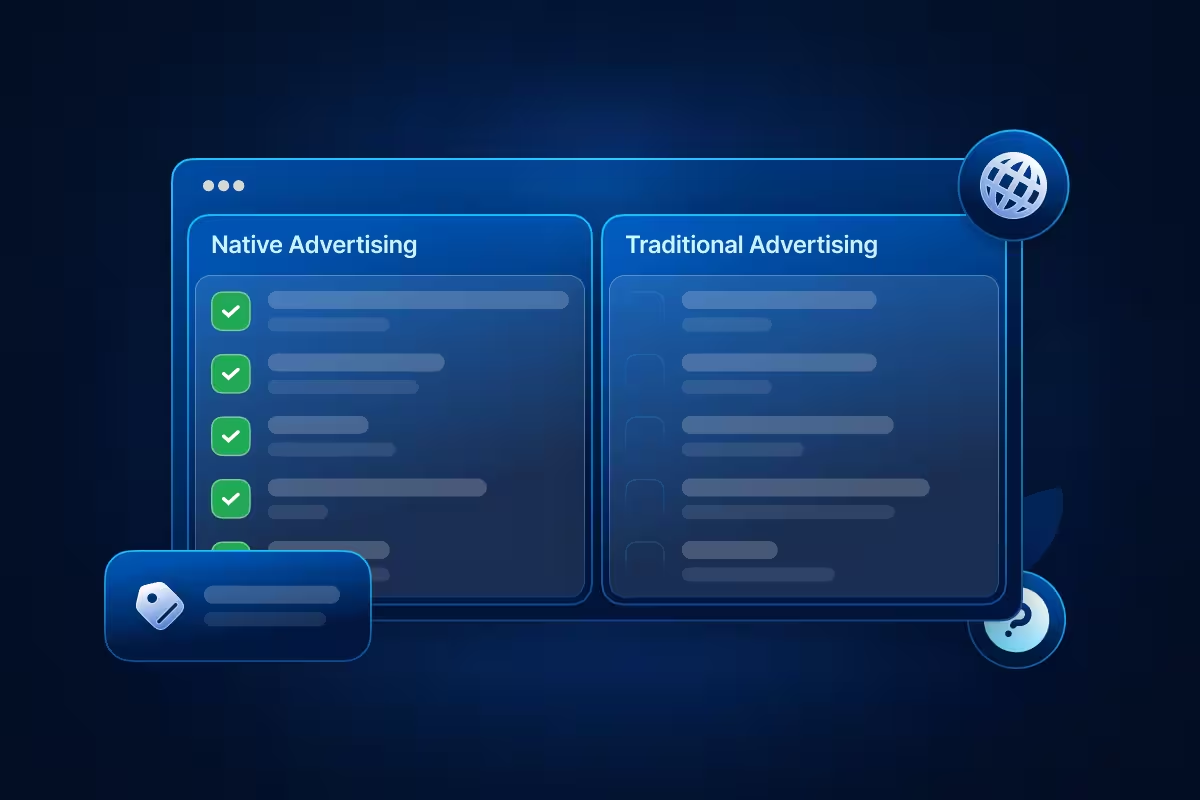
Native Advertising vs Traditional Advertising
Native advertising works because it preserves immersion rather than breaking it. The difference lies mainly in the type of creative and the language used.
Unlike traditional ads, native ads tend to have more natural and content-like language. The creative is more natural and original rather than tacky and in-your-face. In essence, it looks like any other post or content on the page you’re viewing.
5 Core Benefits of Native Advertising
- Native ads match the look, feel, and format of the platform, so users experience them as part of the content rather than a disruptive advertisement.
- By appearing helpful, informative, or entertaining instead of overtly promotional, native ads create a sense of authenticity, which strengthens brand perception.
- Unlike traditional banner or pop-up ads, native ads do not overwhelm users, leading to less irritation and more sustained attention.
- Because native ads spark curiosity and align with user interests, they encourage users to interact more, driving higher CTRs and time spent on content.
- From awareness to consideration and finally action, native advertising guides users naturally, making them more likely to convert without aggressive selling.
How Native Advertising Works from End to End
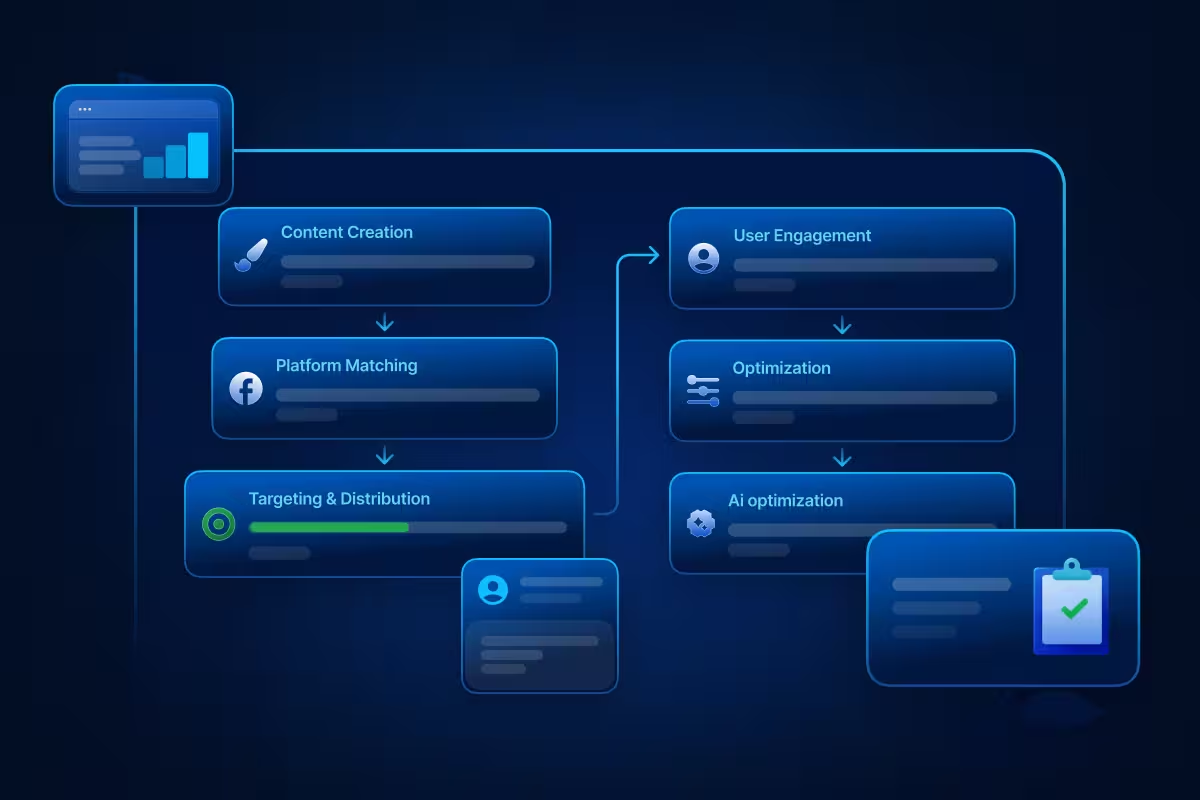
Native advertising is not a single action; it is a system. The native advertising process is one that takes some practice and creative liberty. Most importantly, it requires good knowledge of the ad space to be utilized. The whole concept revolves around melding your ad with the surroundings in a natural way.
Step 1: Content Creation
Everything begins with content engineering. Content is the heart of native advertising, and the main driver of separating it from billboard-like ads that populate the internet.
Native ad content is special because of its headlines, copy, and creatives. Headlines are crafted to spark curiosity rather than promise outcomes. Copy prioritizes explanation, narrative, or relevance before persuasion. The commercial intent is delayed, not hidden.
Step 2: Platform Matching & Format Alignment
Next comes platform alignment. Every platform has its own behavioral physics: scroll speed, attention span, emotional pacing, and visual grammar. Native ads must obey these rules precisely or performance collapses.
The philosophy is to blend in as smoothly as possible. Optimization is one of the key aspects of digital marketing, especially for innovative avenues like native advertising. It is important to adjust and tweak ad characteristics to go well with the platform.
Step 3: Targeting & Distribution
Then comes algorithmic distribution. Native platforms analyze contextual signals, historical engagement, topical relevance, device usage, and user behavior to determine exposure.
Engagement follows organically. The click is not forced by bright colors or intrusive placement. It happens because the content feels relevant at that moment.
Step 4: User Engagement & Click Flow
Click flow entails mainly what happens after the click. The ad creative must lead to a coherent landing page that does not betray the user. This is important to keep the ad relevant for future viewers. Traditional ads tend to disguise themselves as blog posts and content, but lead to a completely ad-filled landing page.
Native ads should follow towards a content page, with a subtle plug of the advertisement. This may seem like a poor advertisement, but this is where the optimization comes in.
Step 5: Optimization
Finally, optimization closes the feedback loop. Every interaction feeds machine-learning systems that refine creatives, bids, placements, and audiences. Over time, inefficient variants disappear, and winning combinations dominate.
Optimization is the best way to determine how much of the ad needs to be content and how much to be commercial. Having too much content can lead users to ignore the product that is advertised. Having too much commercial language can dissuade users from clicking on the ad. The beauty lies in the balance between content and product placement.
Step 6: AI, automation, or algorithm-based optimization
Native ads are all the simpler with AI. AI assistants from native ad platforms can help simplify your task exceptionally. AI is great at mimicking human-made content, which makes it even better at making native ads.
Modern native advertising is inseparable from AI-driven automation. Manual optimization alone cannot compete at scale. Trying to push your product with a huge ad campaign is difficult if you need to manufacture content for each ad by hand. This is why AI is a great tool for helping to smooth out the edges and ease the workload.
If you are interested, also understand Ad Arbitrage and how it works.
Native Ad Creative Principles That Actually Convert
Being original is the best native advertising strategy. They rely on congruence. Creatives are the heart and soul of native ads. To make sure your ad is performing as you expect, try to make sure your creatives follow the basic principles.
- Headlines and images must feel congruent and different expressions of the same promise. When they conflict, the native illusion breaks.
- Images featuring people consistently outperform logos. Logos and company branding signal advertising too early and dilute engagement.
- The post-click content must continue the same narrative introduced in the ad. Native trust collapses when curiosity is not fulfilled.
- Each native format serves a distinct strategic role. Choose the format first, then design the creative to match its purpose.
- Native performance improves through constant experimentation. Continuous A/B testing of headlines and images is non-negotiable.
- For deeper refinement, studying advanced headline and visual frameworks reveals why certain combinations quietly outperform others.
Mapping Native Advertising to the Funnel

Native advertising excels because it adapts to user intent rather than forcing it. The funnel is essential in making the user experience natural and smooth. Native ads must obey the philosophy throughout the ad funnel, not just at the beginning.
At the top of the funnel, native advertising is not trying to sell anything. Its role is to surface a problem, question, or idea that the user may not have consciously identified yet.
These ads feel exploratory, with articles, stories, or insights that spark recognition rather than urgency. The goal is awareness, not action.
In the middle of the funnel, native ads shift from introduction to validation. At this stage, the user already has interest, so the content focuses on explaining options, comparing approaches, answering objections, and providing social proof.
Educational pieces, case studies, and real-world examples help the user feel informed and confident rather than pressured.
At the bottom of the funnel, native placements act as reassurance rather than persuasion. Instead of aggressive sales language, they reinforce trust through familiarity.
These include retargeted content, testimonials, and gentle offers that feel like a logical next step. The emphasis is on reducing hesitation, not creating urgency.
This layered approach transforms attention into conviction.
Landing Pages for Native Traffic: Why Pre-Sell Wins
Native traffic behaves differently from search traffic. It is exploratory, not transactional.
Sending it directly to a hard sell often breaks narrative continuity. A pre-sell page acts as a psychological bridge, aligning expectations and deepening belief before introducing the offer.
Pre-sell pages:
- Extend the story
- Establish credibility
- Frame the offer naturally
For most verticals, this approach increases conversion quality and lifetime value.
The Different Forms Native Advertising Takes

Native advertising comes in multiple formats, each designed to fit a specific moment in the user journey. Choosing the right types of native advertising formats matters as much as the message itself.
In-feed Native Ads
These ads appear directly inside content feeds or social timelines, blending in with organic posts.
How they work
- Visually match surrounding posts or articles
- Appear while users are scrolling naturally
- Feel like suggested content rather than promotion
Example
An article titled “Why Most Skincare Routines Fail After 30” appears naturally inside a news or social feed.
Sponsored content and branded articles
These are long-form pieces hosted on publisher websites and clearly labeled as sponsored.
How they work
- Written in an editorial, story-driven style
- Provide real information, insights, or narratives
- Borrow credibility from trusted publishers
Example
A sponsored article in a business publication explaining how a SaaS company helped teams reduce operational costs.
Recommended Content Widgets
These ads appear below articles under labels like “Recommended for You” or “Around the Web.”
How they work
- Appears after a user finishes reading
- Encourage continued browsing rather than immediate action
- Rely heavily on curiosity-driven headlines
Example
A headline such as “Doctors Are Warning People About This Common Habit” placed beneath a news article.
Native Search Ads
These ads closely resemble organic search results and appear alongside them.
How they work
- Match the layout of organic listings
- Appear when users are actively researching
- Focus on discovery rather than urgency
Example
A paid result titled “Best Project Management Tools for Remote Teams” that blends with organic results.
In-app and in-game native ads
These ads are integrated directly into mobile apps or games.
How they work
- Appear as part of the interface or environment
- Do not interrupt the user’s activity
- Preserve immersion and flow
Example
A branded billboard inside a racing game or a promoted feature card inside a productivity app.
Native video ads
These ads behave like platform-native videos rather than traditional commercials.
How they work
- Match the platform video style and pacing
- Often autoplay silently in feeds
- Rely on storytelling over selling
Example
A short lifestyle video showing how a product fits into daily routines, appearing naturally in a social feed.
Two Big Names in Native Ads
Native advertising is powered by large discovery ecosystems. You can take help from the native advertising company as well.
Taboola
Taboola operates one of the world’s largest content discovery networks, placing ads across premium publishers via in-feed placements, recommendation widgets, and video units. It excels at scale but demands disciplined compliance and continuous testing. Taboola native advertising is one of the amazing options.
Taboola Ad Formats
- Content Recommendation Ads – Appear below articles as suggested reads
- In-Feed Native Ads – Placed inside content feeds, matching editorial style
- Native Video Ads – Autoplay, captioned videos blended into feeds
- Carousel Ads – Swipeable images showing multiple angles or features
Best Industries for Taboola Ads
- Content & Media – Articles, newsletters, subscription funnels
- Affiliate Marketing – Finance, health, lifestyle offers
- SaaS & B2B – Educational content, lead nurturing
- Finance & Insurance – Guides, comparisons, explainers
- E-commerce (Selective) – Problem-solving or lifestyle products
Pros & Cons of Taboola native advertising
Get Taboola Agency Ad Accounts from Uproas today!
Outbrain
Outbrain emphasizes editorial integrity and publisher alignment. It often performs better for storytelling-heavy campaigns and trust-sensitive industries.
Outbrain Ad Approval & Content Rules
Outbrain enforces stricter editorial and compliance standards to protect publisher trust and user experience.
Content guidelines
- Ads must clearly match the landing page content
- Misleading headlines or exaggerated claims are not allowed
- Clickbait language is heavily restricted
Restricted content
- Adult, explicit, or sexually suggestive material
- Sensational health, miracle cures, or guaranteed results
- Aggressive financial claims (especially “get rich quick” angles)
Landing page requirements
- Pages must load quickly and function properly
- Content should provide real value, not just redirect links
- Clear branding, disclosures, and transparency are required
Approval process
- Manual review is common
- Rejected ads often require copy or image adjustments
- Consistency between ad creative and page content is critical
Additional reach comes from Google Discovery Ads, Yahoo Native Ads, and socially native ecosystems powered by Meta, TikTok, and LinkedIn.
You can get Outbrain Agency Ad Accounts from Uproas as well!
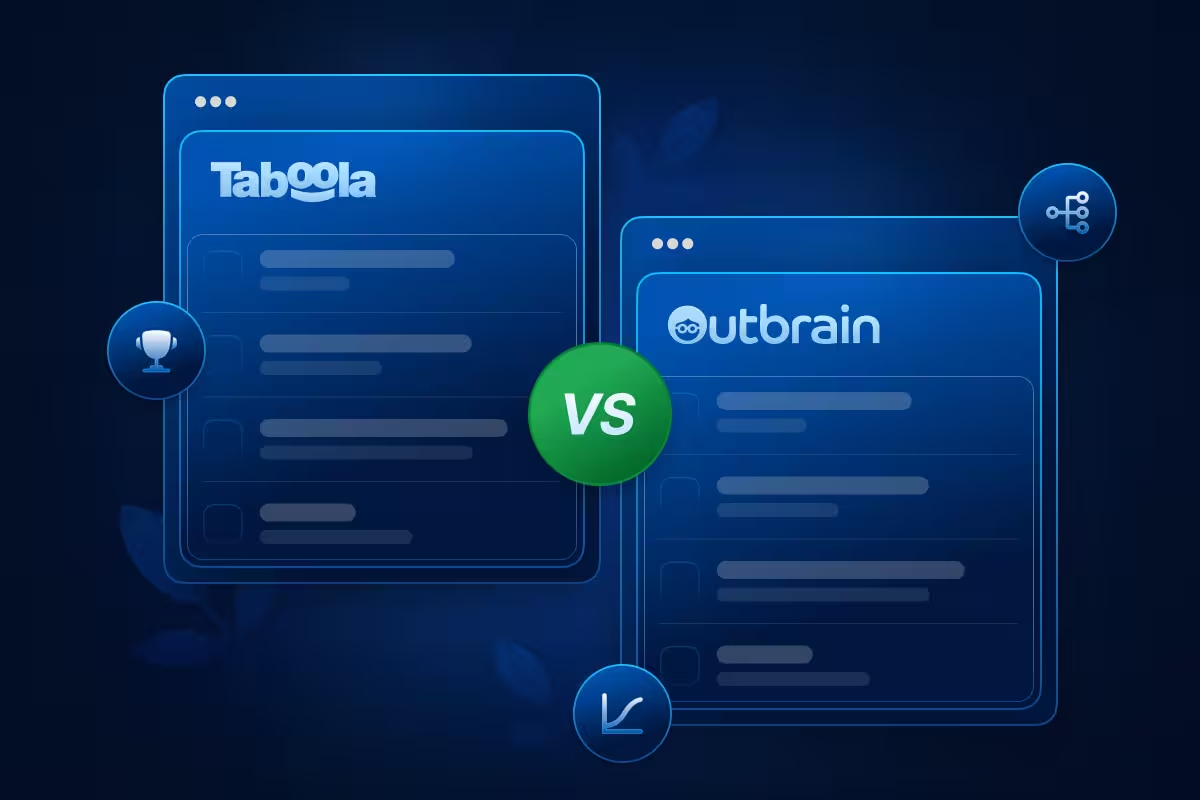
Outbrain vs Taboola (Key Differences)
Both platforms operate in the native advertising space, but they differ slightly in tone, traffic behavior, and use cases.
Native Advertising Examples: Why Some Work and Others Collapse
Let’s understand every category of native advertising.
High-Performing Native Advertising Examples
These campaigns integrate seamlessly with content, spark curiosity, and deliver on their promises after the click:
- Educational Sponsored Articles: A SaaS company publishes a guide on productivity tools. The headline teases value (“10 Ways to Reduce Team Chaos”), the content fulfills it, and the landing page continues the same tone. Engagement and conversions are high.
- In-Feed Lifestyle Ads: A skincare brand uses a human-centered image with a headline that hints at a problem readers relate to. The linked content explains solutions subtly, building trust before suggesting products.
- Native Video Storytelling: A travel brand shares short videos of unique experiences on social feeds. The videos entertain while naturally highlighting the brand, increasing brand recall and clicks without feeling pushy.
Average Native Advertising Examples
These campaigns are somewhat effective but have noticeable gaps:
- Generic Carousel Ads: A retailer promotes multiple products with minimal storytelling. Users scroll past because the images and headlines feel repetitive. Click-through and engagement are moderate.
- Sponsored Posts with Weak Alignment: An article headline promises “Tips for Healthy Living,” but the landing page is mostly promotional. Users bounce quickly, reducing overall ROI.
- Text-Only Recommendations: Headlines appear in widgets without compelling visuals. Curiosity is limited, leading to low engagement.
Poor Native Advertising Examples
These fail because they break user trust or disrupt experience:
- Clickbait Headlines: Exaggerated claims (“Doctors Hate This One Trick!”) that are not supported in the content. Users feel misled and bounce immediately.
- Unrelated Landing Pages: Ads for a finance product link to irrelevant pages or generic homepages. This destroys trust and wastes ad spend.
- Overly Promotional Visuals: Bright, logo-heavy images in feeds signal “ad” immediately. Users ignore or skip these ads, reducing impressions and engagement.
Why Brands Invest in Native Advertising
Brands adopt native advertising because it improves the experience instead of degrading it.
Benefits include:
- Higher engagement rates
- Stronger perceived credibility
- Reduced ad fatigue
- Scalability across funnel stages
Native advertising compounds learning. Every campaign refines audience understanding and creative resonance.
The Real Challenges of Native Advertising
Native advertising is not frictionless. In fact, it is significantly more challenging than traditional advertising. Native ads require much more investment than regular ads, both financial and creative. It is important to make sure how much you are willing to invest in native ads before you dive in full swing.
The main challenging factors in native advertising are:
- Content Creation: Making good creatives and copies for native ads is much harder than the regular ordeal. High-quality content requires time and resources.
- Getting approved: In a sense, native ads disguise the product placement within content. This makes approvals and compliance more complicated. Approval processes can be strict. Disclosure missteps can erode trust.
- User intent: Native ads are placed where users aren’t exactly expecting a commercial ad. This means most of your users aren’t really looking for the product you are trying to sell. Intent is lower than search-driven traffic, requiring stronger nurturing.
Is Native Advertising Ethical and FTC Compliant?
Native advertising walks a fine line between marketing and content. Done right, it feels helpful and informative; done poorly, it can mislead users and damage trust. This is why ethics and compliance matter more here than in most other ad formats. You need to understand the native advertising guidelines as well.
Sponsored Labels and Disclosure Rules
The Federal Trade Commission (FTC) requires transparency. Users must be able to tell when they’re looking at an ad, even if it looks like regular content. Labels like “Sponsored,” “Paid Content,” or “Promoted” are essential. These small disclaimers protect both the brand and the publisher by building trust instead of eroding it.
How to Spot Native Advertising as a User
Even when it blends seamlessly into a feed or article, native advertising usually leaves clues:
- Look for disclosure tags like “Sponsored” or “Recommended for You.”
- Notice if the content links to a product, service, or lead form rather than just providing information.
- Pay attention to the tone. Ads often focus on curiosity or problem-solving while subtly pointing to a solution.
Best Practices to Stay Compliant
For advertisers, compliance isn’t just about avoiding fines; it’s about preserving credibility. Some essential steps include:
- Always label sponsored content clearly.
- Ensure the headline accurately reflects the content on the landing page.
- Avoid exaggeration, misleading claims, or clickbait language.
- Make sure landing pages provide real value, not just a sales pitch.
Building a Native Advertising Campaign from Scratch
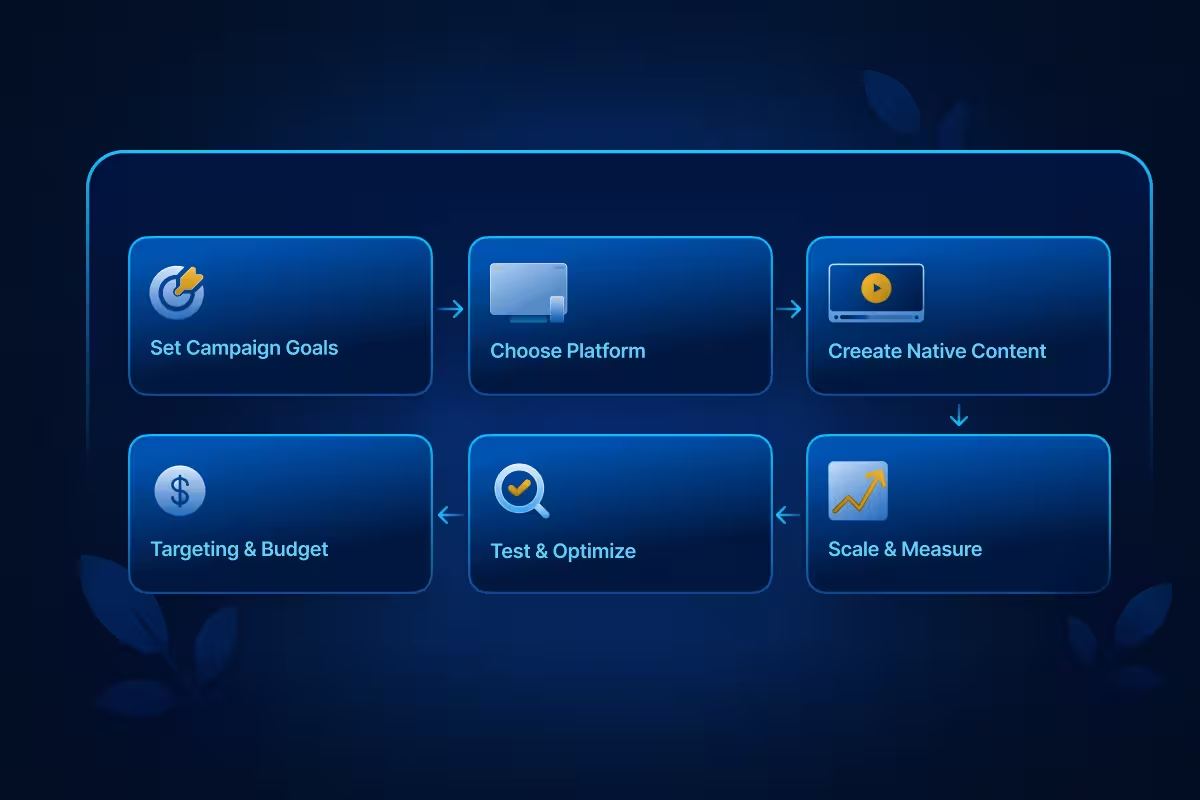
Effective campaigns begin with a precise objective, either awareness, education, leads, or sales.
Platform selection follows audience behavior. Content mirrors publisher style. Targeting and budgets start conservatively. Testing precedes scaling. Optimization is continuous.
Native advertising rewards patience more than aggression.
- Define Your Goals: Decide whether you want awareness, engagement, leads, or sales. Clear objectives guide every other step.
- Choose the Right Platform: Pick where your audience spends time. Options include Taboola, Outbrain, or social feeds like Facebook and TikTok.
- Create Matching Content: Make your ads feel native by mirroring the publisher’s style, tone, and format.
- Set Targeting & Budget: Define your audience, geographic reach, and spending limits to maximize efficiency.
- Launch, Test & Optimize: Start small, monitor performance, and tweak headlines, images, and placements continuously.
- Scale Winning Creatives: Once an ad performs well, increase reach and budget to maximize results without losing quality.
How to Measure Native Advertising Performance
Measuring native advertising performance is essential to know whether your campaigns are delivering results. Tracking the right native advertising metrics helps advertisers understand which content resonates, how users engage, and how well campaigns convert attention into action. Key metrics provide insight into both creative effectiveness and overall ROI.
Native Advertising vs Other Ad Formats
When evaluating advertising strategies, understanding how native advertising compares to display ads or sponsored content is crucial. Native ads aim for subtle integration, while other formats rely more on visibility, repetition, or direct selling. The table below highlights differences in cost, usability, and platform features:
When Native Advertising Works Best
Before investing in native ads, it’s important to figure out who should use native advertising. Native advertising works best when it matches both the audience and the type of content they consume. It excels in environments where subtlety, education, and storytelling are more effective than hard selling.
In essence, you can use native advertising for e-commerce, SaaS, and affiliate marketing with some caveats here and there.
E-commerce & DTC Brands
- Ideal for lifestyle or problem-solving products
- Works well for introducing multiple products through carousel or in-feed ads
- Effective at top-of-funnel awareness campaigns and pre-sell landing pages
SaaS & B2B Companies
- Educational content and case studies convert well
- Supports long sales cycles by nurturing trust and authority
- Native ads can highlight ROI, industry insights, or product tutorials
Affiliate Marketing & Lead Generation
- Perfect for content-driven funnels and curiosity-based campaigns
- Pre-sell articles and recommended content widgets drive high engagement
- Can scale across multiple verticals like finance, health, or lifestyle
Content-Heavy Brands & Publishers
- Native advertising helps monetize traffic without disrupting user experience
- Sponsored articles and recommendation widgets increase page views and time on site
- Encourages engagement while maintaining credibility and editorial integrity
By aligning native ad strategy with industry use cases, brands ensure campaigns feel natural, relevant, and high-performing across the funnel.
Why Uproas is the Best to Get Started with Native Advertising
Getting started from scratch with native advertising is a big challenge, both financially and creatively. In these circumstances, it helps to have someone on your side, guiding you and assisting with the necessary tools. Uproas offers the perfect solution for new beginners.
Using a Bing agency ad account from Uproas can help you kickstart your native advertising campaign smoothly. Uproas offers accounts for Taboola and Outbrain, with the following perks:
- Run ads for any vertical
- No bans or restrictions
- Lower CPCs
- Fast account creation
- Ads approved in seconds
Aside from this obvious logistical assistance, Uproas also helps you out with their informative blog page with useful tips and tricks for the newest updates and advertising trends. It also provides 24/7 customer support to its users if you face any issues. Uproas is the best way to get started with native advertising in 2026.
Final Words
Native advertising is not a trend. It is an adaptation to how humans consume information. Brands that master it can grasp the attention of the internet efficiently and produce results. This begs the ultimate question: Is native advertising better?
Well, the answer depends. It requires much more investment than regular ads and is riskier if not done right. But one thing is for sure: native advertising is the way of the future. Like electric vehicles and virtual reality, native advertising is also an avenue for investing in the future.
With every coming year, the internet gets more and more cluttered with invasive ads and overwhelming monetization. Native ads can be a reprieve from that overstimulation, giving a cleaner and more natural perspective to commercialization.
And what better way to start on native advertising than with a helpful partner like Uproas. Uproas gives you the best agency ad accounts to begin your native advertising journey and much more. Combine that with the customer support and the hacks in their blogs, and you will become adept at native ads in no time.
Frequently Asked Questions
Is native advertising worth it?
Yes, when content depth and funnel logic are aligned.
How much does native advertising cost?
Entry costs are accessible, but meaningful results require sustained optimization.
Are native ads better than Google Ads?
They serve different stages of intent and work best together.
What are the best native advertising platforms?
Taboola, Outbrain, and social-native ecosystems dominate.
Can native advertising generate sales?
Yes, especially when education and trust precede the offer.


Latest blogs
Marketing Mix Modeling: Master Revenue Growth
Stop trusting broken attribution data. Learn how marketing mix modeling bypasses tracking limits to uncover true revenue and optimize ad spend.
Types of Retargeting: The Full Guide for Marketers
Explore major types of retargeting, from pixel-based to dynamic and sequential, and learn how to combine them into a converting campaign.
Targeted Advertising: How It Works and How to Use It Well
Build a bulletproof targeted advertising strategy. Turn raw behavioral data into profitable segments using our step-by-step optimization plan.
Retargeting vs Remarketing: The Difference Every Marketer Needs to Know
Stop treating Retargeting vs Remarketing as identical. Use a precise, high-impact framework to weaponize your data and maximize conversions.

Google Ads Cost: What You'll Really Pay (By Industry, Campaign Type, and Business Size)
Stop wasting budget on vague pricing. See exact 2026 Google ads cost benchmarks by industry, real CPC data, and the formula to reduce your ad spend.

Types of Facebook Ads: A Complete Guide to Every Format in 2026
See all types of Facebook ads, including current specs, placements, and objectives, plus a matching table to pick the right format for your goal.
ABM Stats: 2026 Benchmarks, ROI & Trends
From ROI to pipeline velocity, these 2026 ABM stats show exactly why account-based marketing dominates B2B growth.
.jpg)
The Real Price of Social Media Advertising: A Cost Guide for Advertisers
Find out what social media ads actually cost these days. Get to know about CPC, CPM, CPL, industry verticals, budget ranges, and ROAS across major platforms.
Bing Ads Cost in 2026: Everything You Need to Know
Stop wasting money on ad spend. See the 2026 Bing Ads cost benchmarks, real industry CPAs, and hidden ROI data you need to outperform competitors.