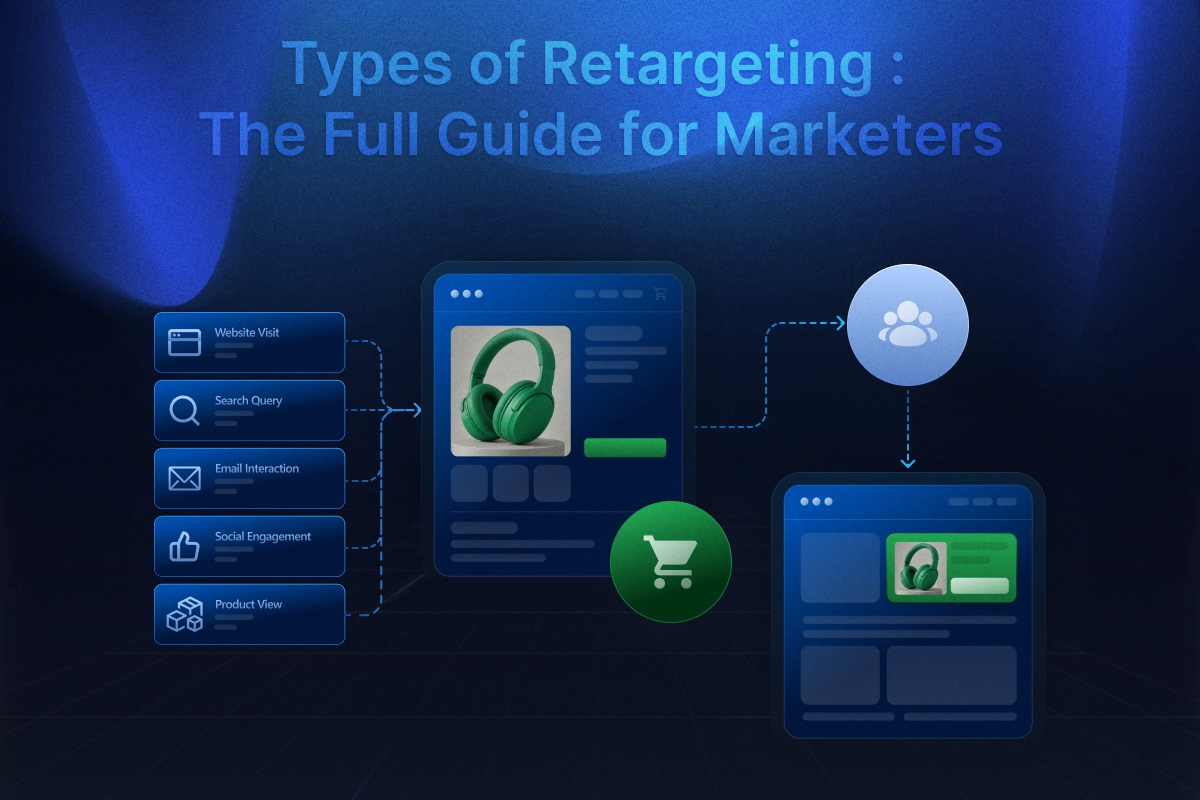
Types of Retargeting: The Full Guide for Marketers

Retargeting is one of the best-performing tactics in paid media, and there's a simple reason why. It reaches people who already showed interest in your brand, instead of reaching strangers who have never heard of you.
But "retargeting" is not one single thing. It's a group of different tactics, each built on a different signal and each suited to a different job. Some are built for eCommerce. Some are built for long B2B sales cycles. Some work best on their own, and some work best stacked on top of another type.
This guide breaks down the main types of retargeting, how each one works, and how to combine them into a campaign that performs.
What Retargeting Is (and How It's Different From Remarketing)
Retargeting means showing ads to people who already interacted with your brand in some way. Maybe they visited your site. Maybe they clicked an ad. Maybe they searched for something related to what you sell. Retargeting uses that past behavior to serve them a relevant ad later, on another site, app, or platform.
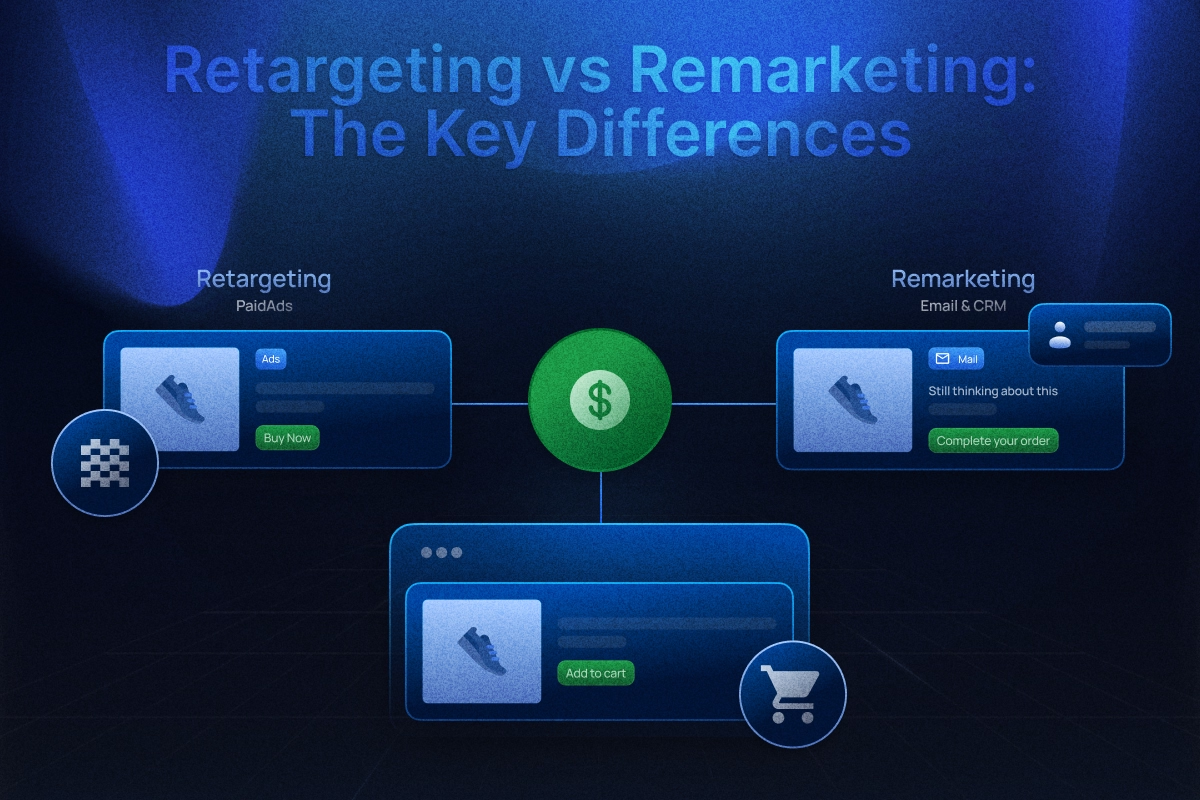
You'll often see "retargeting" and "remarketing" used as if they mean the same thing. In casual conversation, most marketers do treat them that way. But in a more precise sense, the two terms sometimes point to different channels. Retargeting usually refers to paid ads shown to anonymous visitors across the web, social platforms, and search. Remarketing more often refers to owned channels, like sending a follow-up email to someone already in your database.
The line between the two gets blurry depending on which platform or agency you ask. For this guide, we'll use "retargeting" as the umbrella term for all of it, including email retargeting, which is covered as one of the types below.
The Main Types of Retargeting at a Glance
Before going deep on each type, it helps to see the full picture. The types below differ primarily in what triggers the ad and where the audience data comes from.
Each of these is covered in detail below, including how it works conceptually and when it earns a place in your media mix.
Site Retargeting: The Pixel Based Foundation
Site retargeting is the type most marketers picture when they hear the word "retargeting." It's built around a small piece of tracking code, usually called a pixel or tag, placed on your website.
How Pixel-Based Retargeting Works
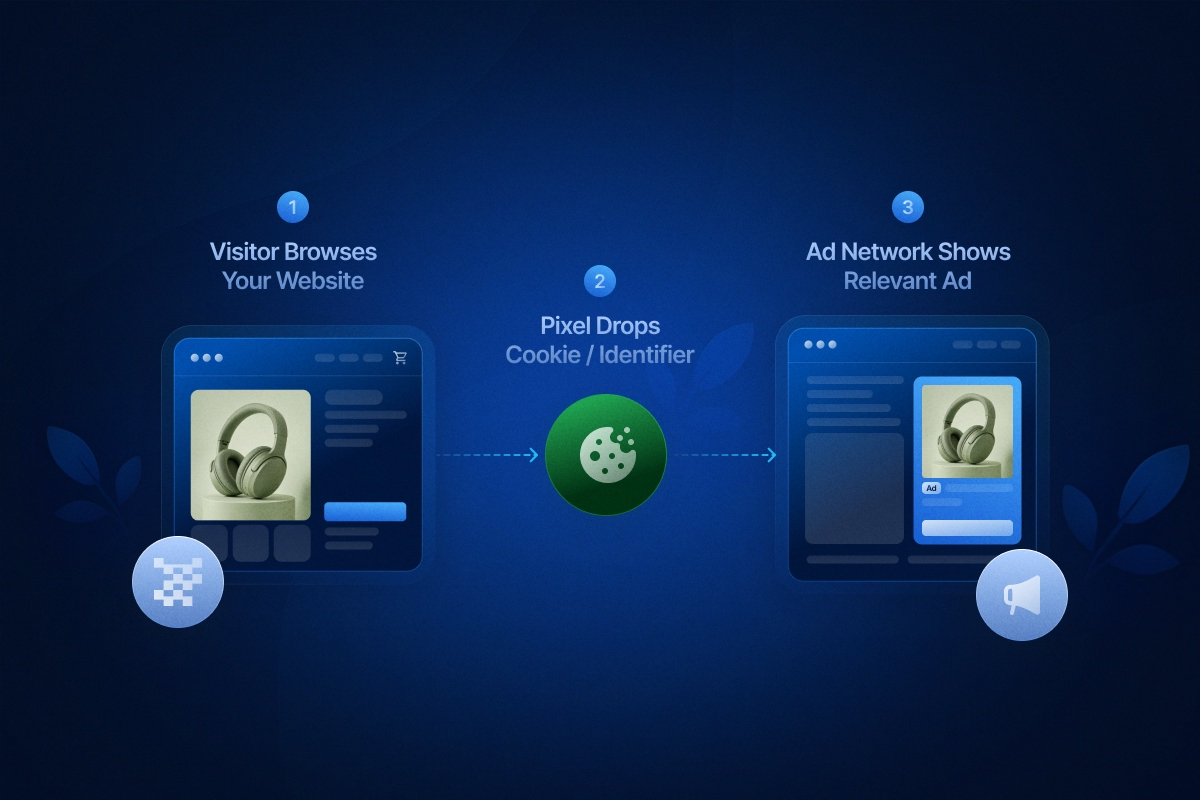
A pixel is a tiny tracking code you put on your website to build an audience list. It records every person who lands on your pages.
Ad networks read this list and target those past visitors with your ads across different sites and apps. Every advertising platform relies on this exact same method regardless of how their setup menus look.
Segmenting Site Visitors for More Relevant Ads
The real strategic work in site retargeting is not the pixel itself, it is how you segment the audience it builds. Treating every site visitor the same wastes the budget on people who were never close to converting.
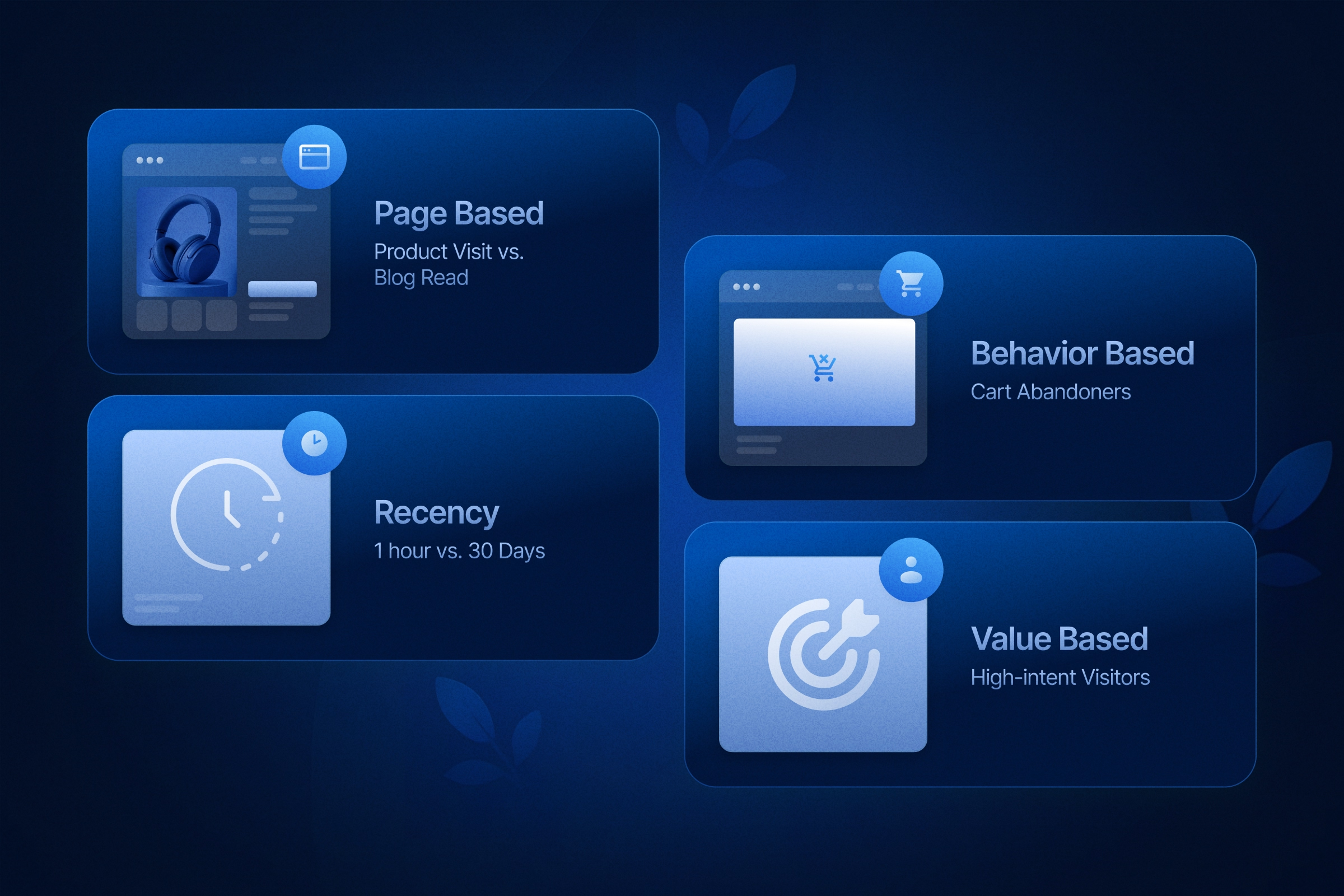
Common segmentation approaches include:
Customizing your retargeting lists keeps ads relevant to each visitor. This stops your retargeting campaigns from looking like intrusive follow around ads that annoy prospective customers.
Search Retargeting
Search retargeting works on a different data source than site retargeting. And the difference matters. Instead of relying on a visit to your own site, search retargeting targets users based on the search engine queries they have recently made, whether or not they ever landed on your domain.
This makes it useful for reaching people earlier in their research process, before they have discovered your brand at all.
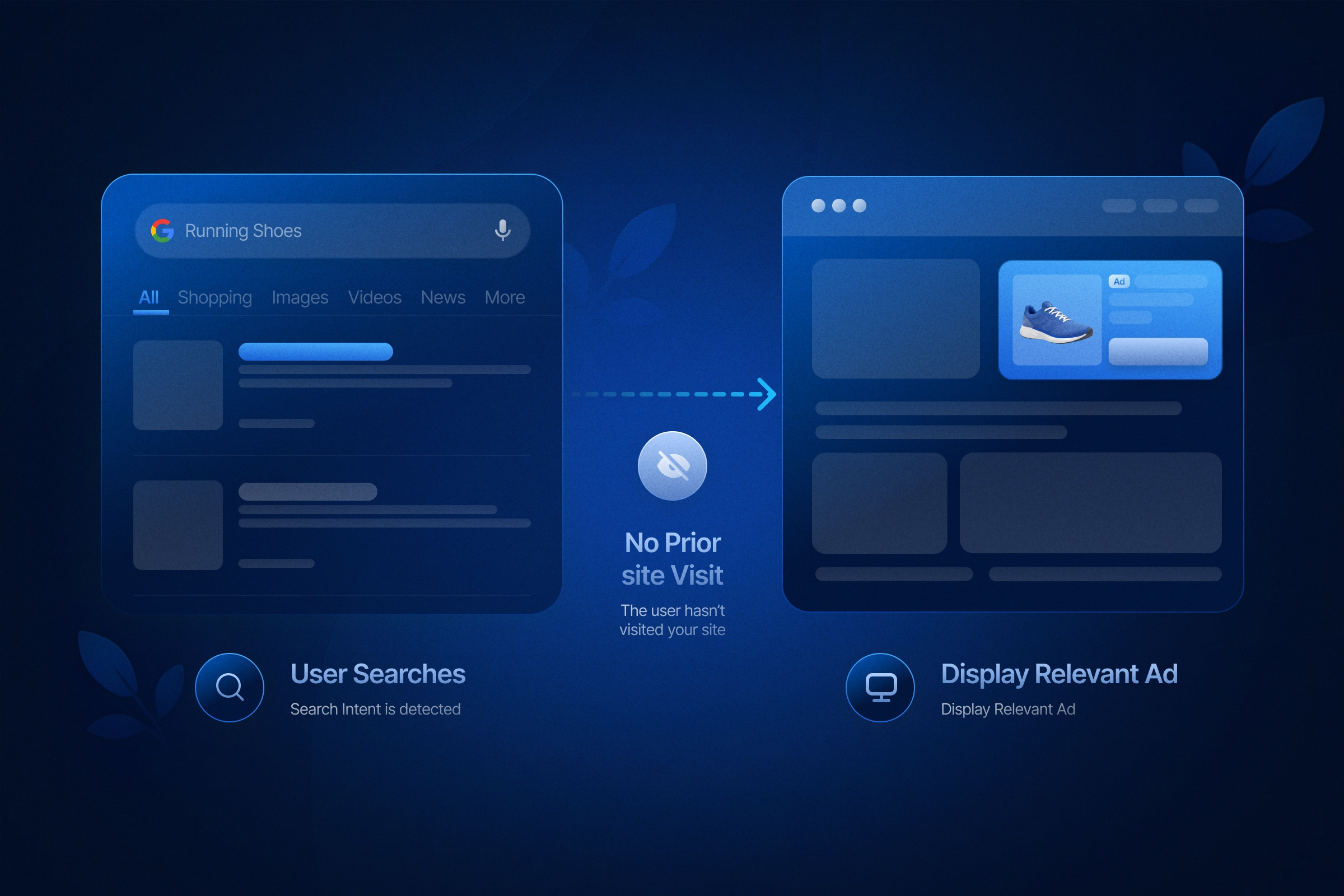
If someone searches for a category term related to your product, search retargeting can put your brand in front of them even though your pixel never fired. It is a way to extend intent based targeting beyond the limits of your own site traffic, which makes it a natural complement to, rather than a replacement for, site retargeting.
Email Retargeting
Email retargeting targets people based on how they engaged with your email campaigns, not your website. If someone opened a marketing email, or clicked a link inside one, but didn't go on to convert, email retargeting lets you follow up with a paid ad rather than another email.
This is a useful complement to site retargeting rather than a replacement for it. Someone might open your emails regularly but never click through to your site, which means your site pixel never fires for them. Email retargeting reaches this person through a different channel.
It also gives you a second channel to reinforce a message someone already partially engaged with. If they opened an email about a sale but didn't act, a retargeting ad on social media or the open web can serve as a second nudge. This format doesn't compete for space in an already-crowded inbox
Social Media Retargeting
Social media retargeting forms ad groups using actions taken directly on the platform, such as watching videos, leaving comments, or visiting a brand profile. Data origin marks the biggest difference between this and site retargeting.
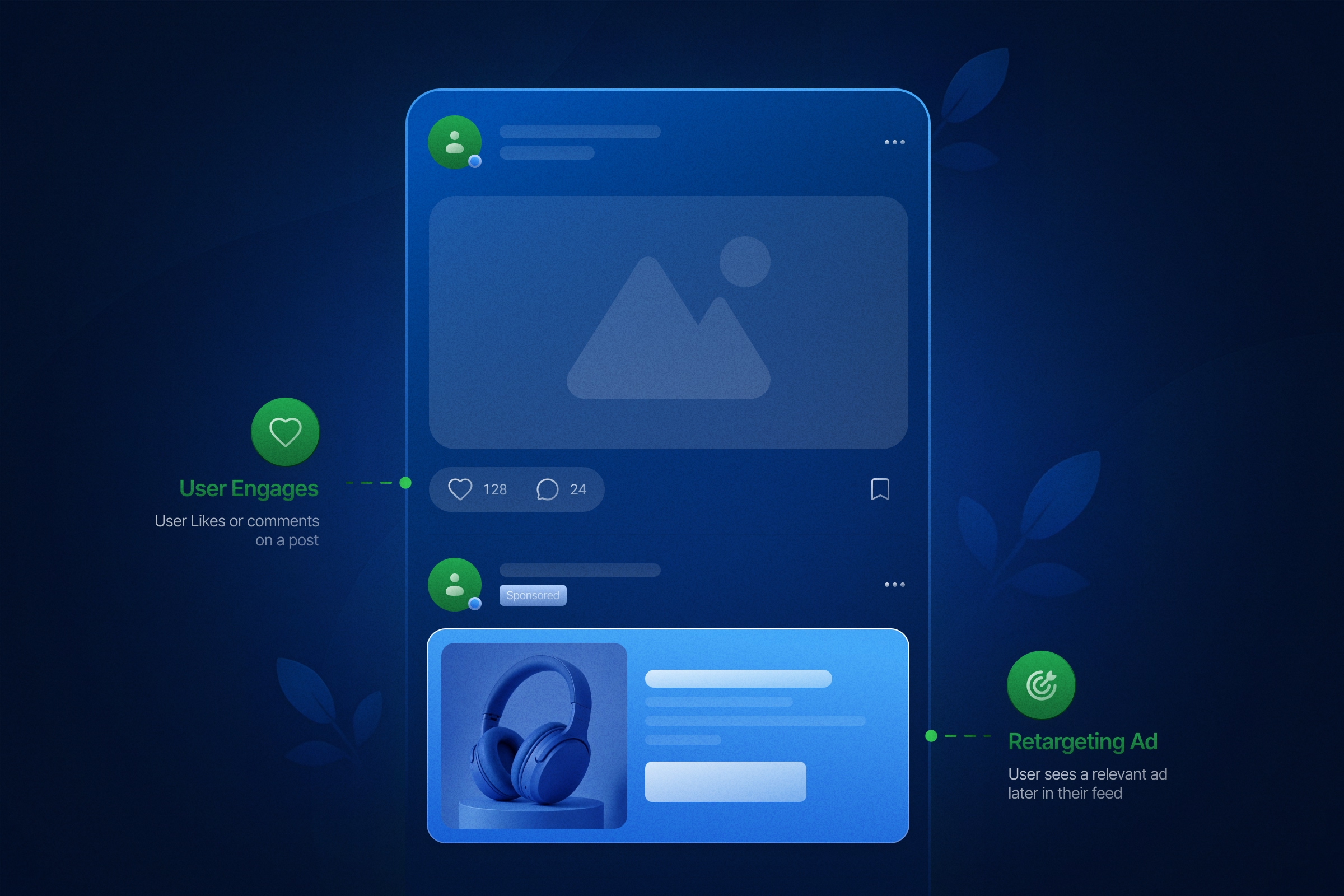
Social platforms monitor how users interact with your content in real time and serve ads to those specific accounts. Keeping tracking and ad delivery inside one system shortens the gap between user intent and ad exposure.
This method targets prospective customers who engage on social channels without ever clicking through to your site. Combining both social and web retargeting works best because each strategy catches a distinct type of audience interest.
Dynamic Retargeting
Dynamic retargeting takes the segmentation idea from site retargeting and automates it at the individual product level. Instead of showing everyone the same retargeting ad, it pulls from a product feed to automatically build an ad showing the exact items a specific user viewed.
This works through a feed of your catalog, images, prices, product names, and availability, connected to your retargeting platform. When someone views a product page, the platform tags that product to their profile. When they later see a retargeting ad, the platform builds it using that exact product, sometimes alongside a few related items.
This type of retargeting is especially strong for ecommerce, where the catalog is large and the products themselves are visual. A shopper who looked at a specific pair of shoes is far more likely to click and buy when the ad shows that exact pair, compared to a generic ad for the store. It's less useful for businesses selling a single service or product, there's no catalog of individual items to personalize.
Sequential Retargeting
Sequential retargeting is less a separate data source and more a strategic layer that can be applied on top of the other types covered above. Rather than showing the same ad to a user indefinitely, sequential retargeting delivers a deliberate series of ads based on where a person is in the consideration process.
How a Retargeting Sequence Is Typically Structured
A typical sequence starts broad and gets more direct as engagement continues. An early ad might simply reintroduce your brand or highlight what makes it different. A middle ad might go deeper into a specific product or a customer story.
A later ad, shown to someone who's stayed engaged through the earlier stages, might include a more direct offer or a clear call to action.
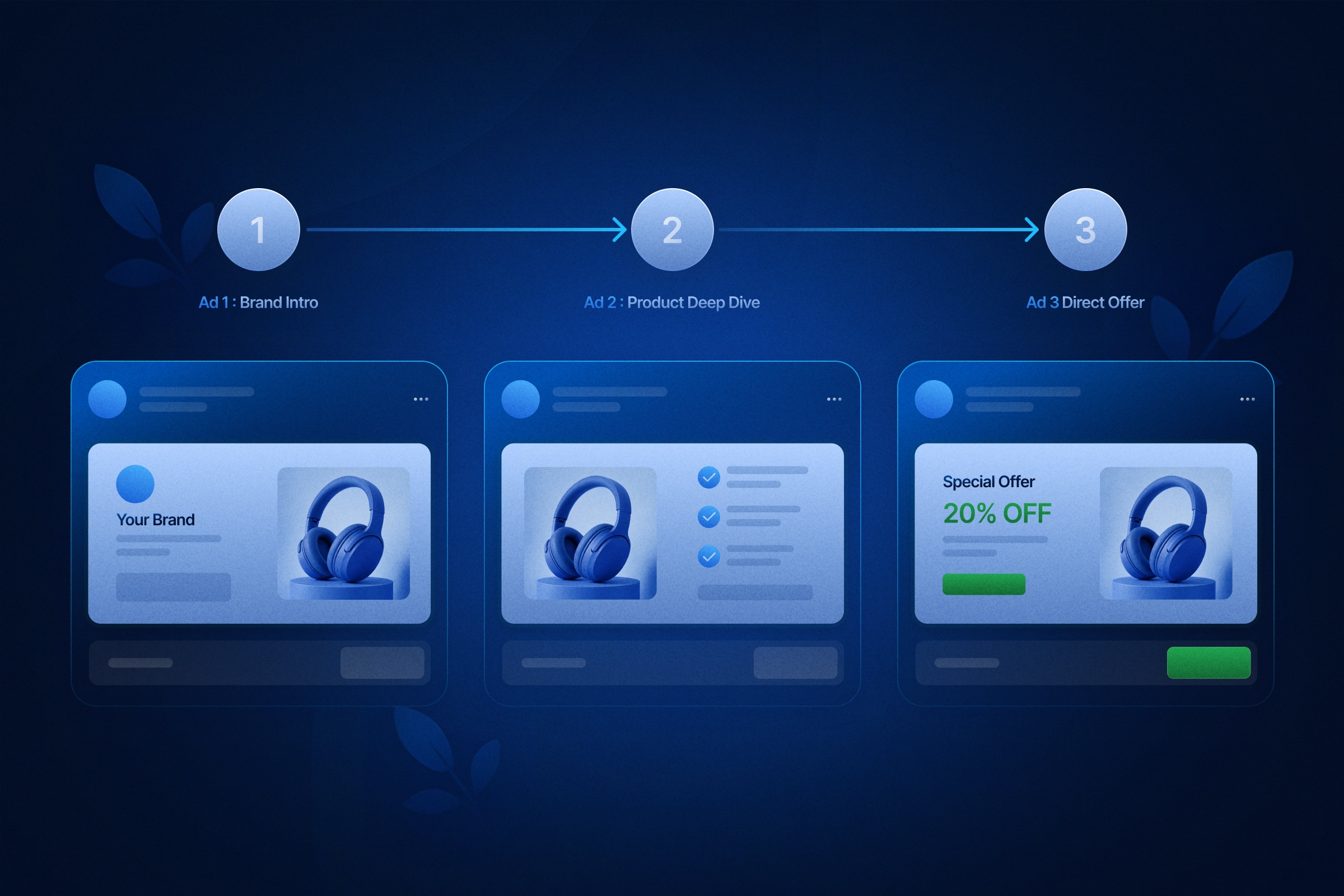
There's no fixed number of ads or exact timing that works for every business, since this depends heavily on your sales cycle and how considered your purchase is. A low-cost impulse product might move through a sequence in days. A B2B software purchase might take weeks. The structure matters more than the exact schedule.
Why Sequencing Improves Retargeting Performance
Showing identical static ads over time leads to ad fatigue because viewers simply stop paying attention. Ad sequencing fixes this issue by aligning your message with viewer interest as people move forward.
Someone who engaged with multiple ads needs different information than a person who scrolled past your very first impression. Sequential messaging adjusts your ad creative dynamically so you meet prospects where they are instead of repeating yourself.
Cross-Device Retargeting
Many customers browse products on mobile phones while traveling and convert later on desktop setups. Cross device retargeting fixes this disconnect by matching user behavior across multiple hardware platforms instead of splitting one buyer into separate profile stats.
Solving identity resolution requires matching technical signals with high precision without a universal tracking key.
Modern privacy rules and browser changes now restrict many classic data collection channels. Regardless of these limitations, the overarching goal involves viewing user interactions as a single unified relationship rather than fragmented visits.
How to Create Effective Retargeting Campaigns
So, after learning all about the types, your question now is how to use retargeting ads, right?
Understanding the types above is only half the work. Turning them into a campaign that performs requires decisions about both strategy and execution. And let’s give you a rundown straight away.
Choosing The Types
Start with your business model, sales cycle length, and available data sources. A short sales cycle eCommerce brand with a large catalog will likely lean on site and dynamic retargeting first, then layer in social.
A longer B2B sales cycle may get more value from combining search retargeting to catch early research behavior with a sequential structure to nurture leads over weeks rather than days.
Few businesses need every type covered in this article at once; the goal is choosing the combination that matches how your buyers actually move.
Finding the Right Segmentation
Treating all site visitors identically destroys campaign efficiency. To maximize return on ad spend, break your web traffic into granular intent buckets using engagement depth and conversion likelihood.
Target high intent users who viewed pricing pages within 48 hours with direct promotional offers. Deliver simple educational content to users who only read a single blog post.
Filtering audiences by recency and specific page interactions dramatically improves click through rates while preventing wasted impressions on cold leads.
Frequency Capping
Without strict frequency capping, retargeting campaigns waste ad spend by oversaturating warm prospects.
Capping impressions at two per user per day maximizes return on ad spend. Research shows that ad performance drops rapidly after four total exposures without a conversion.
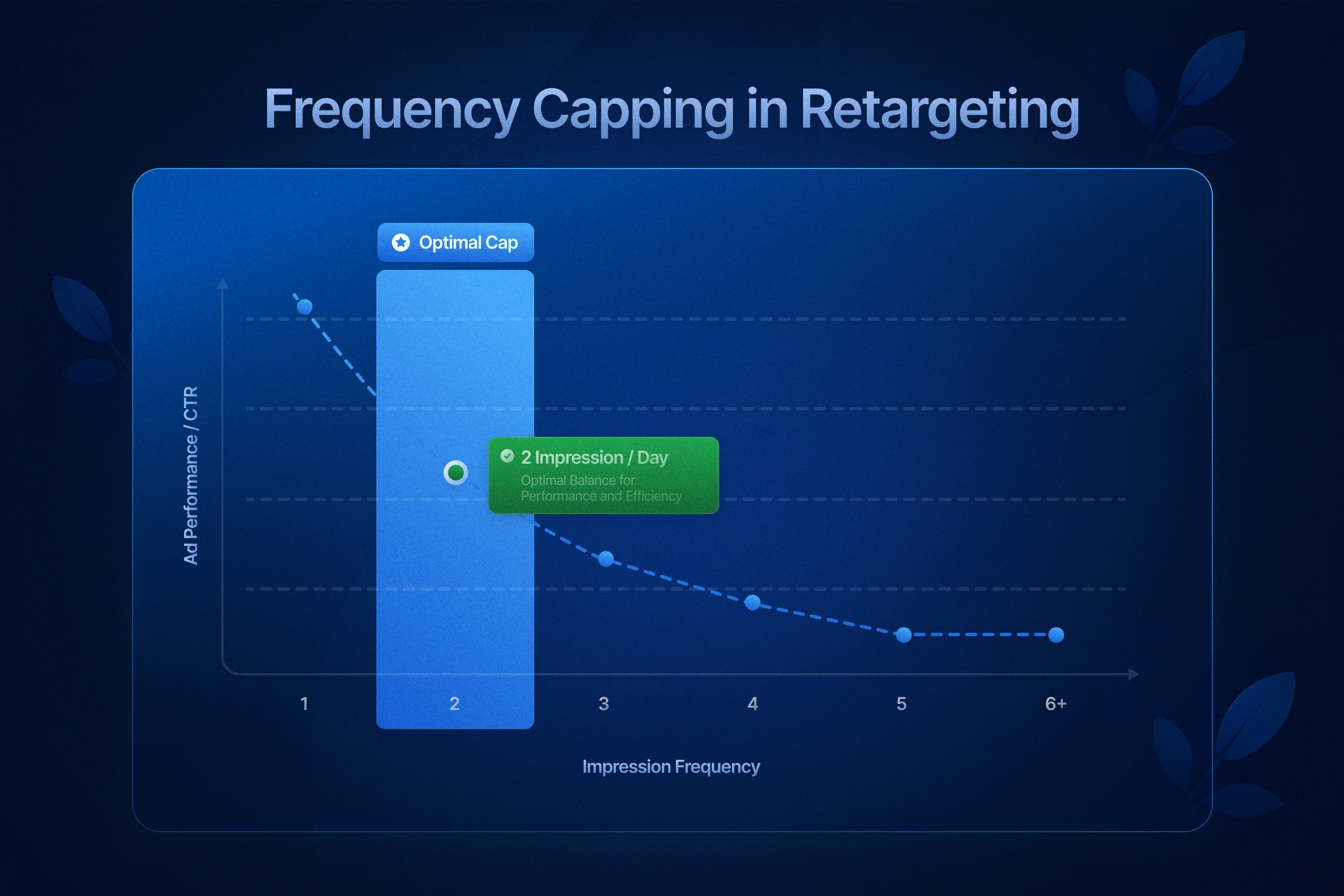
Restricting impression counts maintains strong click through rates and prevents users from tuning out your creative.
Establishing clear cap thresholds optimizes your budget, preserves audience interest, and delivers consistent conversions over longer campaign lifespans.
Creative Rotation
Performance data shows that ad creative fatigue sets in after a user sees the same visual three to four times. Rotating creative assets on a biweekly schedule preserves return on ad spend and keeps click through rates high.
True creative rotation means changing the core offer, such as shifting from free shipping incentives to social proof case studies.
Swapping user generated video clips for clean product carousels resets audience attention. Continually testing fresh angles protects your return on ad spend before performance metrics degrade.
Excluding the Converters
Retargeting existing customers with top of funnel offers wastes ad spend and creates a poor customer experience. Implementing negative audience targeting through purchase event tags ensures converted users leave sales funnels immediately.
Excluding buyers for 60 to 90 days prevents annoying people who just bought from you while saving up to 15% of overall campaign spend. Reinvest those saved dollars into acquiring new leads or running dedicated upsell campaigns for current customers.
Pacing the Budgets
Uncontrolled budget pacing allows fast spending channels like broad site retargeting to devour funds without delivering proportional returns.
Dividing capital strategically across site, social, and search retargeting prevents early campaign saturation.
A typical 60/30/10 split directs 60% to high intent site visitors, 30% to social engagement, and 10% to search retargeting.
Setting daily budget caps at the ad set level ensures balanced coverage across all touchpoints. Multi channel pacing stabilizes customer acquisition costs while capturing leads across various stages of readiness.
Combining these execution details with the right mix of retargeting types is what separates a campaign that gets set up once and forgotten from one that keeps improving.
I hope this answers your question regarding “how to do retargeting ads” and gives you a complete overview.
Does Retargeting Actually Work?
The honest answer is: yes, generally, but with real limits worth knowing about.
The case for retargeting is straightforward. It targets people who have already shown some form of intent, whether that's a site visit, a search, or a social engagement. That's a fundamentally warmer audience than cold prospecting, where you're introducing your brand to someone who has never shown any interest. Meeting someone at a point where they already know who you are simply requires less convincing.
But retargeting isn't automatically effective just because it exists. Ad fatigue is real. Show the same person the same ad too often, and performance drops, sometimes sharply, as people start to tune it out or find it intrusive.
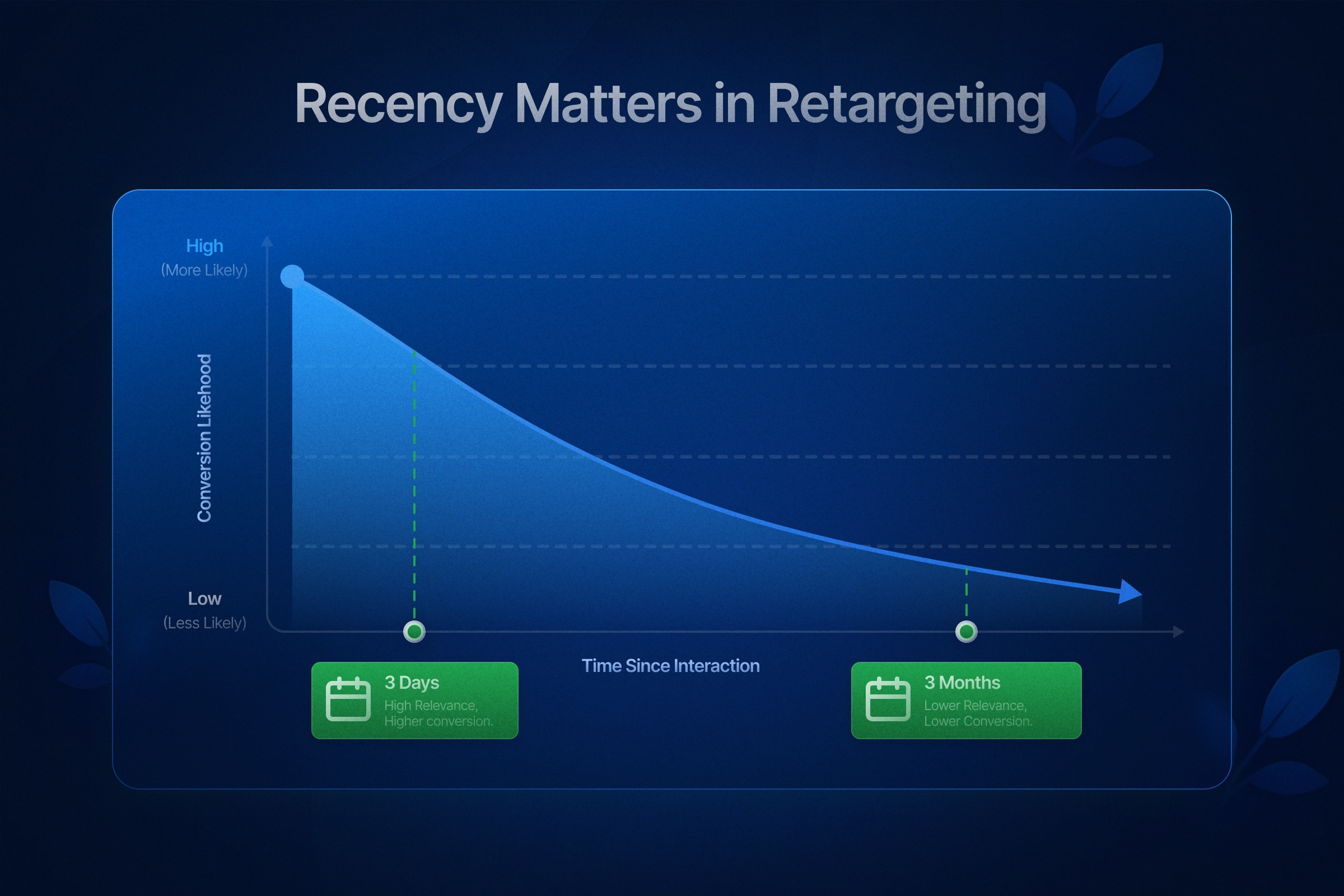
There's also a diminishing return over time. Someone who visited your site three days ago is a much stronger prospect than someone who visited three months ago. As the gap between the original interaction and the retargeting ad grows, relevance fades and so does performance.
Retargeting works best as one part of a broader strategy, not a standalone fix for a weak funnel. If your site isn't converting well to begin with, retargeting can bring people back, but it won't fix the underlying reasons they left.
Quick Reference: Retargeting Types Summary
Conclusion
Retargeting isn't one tactic. It's a toolbox. And that’s exactly why different types of retargeting brings out quite different outcomes.
Site retargeting gives you a foundation. Search and social retargeting extend your reach beyond your own website.
Dynamic retargeting personalizes at the product level. Sequential and cross-device strategies tie it all together into something that feels coherent to the person on the other end.
The brands that get the most out of retargeting don't rely on just one type. They combine a few, matched to their sales cycle and their available data. They also manage frequency and creative carefully enough to stay relevant instead of annoying.
FAQs


Latest blogs
Types of Retargeting: The Full Guide for Marketers
Explore major types of retargeting, from pixel-based to dynamic and sequential, and learn how to combine them into a converting campaign.
Targeted Advertising: How It Works and How to Use It Well
Build a bulletproof targeted advertising strategy. Turn raw behavioral data into profitable segments using our step-by-step optimization plan.
Retargeting vs Remarketing: The Difference Every Marketer Needs to Know
Stop treating Retargeting vs Remarketing as identical. Use a precise, high-impact framework to weaponize your data and maximize conversions.

Google Ads Cost: What You'll Really Pay (By Industry, Campaign Type, and Business Size)
Stop wasting budget on vague pricing. See exact 2026 Google ads cost benchmarks by industry, real CPC data, and the formula to reduce your ad spend.

Types of Facebook Ads: A Complete Guide to Every Format in 2026
See all types of Facebook ads, including current specs, placements, and objectives, plus a matching table to pick the right format for your goal.
ABM Stats: 2026 Benchmarks, ROI & Trends
From ROI to pipeline velocity, these 2026 ABM stats show exactly why account-based marketing dominates B2B growth.
.jpg)
The Real Price of Social Media Advertising: A Cost Guide for Advertisers
Find out what social media ads actually cost these days. Get to know about CPC, CPM, CPL, industry verticals, budget ranges, and ROAS across major platforms.
Bing Ads Cost in 2026: Everything You Need to Know
Stop wasting money on ad spend. See the 2026 Bing Ads cost benchmarks, real industry CPAs, and hidden ROI data you need to outperform competitors.

6 Best AI UGC Video Creators for TikTok Ads in 2026
Avoid expensive creators. Find the 6 best AI UGC video platforms for TikTok ads in 2026. Cut production costs, test faster, and scale your ROI.