Marketing Mix Modeling: Master Revenue Growth

If you've spent the last few years frustrated by attribution numbers that don't add up, you're not alone. Platform-reported conversions rarely match what your finance team sees in revenue. The gaps have only gotten harder to explain as privacy changes chip away at how much individual-level tracking is even possible anymore.
Marketing mix modeling (MMM) is one of the main reasons marketers are turning back to a much older idea. It's a statistical approach to figuring out which channels drive results, built on historical data rather than on tracking individual users around the internet. It's not new, but it's become newly relevant.
This guide breaks down what marketing mix modeling is, how it's built, what it can and can't tell you, and how to think about choosing an approach that fits your business.
What is Marketing Mix Modeling?
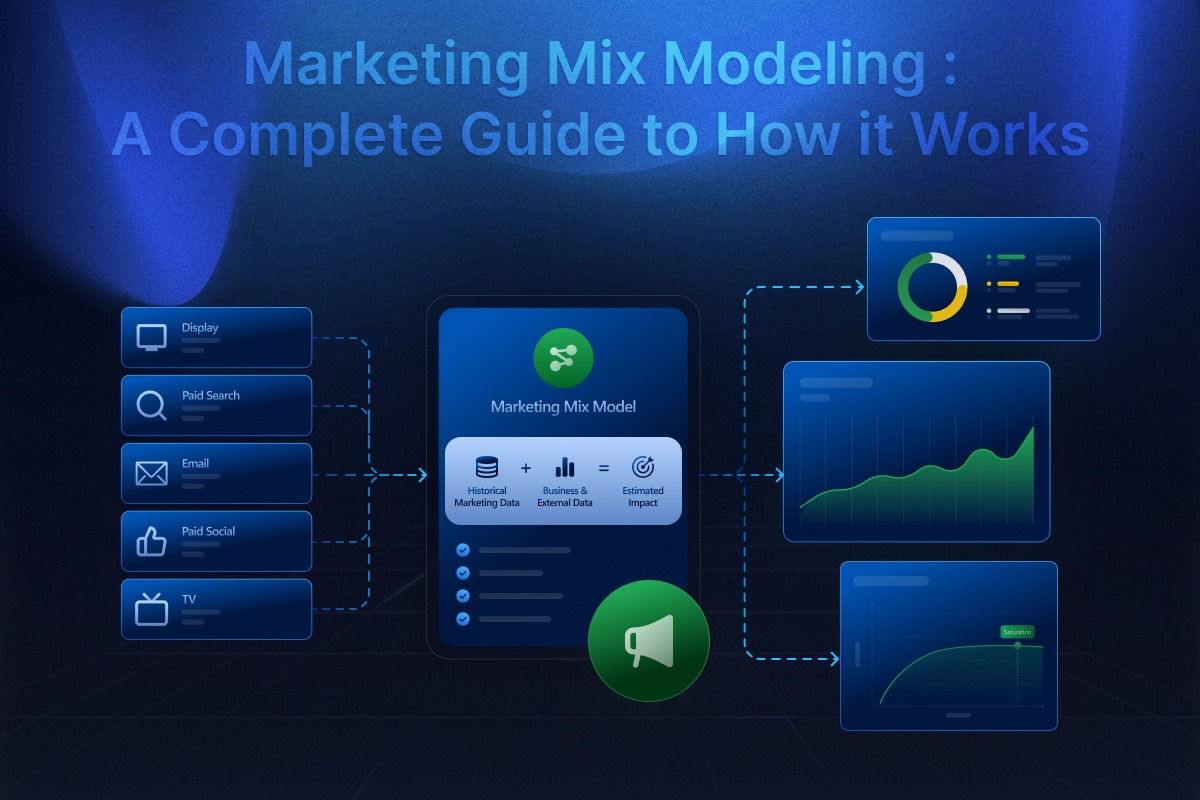
Marketing mix modeling in short, MMM marketing is a statistical method that analyzes historical data to measure how different marketing inputs contributed to a business outcome like sales or conversions. It also accounts for outside factors like pricing and seasonality.
The Core Idea Behind Marketing Mix Modeling
Marketing Mix Modeling analyzes historical spend across each channel alongside sales or conversion results over the same period. It uses statistical analysis to estimate how much each input contributed to the outcome.
Key Principles
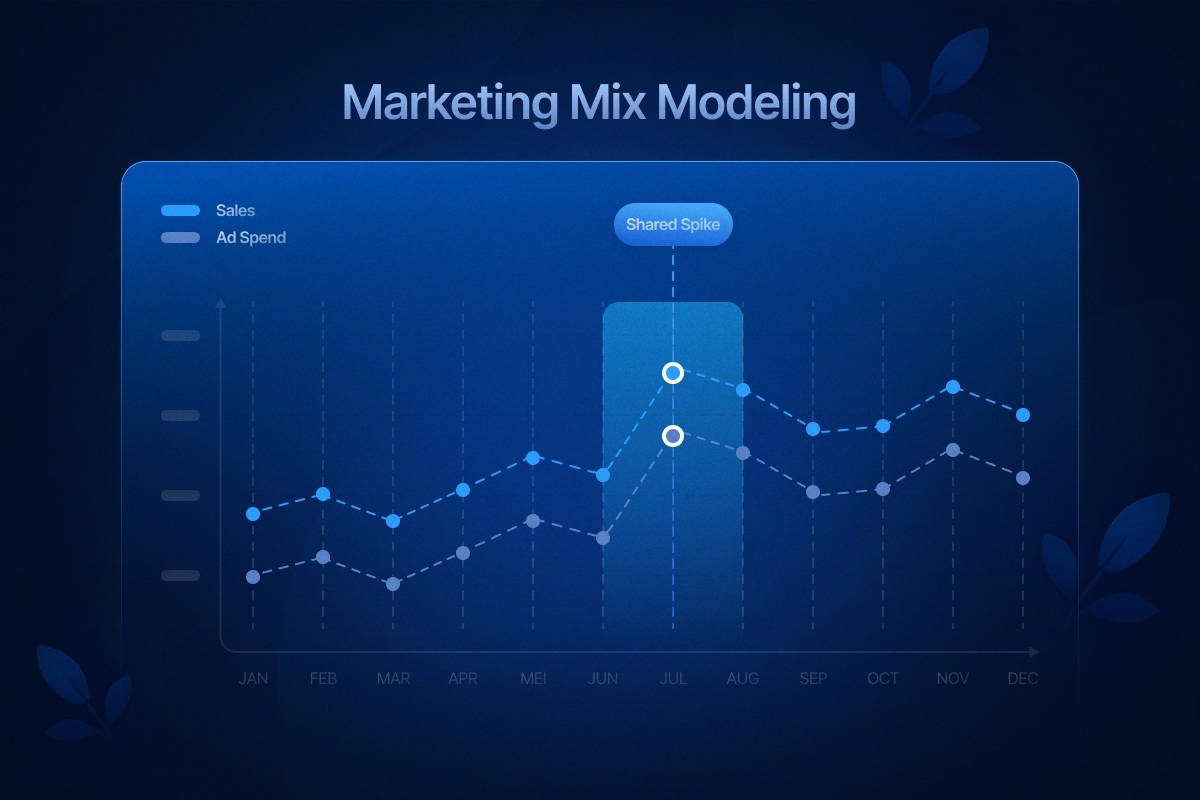
A Practical Example
How MMM Differs From Attribution Modeling
Marketing Mix Modeling and Multi Touch Attribution split along one core line: tracking single user paths versus evaluating aggregate data trends.
Individual Tracking vs. Aggregate Modeling
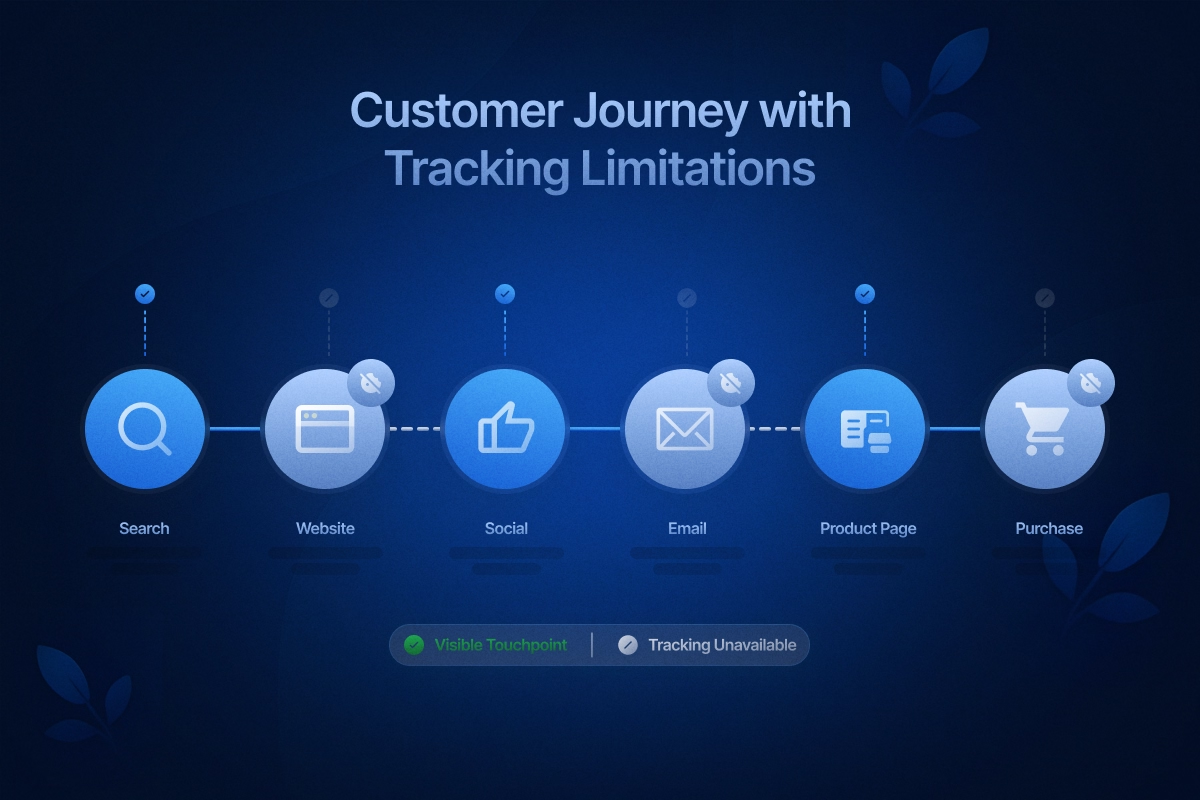
Attribution modeling tracks a specific user across touchpoints, assigning credit to individual ad clicks and site visits along a conversion path. This granular approach depends on tracking users across devices and sessions, which modern privacy updates make increasingly difficult.
Marketing Mix Modeling operates without user tracking. It analyzes total expenditure alongside total sales volume over time, inferring relationships through statistical modeling. Because it relies exclusively on internal business data, browser changes and tracking restrictions cannot degrade its performance.
The Modern Framework: Triangulation
Leading brands use both frameworks together to connect big picture strategy with daily operations:
Why Marketing Mix Modeling Became More Relevant Now?
Marketing Mix Modeling spent decades as a tool for consumer packaged goods and offline advertising. Digital marketers now adopt it rapidly due to four major industry shifts.
1. Browser Tracking Restrictions
- Safari and Firefox blocked third party cookies by default years ago, removing a massive portion of web activity from cross site tracking.
- Chrome transitioned from a planned phase out to a user choice model without establishing a stable replacement identifier.
- Marketers face a fragmented tracking ecosystem with no universal identifier holding steady.
2. Mobile Tracking Limits
- Apple introduced App Tracking Transparency in 2021, requiring explicit user permission for cross app tracking.
- High opt out rates drastically reduced individual user data available for in app attribution.
3. Permanent Privacy Regulations
- Laws like the General Data Protection Regulation in the EU and the California Consumer Privacy Act enforce strict consent requirements for personal data collection.
- These legal mandates operate independently of browser technology, turning privacy resilient measurement into a standing legal requirement.
4. Walled Garden Double Counting
- Platforms like Google and Meta report conversions using proprietary methodologies with visibility limited to their own channels, and their Google Ads costs rarely line up with what finance actually sees.
- Multiple platforms often claim credit for the same conversion, overstating total revenue when combined.
- Marketing Mix Modeling relies on internal aggregate sales data, eliminating double counting and anchoring performance to verifiable business outcomes.
The Base Variables in a Marketing Mix Model
Every marketing mix model requires a balanced dataset of marketing inputs and baseline controls. A model is only as accurate as the variables fed into it.
Here’s an outline for the market mix modelling base variables:
The Channel Granularity Balancing Act
Categorizing ad spend by specific platforms, campaign goals, or funnel steps yields much better insights than looking at one lump sum. Comparing brand search against generic search or separating awareness videos from retargeting display ads helps uncover genuine channel incrementality.
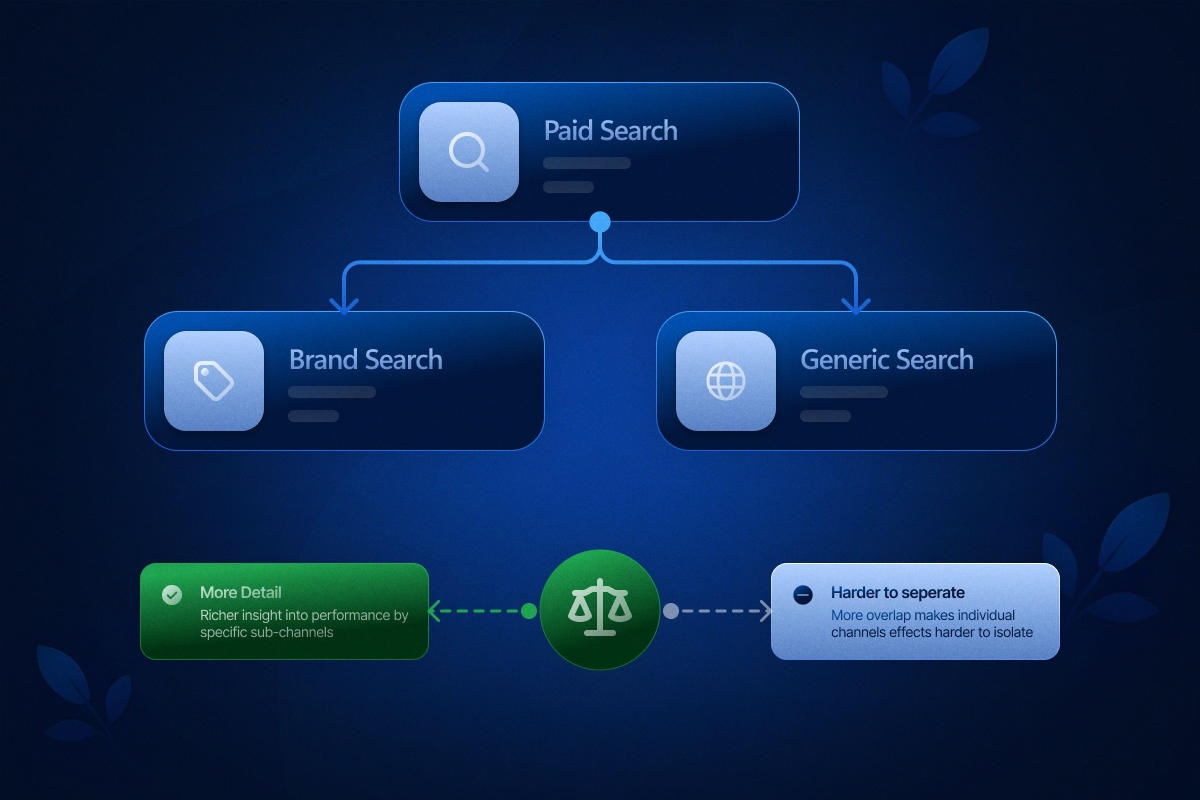
Too much segmentation backfires by creating statistical clutter. Running multiple campaigns aimed at the same audience segments makes it difficult for the model to isolate specific performance drivers. You must balance detail level against statistical accuracy to keep the model reliable.
Preventing Omitted Variable Bias
Omitted variable bias occurs when you fail to track major non marketing variables that drive revenue.
If your model leaves out pricing changes or seasonal shopping surges, it will attribute that extra sales volume to whatever marketing campaigns happened to run during that window. Including non ad inputs correctly ensures channel evaluation stays grounded in true incremental growth rather than mere coincidence.
How to Build a Marketing Mix Model?
Building a Marketing Mix Model transforms complex business data into actionable media decisions through a structured analytical process. Regardless of the underlying software or statistical methodology, the build process follows three core phases to deliver reliable performance insights.
Data Collection and Preparation
The modeling process starts by gathering and cleaning historical data. Analysts require three broad categories of information to build an accurate baseline:
Data history length directly affects model accuracy. A model built on thin historical records or messy data struggles to separate individual channel impacts when multiple campaigns run simultaneously. Most practitioners require at least one full year of consistent data to capture seasonal cycles and spending variations.
Data granularity also impacts performance precision:
The Statistical Modeling Approach
At a foundational level, Marketing Mix Modeling evaluates whether sales increased or decreased in alignment with specific channel spending while accounting for outside variables.
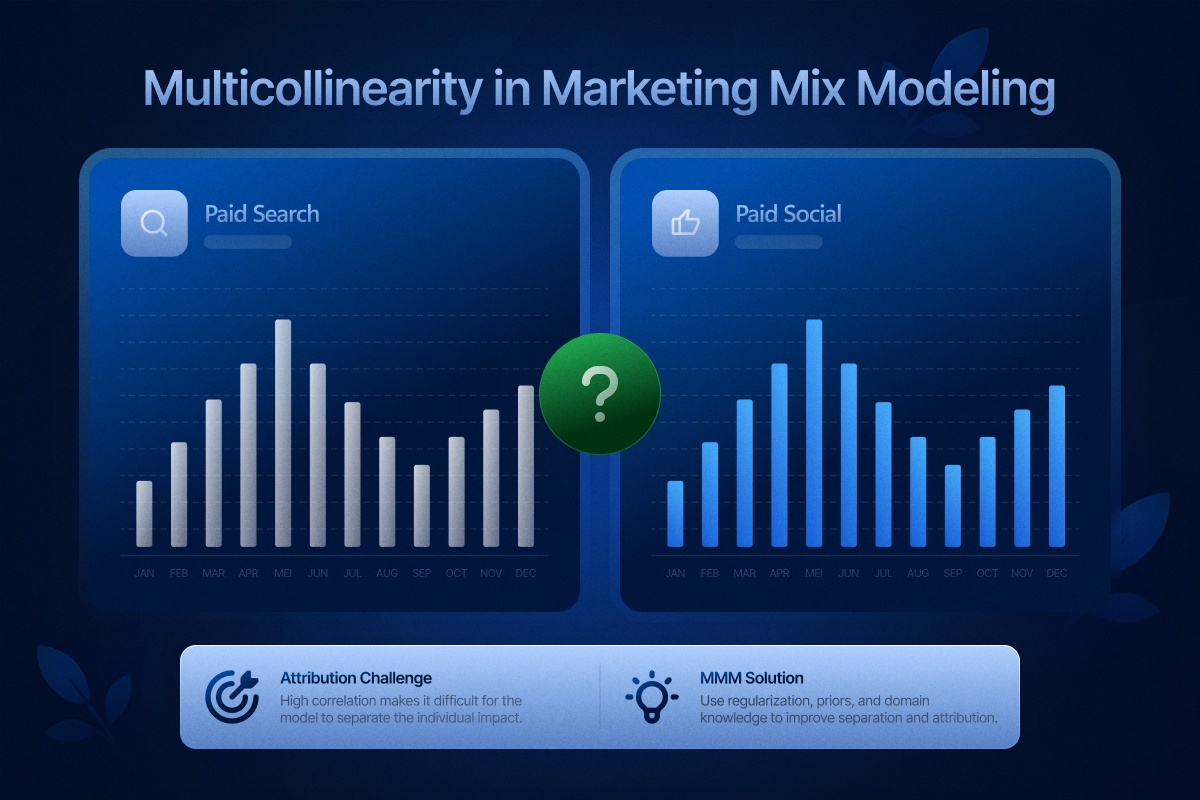
Building this statistical engine requires solving key mathematical challenges:
- Multicollinearity: Occurs when two or more channels move together over time, such as increasing paid search and paid social during the exact same promotional weeks. When spending moves in lockstep, basic models cannot easily determine which channel drove the resulting sales lift.
- Bayesian methodology: Modern models apply Bayesian statistical techniques to solve collinearity. Instead of assuming a channel return could be anything, Bayesian models incorporate realistic prior expectations to establish bounded performance ranges before analyzing historical data.
- Model calibration: Analysts refine statistical outputs by incorporating outside evidence, such as geo lift tests and incrementality experiments, ensuring the model aligns with real world test results.
Turning Model Output Into Channel Contribution
Once mathematical calculations finish, the output is converted into clear decision frameworks for marketing teams:
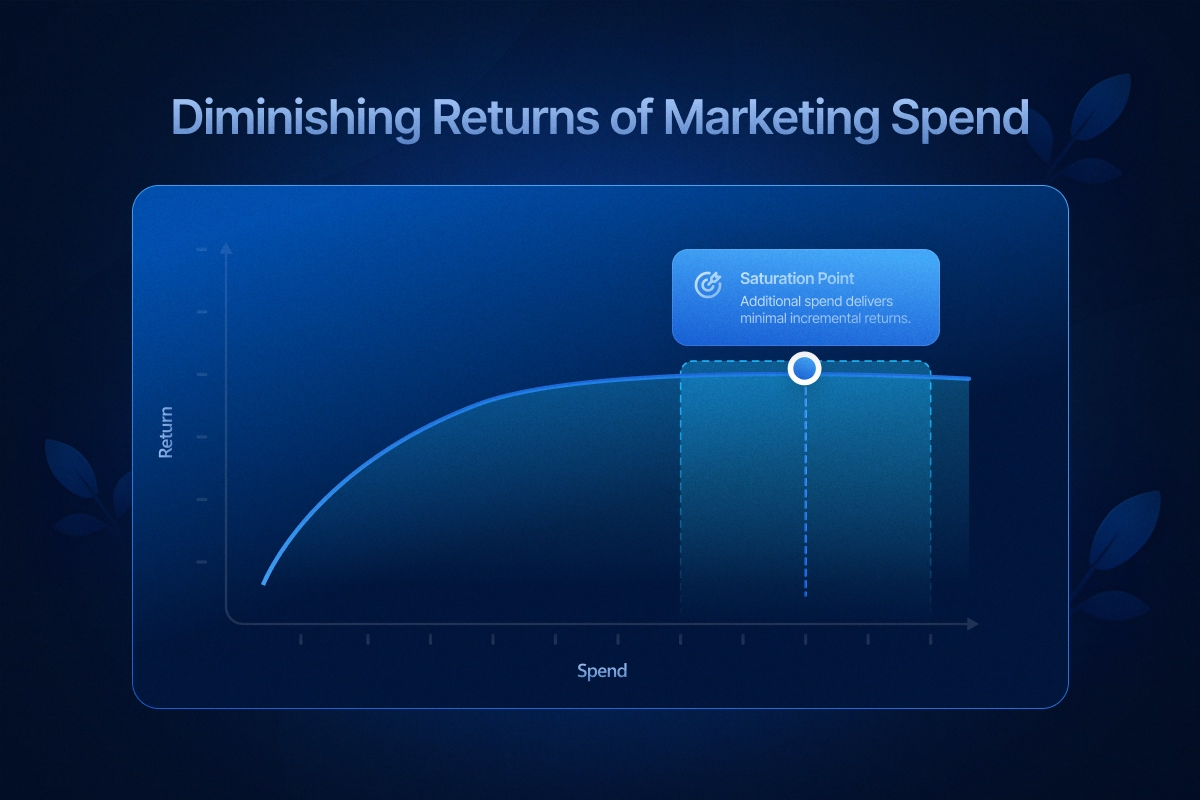
Evaluating response curves changes how marketing budgets are allocated. For instance, a channel with a lower historical return might have a response curve that is still climbing, meaning additional spend will yield strong incremental revenue. Conversely, a channel with a higher past return might have a flattened curve, meaning additional budget will mostly yield wasted spend.
Automated Marketing Mix Modeling
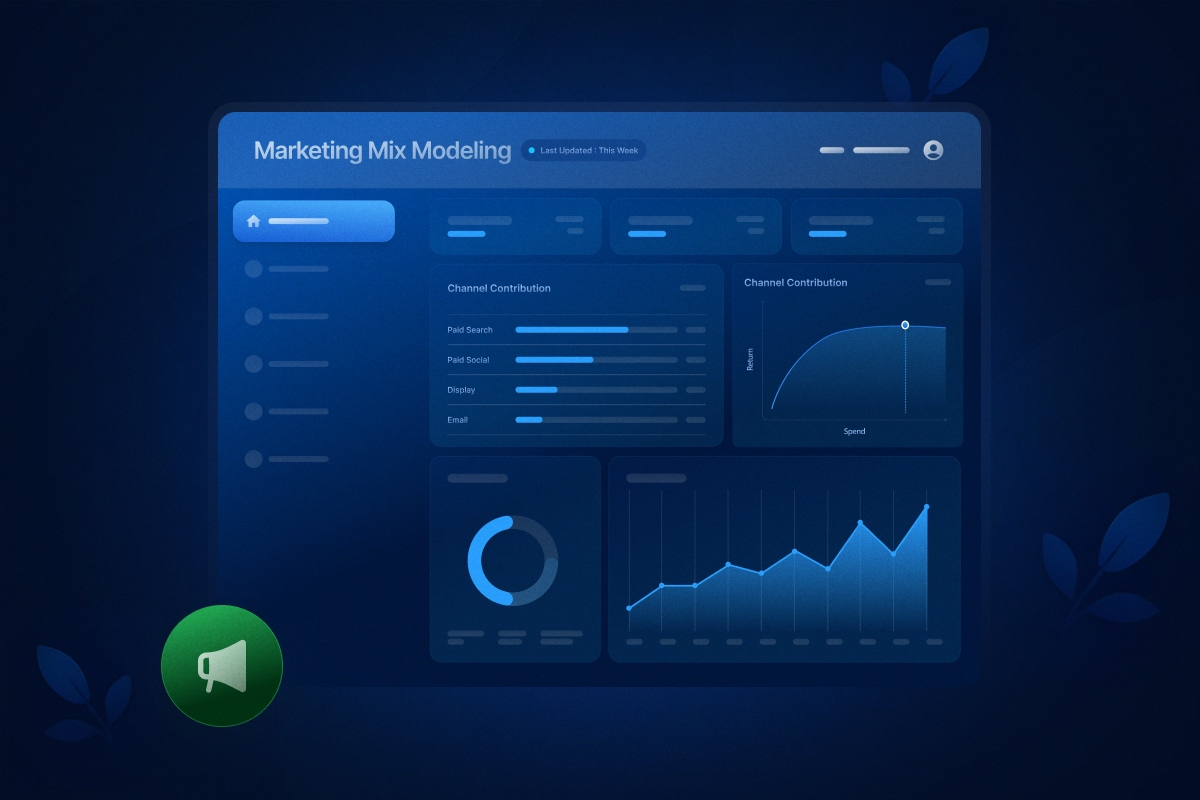
Automated Marketing Mix Modeling transforms traditional measurement from a slow, periodic project into an ongoing software workflow. By connecting directly to active data stacks, these platforms streamline reporting loops and make statistical modeling accessible for daily execution.
Speed and Refresh Rate
Traditionally, marketing mix modeling operated as a slow, consultant driven workflow where specialized analytics teams delivered quarterly or annual reports. Automated platforms eliminate those delays by integrating directly with core data sources, including ad platforms, ecommerce software, and cloud data warehouses.
By automatically ingesting fresh data on a weekly schedule, these platforms update channel contribution estimates and response curves continually. Marketers can shift budgets in near real time instead of reacting to past campaign performance months after the fact.
Team Accessibility
Automation also shifts who uses the model on a daily basis. Historical models required dedicated data science teams to interpret outputs and hand finished reports to marketing leaders.
Modern automated vendors design their platforms specifically for marketers, highlighting clear dashboards, channel performance comparisons, and direct allocation recommendations. Removing the need to digest raw statistical code lowers the barrier to entry for campaign managers.
Even so, teams still require enough internal expertise to validate model assumptions and verify recommendations before shifting real budgets.
Transparency and Customization Tradeoffs
Speed and accessibility come with clear tradeoffs. Prebuilt automation often reduces visibility into how underlying models calculate statistical outputs and offers less customization for unique business models compared to a fully bespoke setup.
Platform vendors vary significantly in how much statistical logic they expose versus keep obscured as a black box. Organizations evaluating automated tools should explicitly test vendor transparency rather than assuming full visibility.
While automation delivers undeniable speed and convenience, it serves as a distinct alternative to traditional modeling rather than a complete replacement for every scenario.
Marketing Mix Modeling vs. Other Measurement Methods
Marketing Mix Modeling works best as part of a broader measurement framework. Comparing Marketing Mix Modeling against Multi Touch Attribution and Incrementality Testing highlights where each method excels and how they complement one another.
Marketing Mix Modeling vs. Multi Touch Attribution
The distinction between these approaches stems from how they gather information:
Marketing Mix Modeling vs. Incrementality Testing
Incrementality testing uses controlled experiments like conversion lift tests or geographic split tests to measure true causal impact:
Combining Methods for Maximum Precision
Modern measurement strategies combine these frameworks rather than choosing between them:
Benefits of Marketing Mix Modeling
Marketing Mix Modeling gives organizations a resilient framework to evaluate performance in an increasingly fragmented measurement landscape. This approach delivers four key advantages for modern marketing teams:
Future Proof Privacy Protection: MMM analyzes high level aggregate trends rather than tracking individual online behaviors. This approach guarantees full functionality regardless of browser policies, privacy laws, or mobile tracking limits.
Strategic Financial Alignment: Response curves reveal channel saturation points, allowing teams to plan multi quarter media spend with confidence. Marketers can present finance leaders with a unified, outcome focused business case rather than fragmented platform metrics.
Separation of External Factors: Attribution models often mistake seasonal surges or price drops for advertising wins. MMM explicitly accounts for pricing strategies, promotional schedules, and economic conditions to isolate real marketing effectiveness.
Comprehensive Cross Channel View: Free from vendor bias, MMM standardizes performance metrics across both digital and traditional channels. It places TV, paid search, and direct email on identical footing to deliver an accurate top down view of total return.
Limitations and Challenges of Marketing Mix Modeling
MMM isn't a perfect or complete replacement for every other measurement approach, and being upfront about its limitations matters for using it well.
Requires extensive historical records: Most models need twelve to twenty four months of rich historical data to separate seasonal trends from marketing impact. Younger businesses or brands with inconsistent budgets will struggle to get actionable outputs.
Inability to track real time changes: The framework focuses on macro level channel effectiveness rather than immediate tactical wins. It will not show you how individual ad variations perform or react to same day performance shifts.
Interference from simultaneous campaign scaling: Running tightly synchronized campaigns across multiple ad networks obscures individual channel performance. Independent spend variation is necessary for the system to attribute sales accurately.
Demands continuous resources and maintenance: Generating reliable insights takes clean data infrastructure, regular model updating, and internal expertise. Without ongoing oversight, the output quickly becomes obsolete.
Misinterpreting estimates as absolute facts: Every model output carries an inherent margin of error. Relying on single point ROI figures as definitive truth creates a false sense of certainty during budget planning.
Choosing an Approach to Marketing Mix Modeling Software
Whether you're evaluating a specific platform or deciding whether to build a model in-house, a few evaluation criteria apply regardless of which specific option you're considering.
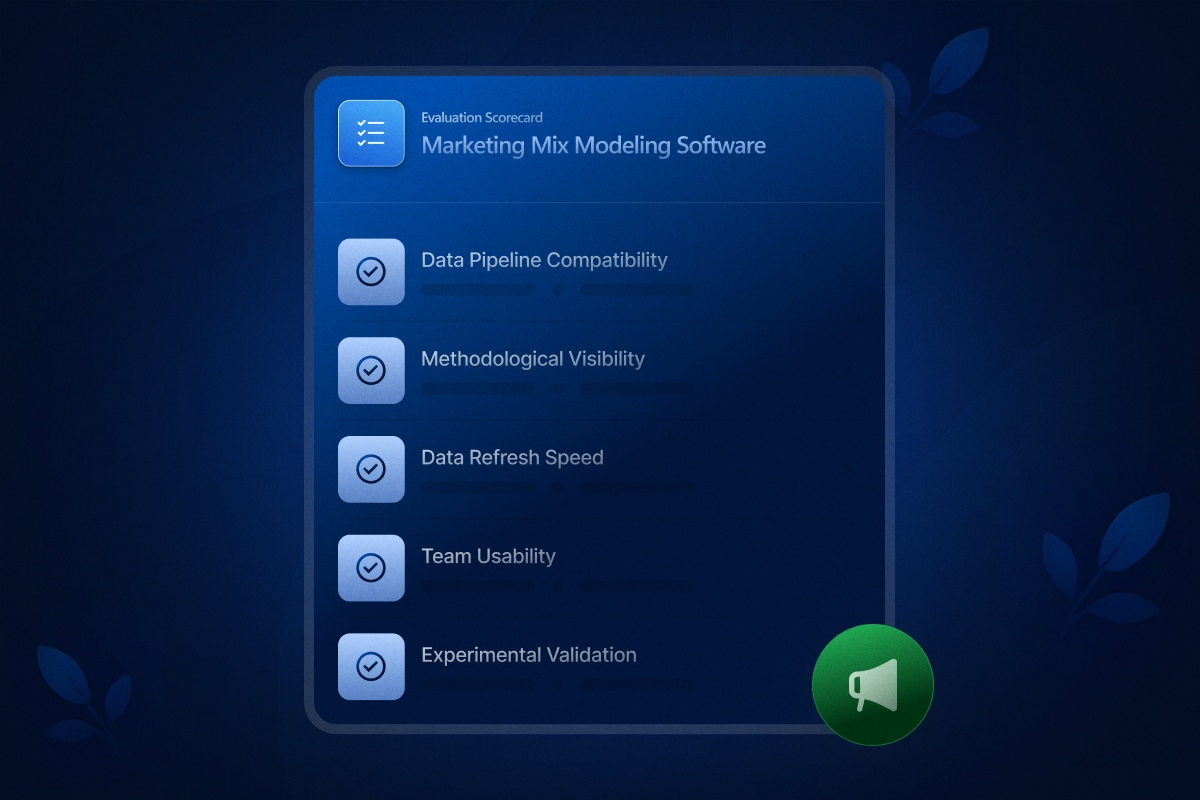
Data pipeline compatibility: Check if the platform syncs effortlessly with your existing tech stack, CRM, and ad platforms. Needing custom spreadsheet work before every model update adds massive drag to your reporting.
Methodological visibility: Demand clear insight into how the software handles baseline sales, ad decay, and statistical confidence. Transparent modeling builds stakeholder trust when reallocating major budgets.
Data refresh speed: Confirm whether output refreshes happen automatically or require manual rebuilds. Frequent data refreshes give marketers the agility needed to optimize campaigns in real time.
Team usability: Consider whether your current staff can operate the platform independently. A tool must match your team's analytical capability so insights turn into practical execution without delay.
Experimental validation: Pick a platform that accepts lift studies and conversion experiments to validate its numbers. Combining regression models with controlled testing provides the strongest foundation for spend decisions.
Conclusion
What used to be a niche enterprise tool is now a core requirement for modern growth teams. Marketing mix modeling gives companies a clear way to measure cross channel performance as cookies vanish and privacy rules limit user tracking. By analyzing aggregate data instead of individual clicks, teams get reliable metrics they can actually trust.
The framework takes clean historical records and ongoing calibration to work well, but the payoff is real. It controls for economic shifts, price changes, and campaign saturation, making it a powerful foundation for long term financial planning. Combining this approach with live lift tests and daily campaign tracking gives your business a durable measurement strategy built to handle future platform changes.
FAQs


Latest blogs
Marketing Mix Modeling: Master Revenue Growth
Stop trusting broken attribution data. Learn how marketing mix modeling bypasses tracking limits to uncover true revenue and optimize ad spend.

Types of Retargeting: The Full Guide for Marketers
Explore major types of retargeting, from pixel-based to dynamic and sequential, and learn how to combine them into a converting campaign.
Targeted Advertising: How It Works and How to Use It Well
Build a bulletproof targeted advertising strategy. Turn raw behavioral data into profitable segments using our step-by-step optimization plan.
Retargeting vs Remarketing: The Difference Every Marketer Needs to Know
Stop treating Retargeting vs Remarketing as identical. Use a precise, high-impact framework to weaponize your data and maximize conversions.

Google Ads Cost: What You'll Really Pay (By Industry, Campaign Type, and Business Size)
Stop wasting budget on vague pricing. See exact 2026 Google ads cost benchmarks by industry, real CPC data, and the formula to reduce your ad spend.

Types of Facebook Ads: A Complete Guide to Every Format in 2026
See all types of Facebook ads, including current specs, placements, and objectives, plus a matching table to pick the right format for your goal.
ABM Stats: 2026 Benchmarks, ROI & Trends
From ROI to pipeline velocity, these 2026 ABM stats show exactly why account-based marketing dominates B2B growth.
.jpg)
The Real Price of Social Media Advertising: A Cost Guide for Advertisers
Find out what social media ads actually cost these days. Get to know about CPC, CPM, CPL, industry verticals, budget ranges, and ROAS across major platforms.
Bing Ads Cost in 2026: Everything You Need to Know
Stop wasting money on ad spend. See the 2026 Bing Ads cost benchmarks, real industry CPAs, and hidden ROI data you need to outperform competitors.